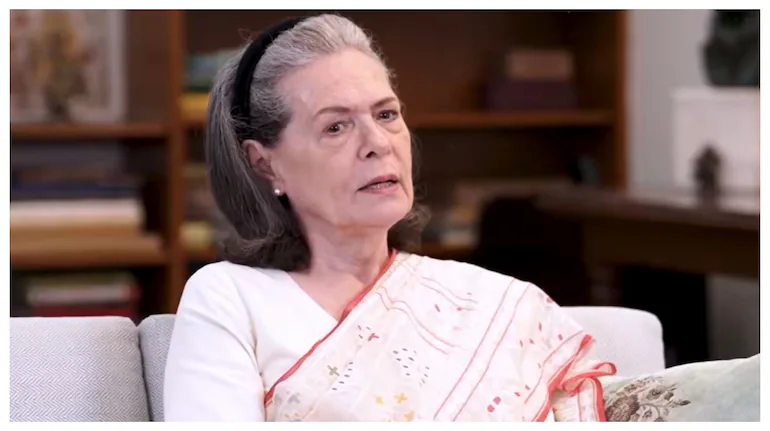
Congress Parliamentary Party chairperson Sonia Gandhi has recalled how she initially felt intimidated by her mother-in-law, former Prime Minister Indira Gandhi, whose sudden outbursts of anger could leave people around her frightened and uncomfortable. In her memoir, Belonging: A Journey of Love, Sonia describes the former prime minister’s occasional explosions of temper, her strict expectations of staff and the way family members learned to manage difficult moments.
Sonia Gandhi writes that she would sometimes “quake” in her seat when Indira Gandhi lost her temper. She also recalls how the former prime minister could become upset over political disagreements, forgotten appointments and perceived breaches of trust. However, the memoir describes a softer side of Indira Gandhi, particularly her relationship with her grandchildren, Rahul and Priyanka Gandhi.
According to Sonia’s account, the children eventually became the family members who could approach their grandmother to understand her mood. Their presence often helped Indira relax, turning tense moments into more comfortable family interactions.
Sonia Gandhi Recalls Being Frightened by Indira Gandhi’s Sudden Outbursts
In her memoir, Sonia Gandhi describes Indira Gandhi as someone whose occasional displays of anger could have an immediate effect on everyone around her. She recalls that staff members sometimes became so uncomfortable during these moments that they would remain frozen or avoid drawing attention to themselves.
One incident involved a staff member who had repeatedly forgotten to remind Indira Gandhi about an important appointment. Sonia writes that her mother-in-law responded by making the employee stand in a corner of the room while other staff members hurried past, embarrassed by the situation.
For Sonia, who was still adjusting to life in the Nehru-Gandhi family, witnessing such incidents was unsettling. She was not yet familiar with Indira Gandhi’s personality or accustomed to the intensity of her reactions.
She recalled that she would “quake in my seat” whenever her mother-in-law lost her temper. The experience gradually became easier as Sonia got to know her better and understood how she responded after an outburst.
According to Sonia, Indira Gandhi would normally regret losing her temper and communicate her remorse in her own way to the person who had upset her. However, she reacted differently when she believed a colleague had betrayed her trust. In those situations, she could distance herself from the individual and refuse to deal with them again.
Indira Gandhi Once Made a Senior Congress Figure Stand Facing a Wall
Sonia Gandhi also recounts another incident that revealed how strongly Indira Gandhi could express her displeasure. She remembers seeing a man dressed in a kurta and dhoti standing motionless in a corner, facing the wall.
At the time, Sonia was not familiar with the identities of senior political figures in the Congress party. However, she understood that the man’s presence inside the family’s private space suggested he was an important party member.
She writes that she spent around half an hour with Amie Crishna, a senior member of Indira Gandhi’s staff. When Sonia returned, the man was still standing in the same position.
She later learned that her mother-in-law had ordered him to remain there. The episode left an impression on Sonia because it showed how Indira Gandhi’s anger could affect not only household staff but also people from the political establishment.
The incident also illustrates the atmosphere of authority surrounding the former prime minister. Sonia’s account suggests that people who worked closely with Indira Gandhi were often careful about how they approached her, particularly when she was displeased.
Rahul and Priyanka Gandhi Became the Family’s Mood Gauges
One of the more personal details in Sonia Gandhi’s memoir concerns the way Indira Gandhi’s behaviour changed after she became a grandmother. Sonia writes that the frequency of her mother-in-law’s tense moments decreased once Rahul and Priyanka were growing up.
As the children became older, they were sometimes sent to understand their grandmother’s mood before other family members approached her. Their presence made it easier to judge whether Indira Gandhi was upset or ready for a conversation.
Sonia describes how even a smile or an innocent question from her grandchildren could soften Indira Gandhi’s mood. The children helped her relax and brought her a sense of contentment.
This family dynamic offers a contrast to the stricter personality Sonia describes in other parts of the memoir. While colleagues and staff members could feel intimidated by Indira Gandhi’s authority, her grandchildren appeared to have a more immediate and affectionate way of reaching her.
The recollection also highlights the role Rahul and Priyanka played within the family during their childhood. Their interactions with their grandmother were not simply expressions of affection; according to Sonia, they also helped other family members understand when it was a suitable moment to approach her.
Indira Gandhi Sometimes Refused to Speak to People Who Displeased Her
Sonia Gandhi’s account also describes how Indira Gandhi handled disagreements and personal disappointments. Rather than always confronting someone directly, the former prime minister would sometimes choose to ignore the person who had displeased her.
She could maintain that distance for days, leaving the individual uncertain about when normal communication would resume. Sonia’s description suggests that Indira Gandhi’s displeasure could be expressed through silence as well as sudden anger.
For people working with her, this behaviour could create an uncomfortable atmosphere. Those who had fallen out of favour might have to wait without knowing when the former prime minister would be willing to speak to them again.
Sonia’s recollections distinguish between ordinary moments of anger, which Indira Gandhi might later regret, and situations in which she believed someone had betrayed her confidence. In the latter cases, she appeared less willing to reconcile.
Political Arguments Sometimes Followed Indira Gandhi to the Dining Table
Indira Gandhi’s temper could also surface during family meals, particularly after difficult exchanges in Parliament. Sonia recalls that the former prime minister sometimes became upset at the dining table following what she described as a particularly unpleasant confrontation with the Opposition.
On one occasion, Indira Gandhi pushed her thali towards the other side of the long dining table in a fit of anger. The incident unsettled Sonia, who said such behaviour reminded her of the angry outbursts she had witnessed from her own father.
While Sonia felt perturbed and shaken, Rajiv Gandhi and his brother Sanjay Gandhi reportedly remained silent, waiting for the uncomfortable moment to pass.
The contrast between their reactions and Sonia’s response reflects how differently family members had learned to deal with Indira Gandhi’s temper. Rajiv and Sanjay were more accustomed to their mother’s behaviour, while Sonia was still adjusting to the family environment.
Rajiv Gandhi would often reassure his wife that the situation would settle down quickly. Sonia recalls him telling her: “Don’t let yourself get so scared. She’ll be all right in no time.”
His reassurance helped Sonia understand that an angry moment did not necessarily mean a lasting conflict. It also offered her a different perspective on the person she was still getting to know as both a family member and one of India’s most powerful political leaders.
Indira Gandhi’s Softer Side: Love for Sarees and Kashmiri Shawls
Alongside memories of her mother-in-law’s temper, Sonia Gandhi’s memoir includes details about Indira Gandhi’s personal interests and attachment to family possessions.
Sonia recalls the former prime minister’s love for sarees and old Kashmiri shawls. Indira Gandhi particularly treasured several sarees that had belonged to her mother and dated from the period before khadi became prominent in her wardrobe.
These personal details provide a different perspective on Indira Gandhi, beyond her public image as a powerful political leader. They show her connection to family history, clothing and objects that carried sentimental value.
The memories also help explain why Sonia’s account is not limited to political events or public controversies. By including everyday family experiences, she presents a more personal picture of a woman whose public authority and private relationships could involve very different sides of her personality.
What Sonia Gandhi’s Memoir ‘Belonging: A Journey of Love’ Covers
Belonging: A Journey of Love is a 544-page memoir published by HarperCollins India. The book traces Sonia Gandhi’s journey from her childhood in post-war Italy to her marriage into the Nehru-Gandhi family and her eventual entry into Indian Politics.
It also covers major personal and political experiences, including the assassination of her husband, former Prime Minister Rajiv Gandhi. The memoir offers Sonia’s recollections of family relationships, important events and the circumstances that shaped her life in India.
Her memories of Indira Gandhi form one part of a broader account of her experiences within the Gandhi family. Rather than focusing only on the former prime minister’s political career, Sonia describes domestic interactions that reveal how Indira behaved around relatives, staff members and colleagues.
The recollections are particularly significant because they come from someone who experienced Indira Gandhi in her private life. Sonia’s account describes the challenges of adjusting to a household where a prominent political leader’s moods and expectations could influence everyday family interactions.
A Personal Portrait of Indira Gandhi Beyond Her Political Image
Sonia Gandhi’s recollections present a complex portrait of Indira Gandhi. The former prime minister emerges as a strong-willed figure whose anger could intimidate staff members and colleagues, but also as a grandmother whose grandchildren could quickly soften her mood.
The memoir highlights the contrast between Indira’s strict approach to people who disappointed her and her affectionate response to Rahul and Priyanka. It also describes how Rajiv Gandhi helped Sonia navigate the difficult moments by reassuring her that his mother’s anger would usually pass.
These memories offer a glimpse into the private relationships behind one of India’s most prominent political families. They also show how Sonia Gandhi’s understanding of her mother-in-law changed over time, from initial fear and uncertainty to a more familiar appreciation of her personality.
By sharing these experiences in Belonging: A Journey of Love, Sonia Gandhi adds a personal dimension to the historical image of Indira Gandhi, revealing how the former prime minister’s authority, temper, family attachments and everyday habits were experienced by those closest to her.
For breaking news and live news updates, like us on Facebook or follow us on Twitter and Instagram. Read more on Latest India on thefoxdaily.com.






COMMENTS 0