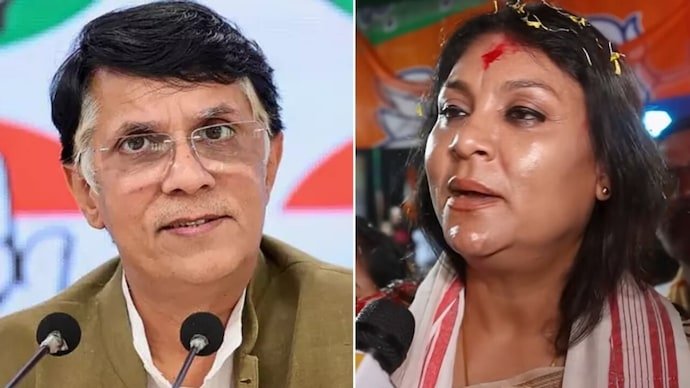
- What Triggered the Case?
- Legal Timeline: How the Case Reached the Supreme Court
- What Is Khera Asking the Supreme Court For?
- Key Legal Question: When Does Speech Become a Criminal Offence?
- Gauhati High Court’s Rejection: Why It Matters
- Political Context: More Than Just a Legal Dispute
- Comparison: Similar Legal Conflicts in Political Speech
- What Happens Next?
- A Key Insight: This Case Is Also About Process, Not Just Content
- Conclusion: A High-Stakes Test for Law, Politics, and Speech
The legal and political confrontation between Congress leader Pawan Khera and Assam Chief Minister Himanta Biswa Sarma’s family has escalated to the highest judicial level, with Khera approaching the Supreme Court after being denied anticipatory bail by the Gauhati High Court.
The Pawan Khera Supreme Court case now sits at the intersection of law, Politics, and free speech raising important questions about criminal liability for public statements, procedural fairness, and the limits of political rhetoric in India.
What Triggered the Case?
The Controversy stems from statements made by Pawan Khera during press interactions in early April, where he alleged that Riniki Bhuyan Sharma wife of Assam Chief Minister Himanta Biswa Sarma held multiple foreign passports and had links to overseas assets and companies.
These claims quickly triggered a political storm, followed by legal action.
An FIR was registered in Guwahati, invoking several provisions under the Bharatiya Nyaya Sanhita, including:
- Cheating
- Forgery
- Defamation
- Intentional insult
Authorities argue that the allegations were not only unverified but also potentially damaging to reputation and public trust.
Legal Timeline: How the Case Reached the Supreme Court
The Pawan Khera anticipatory bail case has followed a complex legal path across multiple courts:
| Date | Development |
|---|---|
| April 5 | Khera makes allegations during press conferences |
| April 7 | Assam Police visit his Delhi residence |
| Early April | Telangana High Court grants 7-day transit anticipatory bail |
| April 15 | Supreme Court stays Telangana HC order |
| Subsequently | Gauhati High Court denies anticipatory bail |
| Now | Khera moves Supreme Court via Special Leave Petition |
This sequence highlights not just the urgency of the case, but also the procedural complexity involved when jurisdiction spans multiple states.
What Is Khera Asking the Supreme Court For?
In his Special Leave Petition, Khera has sought:
- Protection from arrest (anticipatory bail)
- Relief against the Gauhati High Court’s order
- Consideration of his case on legal merits without immediate coercive action
In simple terms, he wants the Supreme Court to intervene before any arrest takes place, allowing him to contest the charges without being taken into custody.
Key Legal Question: When Does Speech Become a Criminal Offence?
At the heart of the case lies a broader legal issue that goes beyond one individual:
Where is the line between political speech and criminal liability?
Indian law allows restrictions on speech in cases involving defamation, misinformation, or intent to harm reputation. However, courts have also repeatedly emphasized the need to protect legitimate political expression.
This case could test how those principles apply when allegations are made in a political context without immediate substantiation.
Gauhati High Court’s Rejection: Why It Matters
The Gauhati High Court’s refusal to grant anticipatory bail is significant for two reasons:
- It indicates the court found insufficient grounds for pre-arrest protection at this stage
- It shifts the burden onto the Supreme Court to evaluate whether intervention is necessary
At the same time, a local court in Guwahati declined to issue a non-bailable warrant against Khera, noting that the request lacked material backing and relied on assumptions.
This creates an unusual situation where:
- Higher court denies anticipatory bail
- Lower court questions the urgency of arrest
The contrast could influence how the Supreme Court views the matter.
Political Context: More Than Just a Legal Dispute
The Pawan Khera vs Assam CM wife case is not unfolding in isolation it carries clear political undertones.
For the Congress:
- The case is being framed as an issue of free speech and political targeting
For the ruling side:
- The focus is on accountability and preventing the spread of unverified allegations
This dual framing ensures that the case will be closely watched not just in legal circles, but across the political spectrum.
Comparison: Similar Legal Conflicts in Political Speech
| Issue | Common Legal Approach |
|---|---|
| Defamation in politics | Civil and criminal remedies available |
| Unverified allegations | Courts examine intent and evidence |
| Anticipatory bail | Granted based on risk of misuse of arrest powers |
This case will likely be evaluated within these broader legal principles.
What Happens Next?
The Supreme Court’s response will shape the immediate future of the case.
Possible outcomes include:
1. Interim Protection Granted
The court may grant temporary protection from arrest while examining the matter in detail.
2. No Immediate Relief
Khera may be asked to cooperate with the investigation without pre-arrest protection.
3. Notice Issued to Assam Authorities
The court could seek responses before taking a final call.
Each scenario carries different implications for both the legal process and the political narrative.
A Key Insight: This Case Is Also About Process, Not Just Content
While public attention is focused on the allegations themselves, the more significant issue may be procedural:
- How should police act across state jurisdictions?
- When is arrest justified in defamation-linked cases?
- How should courts balance urgency with fairness?
These questions could have lasting implications beyond this case.
Conclusion: A High-Stakes Test for Law, Politics, and Speech
The Pawan Khera Supreme Court case is shaping up to be more than a routine bail matter.
It sits at a sensitive intersection where legal standards, political narratives, and constitutional freedoms overlap.
In cases like this, the outcome is not just about one individual it helps define how law responds to political speech in a democracy.
As the Supreme Court prepares to hear the matter, its decision will not only determine Khera’s immediate legal relief but could also influence how similar cases are handled in the future.
For now, all eyes are on the apex court and the balance it chooses to strike.
For breaking news and live news updates, like us on Facebook or follow us on Twitter and Instagram. Read more on Latest India on thefoxdaily.com.





COMMENTS 0