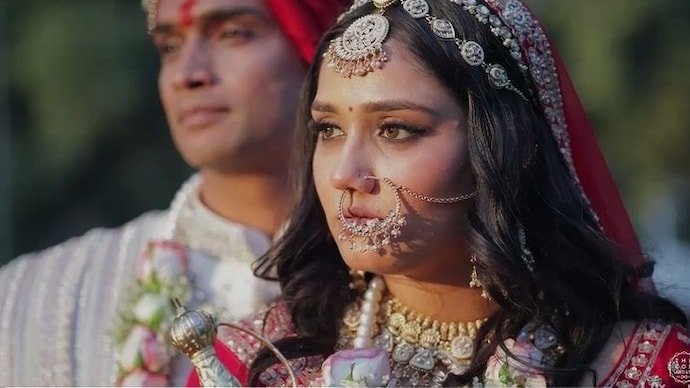
The death of former model-actor Twisha Sharma has rapidly evolved from a tragic individual case into a national conversation about trust in institutions, media scrutiny and the pressures surrounding high-profile investigations in India. On Monday, the Supreme Court made it clear that it was deeply concerned by what it described as a growing public narrative suggesting that the judiciary itself was obstructing or influencing a fair probe.
At the centre of the controversy lies not only the mysterious circumstances surrounding Sharma’s death, but also allegations, speculation and public commentary linked to the professional background of the accused family. The case has now reached a stage where the Supreme Court has backed the transfer of the investigation to the Central Bureau of Investigation (CBI), while simultaneously cautioning all sides against turning the matter into a media-driven battle.
The court’s observations carry significance far beyond a single criminal investigation. They touch on an increasingly common challenge in modern India: what happens when public perception, Social Media outrage and institutional credibility collide before an investigation is even complete?
Why the Twisha Sharma Case Became Nationally Sensitive
Cases involving celebrities, public personalities or individuals connected to influential institutions often attract massive public attention. But the Twisha Sharma case became particularly sensitive because allegations of possible institutional influence entered the public conversation early.
Questions began emerging online after reports highlighted that the husband of the deceased was a practising lawyer and his mother a former district judge. That immediately fuelled speculation on social media that the investigation could be compromised.
The Supreme Court specifically addressed this issue during the hearing. The bench noted that public discourse had increasingly created a perception that the judiciary itself was somehow connected to delays or lack of impartiality in the investigation.
This is exactly the kind of institutional narrative the Supreme Court appeared determined to address quickly.
In India, where trust in institutions is often tested during emotionally charged cases, even unverified allegations can rapidly shape public opinion long before facts are established. Social media algorithms amplify outrage far faster than official investigations can progress.
That creates a dangerous imbalance.
The Bigger Concern: Trial by Media vs Due Process
One of the strongest messages from the Supreme Court hearing was not about guilt or innocence. It was about process.
The bench repeatedly stressed that no conclusions should be drawn before the investigation is completed. That may sound obvious in theory, but in practice, India has increasingly witnessed “parallel investigations” happening online.
In many high-profile cases today, social media platforms often become unofficial courtrooms where narratives harden quickly:
- One side claims a cover-up.
- Another side alleges political targeting.
- Anonymous accounts circulate unverified theories.
- Television debates frame speculation as near-fact.
By the time official agencies complete their work, public opinion is often already deeply polarised.
The Supreme Court’s remarks suggest concern that this exact pattern may already be unfolding in the Twisha Sharma case.
The court specifically urged both the victim’s family and the accused side to avoid public commentary and instead cooperate directly with investigators. It also asked the media to exercise restraint.
That appeal reflects a growing judicial recognition that uncontrolled public narratives can affect investigations, witness testimonies and even future trials.
Why the Transfer to CBI Matters
The decision to transfer the investigation to the CBI is perhaps the most consequential development so far.
In India, demands for CBI investigations often emerge in cases where:
- Public trust in local investigation agencies weakens
- Political or institutional influence is suspected
- The case carries interstate or national implications
- Public pressure escalates significantly
However, the Supreme Court carefully clarified that transferring the case does not automatically validate allegations made by any side.
That distinction is crucial.
The court essentially signalled two things simultaneously:
- The concerns raised by the family deserve institutional reassurance
- No assumptions should be made against the accused before evidence is tested
This balancing act reflects the judiciary’s attempt to preserve both transparency and fairness.
| Key Issue | Supreme Court’s Position | Why It Matters |
|---|---|---|
| Allegations of bias | Investigation transferred to CBI | Helps restore public confidence |
| Media speculation | Advised restraint | Prevents prejudicing investigation |
| Public statements | Asked parties to avoid commentary | Protects integrity of probe |
| Institutional criticism | Court said it was “pained” | Highlights concern over judiciary’s image |
| Fair investigation | Emphasised due legal process | Reinforces rule of law principles |
The Emotional Dimension the Court Acknowledged
One notable aspect of the hearing was the court’s repeated acknowledgement of the emotional trauma suffered by the victim’s family.
The bench openly recognised that unnatural deaths create immense pain for parents and loved ones. This human element is often lost in highly politicised or sensationalised cases.
The Solicitor General’s emotionally charged observation “it is better to have a divorced daughter than a dead one” also reflected the tragedy underlying the legal battle.
Such remarks resonated because they shifted focus back to the human loss rather than purely institutional Conflict.
In many high-profile cases, public debate quickly transforms individuals into symbols:
- Victims become political talking points
- Families become campaigners
- Accused individuals become public villains before trial
The Supreme Court appeared intent on slowing down that process.
How Social Media Changed High-Profile Investigations in India
The Twisha Sharma case also reflects a broader transformation in how criminal investigations unfold in the digital age.
Twenty years ago, investigations were largely shaped by police briefings and newspaper coverage. Today, viral hashtags, influencer commentary and algorithm-driven outrage cycles often dominate the narrative.
Public pressure can sometimes help expose investigative failures. But it can also create distortions.
Several modern trends are now influencing criminal investigations:
1. Instant Narrative Formation
Within hours of a major incident, social media users begin constructing theories, often without evidence.
2. Emotional Amplification
Highly emotional content spreads faster online than procedural legal updates.
3. Institutional Distrust
Public suspicion toward police, courts and government agencies has become more visible and immediate.
4. Pressure on Investigators
Investigating agencies increasingly operate under real-time public scrutiny.
5. Media Competition
News outlets face pressure to provide constant updates, sometimes before facts are fully verified.
The Supreme Court’s remarks can therefore be viewed as part of a wider institutional response to this changing media environment.
The Judiciary’s Reputation Is Also on Trial
One overlooked aspect of the hearing is that the Supreme Court appeared concerned not only about the investigation itself, but also about the reputation of the judiciary.
When public narratives begin suggesting that judicial connections can influence criminal investigations, it risks damaging broader trust in the legal system.
That is why the court explicitly addressed the issue instead of ignoring it.
The judiciary in democratic systems depends heavily on public confidence. Courts do not possess armies or enforcement power in the traditional sense. Their authority comes largely from institutional legitimacy.
Once public trust weakens, every future verdict risks becoming politically contested.
This explains why the Supreme Court moved quickly to clarify:
- It was not pre-judging the case
- No conclusions had been reached
- The CBI should conduct an independent investigation
- Public speculation should not replace evidence
In many ways, the court was defending the integrity of due process itself.
Why High-Profile Death Cases Often Become National Flashpoints
India has witnessed multiple high-profile death investigations over the years where legal, political and media narratives collided simultaneously.
These cases often follow a familiar pattern:
- Initial tragedy triggers emotional public reaction
- Conflicting theories emerge online
- Questions about investigative neutrality surface
- Political groups enter the conversation
- Media coverage intensifies
- Judicial intervention eventually becomes necessary
The Twisha Sharma case appears to be following a similar trajectory.
What makes such cases uniquely volatile is that they combine three emotionally powerful themes:
- Death
- Power
- Trust
Whenever the public suspects that power may influence justice, outrage grows rapidly.
At the same time, courts must also prevent emotional public pressure from replacing legal standards.
That balance is extremely difficult.
The CBI Now Faces Enormous Pressure
With the transfer of the investigation, the focus now shifts heavily toward the CBI.
The agency faces enormous expectations from multiple sides:
- The victim’s family expects transparency and accountability
- The accused side expects fairness and protection from prejudice
- The public expects clarity
- The judiciary expects professionalism
This creates an exceptionally high-stakes environment.
Any delay, inconsistency or leak could immediately trigger another wave of speculation.
That is why the Supreme Court’s warning against media commentary becomes strategically important. Investigations of this scale require controlled evidence collection, forensic examination and witness verification processes that often move far slower than public expectations.
What Happens Next in the Twisha Sharma Case?
Several key developments are now likely to shape the next phase of the case:
CBI Takeover
The agency is expected to formally assume control of the investigation and review all evidence collected so far.
Second Post-Mortem Findings
The Madhya Pradesh High Court had already directed a second post-mortem examination. Those findings may become crucial.
Digital Evidence Analysis
Phone records, forensic reports, communication data and timeline reconstruction will likely play major roles.
Witness Examination
Investigators may re-examine statements already recorded by local authorities.
Legal Oversight
The Supreme Court may continue monitoring procedural fairness depending on future developments.
A Larger Lesson About Justice in the Social Media Era
The Twisha Sharma case is ultimately becoming about more than one investigation.
It reflects a growing challenge facing democracies worldwide:
How do institutions maintain fairness, credibility and public trust when every major case unfolds under nonstop digital scrutiny?
Courts today are no longer operating only inside courtrooms. Public perception evolves instantly online, often faster than evidence can be tested.
The Supreme Court’s remarks suggest an awareness that judicial institutions must now defend not only justice itself, but also the public confidence necessary for justice to function.
That may be the most important takeaway from the hearing.
Conclusion
The Supreme Court’s intervention in the Twisha Sharma death case marks a critical moment in the intersection of law, media and public trust in India. By transferring the probe to the CBI while simultaneously cautioning against speculation, the court attempted to strike a delicate balance between transparency and due process.
The case has already evolved beyond a routine criminal investigation. It now represents a larger debate about institutional credibility, digital-age outrage cycles and the pressures facing India’s justice system in high-profile cases.
Whether the CBI Investigation ultimately confirms foul play, suicide or another conclusion, one thing is already clear: the public battle over perception began long before the legal process could fully unfold.
And in modern India, managing that gap between perception and proof may be becoming just as important as solving the case itself.
For breaking news and live news updates, like us on Facebook or follow us on Twitter and Instagram. Read more on Latest India on thefoxdaily.com.






COMMENTS 0