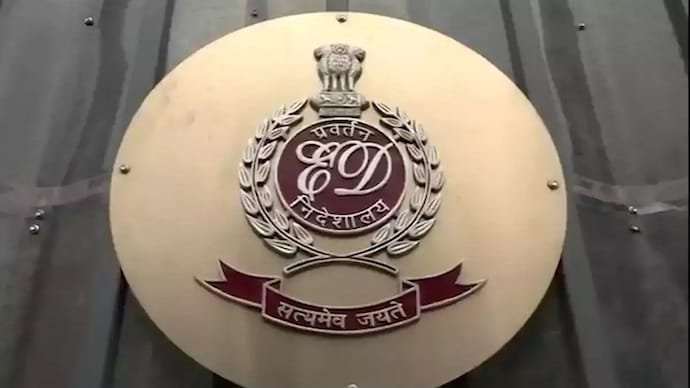
More than eight years after an undercover investigation exposed the Money Trade Coin (MTC) operation, the cryptocurrency case has returned to the spotlight with a fresh Enforcement Directorate action in Maharashtra.
The ED conducted searches at multiple locations in Mumbai and Thane in connection with an alleged money-laundering investigation linked to the MTC scheme and seized around Rs 1 crore in cash along with documents and other material that investigators consider relevant to the case.
The development is significant not simply because of the cash seizure, but because it shows how a financial fraud that first came under public scrutiny in 2018 has continued to generate investigative and asset-tracing consequences years later.
The case centres on Amit Madanlal Lakhanpal and associates WHO, according to investigating agencies, promoted Money Trade Coin as an investment opportunity and collected funds from investors. The ED’s investigation is based on an FIR registered by Thane City Police against Lakhanpal, Taha Hafiz Qazi, Sachin Vasant Shelar, Komal Bhimrao Shirsath and others.
According to figures cited by investigating authorities, about Rs 113.10 crore was collected from investors in connection with MTC. Earlier reporting surrounding the case had put the total amount involved at a considerably higher level, illustrating how estimates can differ depending on whether they refer to investments, alleged proceeds, or the broader pool of money claimed by investigators and complainants.
What is the Money Trade Coin case?
Money Trade Coin was promoted as a cryptocurrency investment opportunity during the cryptocurrency boom of 2017 and early 2018.
The attraction for investors was straightforward: promoters allegedly presented MTC as a digital asset capable of delivering extraordinary returns in a relatively short period. The claims went far beyond the type of gains normally associated with conventional investments.
According to the 2018 India Today investigation, undercover reporters posing as prospective investors were given assurances about dramatic increases in the value of MTC. They were also told about alleged connections with governments in the Caribbean and potential benefits involving citizenship and investments abroad.
Those promises helped create an image of an investment operation with international connections and government-level legitimacy.
The problem, investigators later alleged, was that the assurances were used to persuade people to put money into the scheme.
The ED’s current investigation has added another layer to the case by examining the alleged laundering of proceeds from the cryptocurrency operation.
How Operation Bitcoin exposed the MTC pitch in 2018
The origins of the current investigation can be traced to India Today’s Operation Bitcoin, an undercover investigation published in February 2018.
Reporters posing as investors approached the Thane office of the Flintstone Group, which was linked to the MTC operation. By indicating that they were prepared to invest substantial sums, the reporters were able to record the kind of assurances allegedly being offered to prospective investors.
One individual identified in the investigation as Digambar Jangle presented himself as a senior MTC official. He allegedly offered to facilitate an escrow account and even discussed the possibility of helping investors obtain citizenship in a Caribbean country.
The investigation also recorded claims that MTC had links with the governments of Antigua and Barbuda and could potentially gain legal-tender status in countries in the region.
Such claims were important because they could make an unfamiliar cryptocurrency appear more credible to potential investors. Government connections, international offices and promises of foreign citizenship can create the impression that an investment has institutional backing even when investors have not independently verified those claims.
India Today’s investigation found that MTC was being marketed with promises of multiplying investments several times over within a short period. The investigation also highlighted concerns about inadequate documentation and the absence of conventional safeguards that investors might expect from regulated financial products.
Police action followed the 2018 investigation
The undercover investigation was followed by police action in Maharashtra.
In June 2018, Thane Police registered a case against Lakhanpal and associates. Police alleged that Lakhanpal, described as the owner of the Flintstone Group, and his associates had launched MTC and collected large sums from investors.
Thane Police publicly acknowledged the significance of the India Today investigation at the time. Officials said the expose helped people who believed they had been cheated come forward and provided investigators with material that could be examined as part of the police case.
Police subsequently conducted searches at offices in Thane and Mumbai to recover documents and records connected with the alleged operation.
The investigation also brought scrutiny on people associated with the promotion and operation of MTC. Some police personnel were themselves suspected of having links to the alleged racket, according to the investigation at the time.
The allegations involving individuals connected with the case remain allegations unless established through the judicial process.
Why the ED is involved now
The Enforcement Directorate’s role is different from simply investigating the underlying cheating allegations.
The agency investigates Money Laundering under the Prevention of Money Laundering Act (PMLA). In cases involving alleged financial fraud, an ED investigation can examine whether proceeds generated through the underlying offence were subsequently moved, concealed, layered or converted into assets.
That makes the current searches important even though the alleged cryptocurrency scheme dates back to 2017 and 2018.
A financial investigation does not necessarily end when the original fraud is discovered. Money may have been transferred through different accounts, converted into property or other assets, moved across borders or otherwise placed beyond the immediate reach of investigators.
Tracing those transactions can take considerably longer than identifying the original alleged fraud.
The reported seizure of around Rs 1 crore therefore represents one part of a broader investigation rather than an indication that the entire alleged proceeds of the scheme have been recovered.
ED alleges investors were offered government recognition
According to the ED’s investigation, Lakhanpal allegedly organised seminars in cities including Delhi, Pune and Nashik to promote MTC.
The agency has alleged that he presented himself as an official of the Finance Ministry and used that identity to build confidence among potential investors.
The allegation is particularly important because a claim of government affiliation can substantially change how an ordinary investor evaluates a financial product.
Cryptocurrency itself does not automatically provide legitimacy to an investment opportunity. A digital token can exist without being an authorised or recognised investment product, and a promoter’s claims about government approval need to be independently verified rather than accepted at face value.
In the MTC case, investigators allege that government recognition was used as part of the pitch.
The Central Bureau of Investigation has also previously described MTC as an unrecognised cryptocurrency and said Lakhanpal collected about Rs 113.10 crore from investors without the required permission or licence.
How the alleged MTC system evolved
The ED has said its investigation uncovered multiple schemes and platforms allegedly connected to the MTC operation.
These included Coin Deposit Ratio, MTC Banque, MTCX India and Cryptozaniya.
According to the agency, these platforms were used in the operation and MTC prices were manipulated. Investigators have alleged that trading and withdrawal facilities were eventually stopped, leaving investors unable to retrieve their money.
This alleged progression is important because it helps explain how a cryptocurrency scheme can become more complicated than the initial sale of a digital token.
An investor may initially be attracted by a promised future value. Once money enters the system, additional exchanges, trading platforms, wallets or investment schemes can make it harder for the investor to determine where the underlying funds actually are and whether the advertised asset has any meaningful liquidity.
If withdrawals are eventually restricted or stopped, the apparent value displayed by a platform may become largely irrelevant to an investor who cannot convert the holding back into usable money.
Why the 2018 promises are significant today
One of the most revealing elements of the old investigation was the scale of the promises being made to prospective investors.
The India Today undercover operation recorded claims of exceptionally high returns, including an alleged 12-fold increase within six months. The investigation also found promises involving offshore opportunities and Caribbean citizenship.
These claims illustrate a recurring feature of investment fraud: the product itself may be difficult for ordinary investors to understand, so promoters rely heavily on the promise of extraordinary returns and the appearance of exclusivity.
Cryptocurrency was particularly susceptible to this type of pitch during the boom years because blockchain Technology and digital assets were still poorly understood by many new investors.
A legitimate technological concept could therefore be mixed with misleading investment claims, making it difficult for inexperienced buyers to distinguish an innovative financial product from a conventional fraud dressed in new terminology.
What happened to Amit Lakhanpal?
The case also has an international dimension.
Indian agencies have been trying to trace Lakhanpal for years. In 2025, Interpol issued a Silver Notice against him at India’s request. The notice was part of a new mechanism designed to help member countries identify and trace assets linked to criminal activity.
The CBI said Lakhanpal allegedly created MTC for financial gain, collected about Rs 113.10 crore from investors without the required authorisation and failed to return their investments as promised. The agency also alleged that he impersonated an authorised representative of the Finance Ministry to attract investors.
The Silver Notice is significant because it focuses on the financial trail rather than simply the location of a person.
Under the system, participating countries can request information about assets potentially linked to criminal activity, including properties, vehicles, financial accounts and businesses. Any subsequent seizure or recovery remains subject to the laws and procedures of the country where the asset is located.
The development underscores how international movement of alleged proceeds can make financial investigations substantially more complex.
ED’s latest searches add a new chapter
The ED’s searches in Mumbai and Thane show that the MTC case has not disappeared from the investigative radar.
Searches under the PMLA allow investigators to look for documents, financial records, digital material and assets that may help establish the movement or use of suspected proceeds of crime.
The seizure of approximately Rs 1 crore in cash is therefore only one part of the latest action. The “incriminating material” reportedly recovered could be equally important if it helps investigators establish financial links, ownership structures, transactions or the movement of funds.
Searches do not by themselves establish guilt. They are an investigative step, and the material recovered must be examined and connected to the alleged offence through the legal process.
Why the eight-year gap matters
The long gap between the 2018 expose and the latest ED searches raises an important point about financial crime investigations: identifying a suspected fraud and tracing its proceeds are two different challenges.
The original investigation brought the alleged investment pitch into public view relatively quickly. Police action followed within months. But locating money, establishing its movement and identifying assets that may be connected to alleged proceeds can require years of investigation, particularly when international jurisdictions are involved.
The Lakhanpal case demonstrates this distinction clearly.
What began as a cryptocurrency investment pitch in Mumbai and elsewhere eventually became a matter involving police investigations, an ED money-laundering probe and international asset-tracing mechanisms.
What investors can learn from the MTC case
The case also offers a practical lesson for anyone considering an unfamiliar cryptocurrency or digital-asset investment.
The most important warning sign is not simply that an investment involves cryptocurrency. The bigger concern is a combination of extraordinary returns, pressure to invest, claims of guaranteed or near-guaranteed appreciation, unclear regulation and unverifiable government or international endorsements.
Investors should be especially cautious when promoters claim that an asset will multiply many times within a few months or suggest that government recognition is imminent without providing independently verifiable documentation.
The MTC investigation also highlights the importance of understanding withdrawal conditions. An investment that appears valuable on a platform is of limited practical use if investors cannot sell or withdraw their funds when promised.
Promises of foreign citizenship, government connections or access to exclusive overseas opportunities should likewise be independently checked rather than treated as proof of legitimacy.
What happens next in the Money Trade Coin case?
The ED’s latest action is likely to focus attention on the alleged financial trail behind MTC and on assets that investigators believe may be connected to the scheme.
The next stage will depend on what investigators find in the material seized during the searches and how those findings connect to the existing police case.
If financial records reveal additional transactions, accounts or assets, the investigation could expand further. If overseas assets are identified, international cooperation and local legal procedures may become important to any attempt to trace or recover them.
For investors who lost money, the key issue remains whether any assets can ultimately be identified and recovered through the legal process. A cash seizure does not automatically mean that victims will receive compensation, and asset recovery can depend on ownership, court orders and the outcome of the underlying proceedings.
From a cryptocurrency pitch to a long-running financial investigation
The Money Trade Coin case is a reminder that financial investigations can have a much longer life than the original headlines suggest.
In 2018, the central question was whether MTC’s extraordinary investment promises were credible. India Today’s undercover investigation exposed claims involving huge returns, alleged government connections and offshore opportunities, after which police registered a case.
Years later, the focus has shifted toward the alleged proceeds of the operation and the assets connected to them.
The ED’s seizure of around Rs 1 crore in cash is the latest visible development, but the larger significance lies in the continuing effort to follow the money.
The case also shows why cryptocurrency-related fraud cannot be understood solely as a technology story. When digital assets are used to solicit investments through allegedly false promises, the investigation can involve conventional questions of cheating, financial records, asset ownership and money laundering.
Eight years after Operation Bitcoin first brought the Money Trade Coin allegations to public attention, the investigation has entered another phase. The challenge for authorities now is not merely to establish what happened to investors’ money, but to determine where the alleged proceeds went, whether they were converted into identifiable assets and what can ultimately be recovered through the legal system.
For breaking news and live news updates, like us on Facebook or follow us on Twitter and Instagram. Read more on Latest India on thefoxdaily.com.






COMMENTS 0