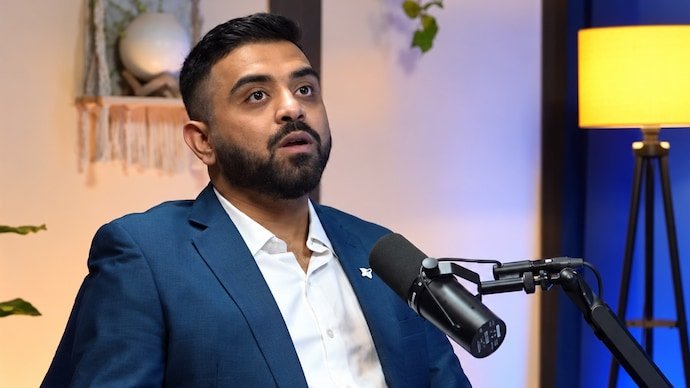
A year before he found himself fighting for control of a passenger aircraft during a life-threatening cockpit confrontation, flydubai pilot Captain Smit Machchhar had spoken about a question that now carries striking significance: WHO saves you when something goes wrong in the air?
Machchhar’s comments, made during an October 2025 appearance on the Bonafide Banter podcast, have gone viral after he was injured during a confrontation with his co-pilot aboard flydubai Flight FZ1073 travelling from Dubai to Tel Aviv.
The Indian captain was reportedly stabbed during the incident and called for help as the situation unfolded inside the cockpit. The aircraft was subsequently diverted and made an emergency landing at Tabuk airport in Saudi Arabia.
The dramatic events have brought renewed attention to Machchhar’s earlier discussion about the importance of trained crew members during emergencies and the role they can play when passengers suddenly find themselves in danger.
What Captain Smit Machchhar said about emergencies
During his podcast appearance, Machchhar discussed the responsibilities of cabin crew and the importance of having people on board who have been trained to respond when something goes wrong.
“When we are up there and if something happens, you know, who’s gonna save you?”
Machchhar went on to explain that passengers may sometimes underestimate cabin crew because their everyday duties are associated with serving and assisting travellers. But, he said, their training becomes critical when an emergency occurs.
“You’ll be lucky enough to have a doctor on board, but if not, then they are trained.”
He clarified that cabin crew are not trained to perform complex medical procedures, but said their emergency training can allow them to respond and potentially save lives when professional medical assistance is unavailable.
At the time, the comments were part of a broader conversation about Aviation and the responsibilities of people working inside an aircraft. Following the cockpit confrontation, however, the remarks have taken on a very different significance for viewers watching the old interview.
The question became painfully relevant
Machchhar’s discussion was not specifically about a cockpit attack or an incident involving another crew member. He was speaking generally about emergencies in aviation.
Yet his question about who comes to a passenger’s aid when something goes wrong has resonated because he later became the person who needed assistance during an emergency in the cockpit.
According to reports cited in the incident coverage, Machchhar was injured during the confrontation with his co-pilot and shouted for help.
The aircraft was at cruising altitude when the situation escalated. Eyewitness accounts cited by the Associated Press described blood inside the cockpit, while the aircraft reportedly descended rapidly from about 33,000 feet to 17,000 feet in roughly 30 seconds.
The incident turned a routine commercial flight into an emergency involving both the safety of the aircraft and the people inside the cockpit.
Passenger intervenes during cockpit confrontation
One of the most unusual elements of the incident was the involvement of a passenger with no professional aviation experience.
An Israeli passenger who worked as a plumber intervened during the confrontation and helped overpower the co-pilot. He then assisted in taking control of the aircraft while the flight was diverted to Saudi Arabia.
The passenger’s intervention became an important part of the response because the confrontation was taking place in the cockpit, the area responsible for controlling the aircraft’s flight.
The details reported about the incident have highlighted how quickly an aviation emergency can require people outside the normal flight crew to respond.
Machchhar’s earlier podcast comments focused on the training of cabin crew. The events aboard Flight FZ1073 added another dimension to that discussion: in an extraordinary emergency, the actions of passengers and crew can become intertwined.
Machchhar spoke about how passengers view cabin crew
In the podcast, Machchhar also discussed what he described as a common perception of cabin crew.
“It is unfortunate how the entire outlook of people is towards the crew. But when things are going wrong, you need them.”
His point was that the role of cabin crew extends beyond the visible duties passengers encounter during an ordinary flight.
Cabin crew are trained to respond to a range of emergencies, including situations involving passengers’ Health, evacuation procedures and other threats to safety. Their preparation may not be obvious during a normal journey because the most serious skills they learn are intended for situations that passengers hope never occur.
That is why the old interview has attracted renewed attention following the flydubai incident. Machchhar had already been explaining the importance of trained people on an aircraft before he experienced an emergency in which coordinated assistance became critical.
What happened aboard Flight FZ1073
Machchhar was the captain of flydubai Flight FZ1073, which was travelling from Dubai to Tel Aviv when the confrontation occurred.
Reports said the captain was attacked inside the cockpit by his co-pilot, an Omani national. Israeli officials cited by Ynet said the co-pilot was suspected of attempting to crash the aircraft.
The allegations surrounding the co-pilot’s actions remain part of the investigation into the incident. The confrontation nevertheless created an immediate threat to the aircraft and its occupants.
Machchhar was injured but continued to play a role in bringing the aircraft to safety. With assistance from the Israeli passenger, the flight was diverted to Tabuk in Saudi Arabia, where it made an emergency landing.
The co-pilot was arrested by Saudi authorities after the aircraft landed.
Captain Machchhar underwent surgery
Following the emergency landing, Machchhar was taken to a hospital in Tabuk for treatment. He underwent surgery for his injuries and was reported to be in stable condition.
The incident could have had far more serious consequences given the reported struggle in the cockpit, the rapid descent and the uncertainty surrounding control of the aircraft.
Instead, the flight reached the ground safely, allowing passengers and crew to leave the aircraft after the emergency landing.
The circumstances have since prompted widespread discussion about the people involved in preventing the situation from becoming even more dangerous.
An old interview becomes a viral moment
Machchhar’s podcast appearance was recorded long before the incident and was not made in anticipation of any particular threat. Its renewed popularity comes from the contrast between what he said then and what happened to him later.
His question, “who’s gonna save you?”, was originally used to explain why passengers should understand the importance of trained crew. After the cockpit confrontation, viewers have interpreted the words through the lens of an emergency in which the captain himself required assistance.
The resurfaced footage has therefore become more than an old aviation interview. For many viewers, it offers a glimpse into the captain’s own understanding of emergency preparedness before he faced an extraordinary situation himself.
The incident also illustrates why aviation safety relies on layers of preparation rather than on a single individual. Pilots operate the aircraft, cabin crew are trained to respond to emergencies inside the passenger cabin, and passengers can sometimes become unexpected participants when an unusual crisis develops.
Why the cockpit matters in an aviation emergency
The cockpit is the operational centre of a commercial aircraft. Pilots are responsible for navigation, aircraft systems, communication with air traffic control and decisions about diversions and emergency landings.
A confrontation inside the cockpit therefore presents a fundamentally different challenge from an ordinary passenger disturbance.
When one member of the flight crew is injured or incapacitated, the ability of the remaining crew to maintain control becomes critical. If the situation also involves a struggle between crew members, the emergency can rapidly affect both the physical safety of those involved and the operation of the aircraft.
The reported descent of Flight FZ1073 demonstrated how quickly conditions can change during such an event. The aircraft’s movement, the reported injuries and the struggle for control created a situation requiring an immediate response.
Recognition for the captain’s actions
Machchhar’s actions during the emergency have drawn praise from political leaders and others following the incident.
Indian Prime Minister Narendra Modi, Israeli Prime Minister Benjamin Netanyahu and US President Donald Trump were among those reported to have praised the captain and described him as a hero.
The recognition followed reports that Machchhar continued helping to bring the aircraft to a safe landing despite suffering injuries during the confrontation.
For the passengers aboard the flight, however, the significance of the incident was more immediate: the aircraft landed safely after an unexpected crisis at cruising altitude.
The unexpected role of an ordinary passenger
The involvement of the Israeli plumber has also become a major part of the story because he had no professional flying background.
His intervention demonstrates the unpredictable nature of emergencies. A passenger who boards a commercial flight expecting an ordinary journey can suddenly find themselves confronted with circumstances that demand action.
In this case, the passenger helped restrain the co-pilot and assisted in the effort to secure the aircraft before the emergency landing.
His actions do not diminish the role of trained aviation professionals. Instead, they show how an extraordinary situation can involve people performing roles far beyond what they expected when they boarded the plane.
Machchhar’s words now carry a different meaning
The resurfaced podcast has drawn attention because Machchhar’s message was ultimately about preparedness and the importance of people who know how to respond when normal conditions disappear.
He spoke about passengers appreciating cabin crew only when an emergency occurs. A year later, he experienced a crisis in which his own ability to respond, together with assistance from others, became central to the outcome.
The circumstances are dramatically different from the routine emergencies Machchhar was discussing in the podcast. Yet the underlying idea remains relevant: when an aircraft is in trouble, the people aboard it can become the difference between confusion and an organised response.
The story of Flight FZ1073 has consequently given new resonance to a question Machchhar asked long before the incident: when something goes wrong thousands of feet above the ground, who is prepared to save you?
For breaking news and live news updates, like us on Facebook or follow us on Twitter and Instagram. Read more on Latest India on thefoxdaily.com.




COMMENTS 0