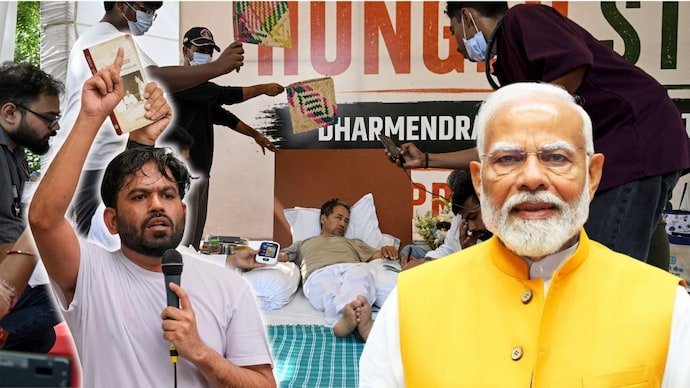
India‘s political debate over the recent Student Protests has entered a new phase after Prime Minister Narendra Modi released another Instagram video addressing the controversy surrounding abusive slogans directed at him during demonstrations against alleged examination paper leaks and irregularities in the education system.
In the video, PM Modi said that although offensive language had been used against him and even his late mother, he believed punishment alone would not solve the problem. Instead, he appealed for understanding, saying that young people who had made mistakes should be guided rather than subjected to prolonged legal action.
His remarks immediately sparked political reactions, with Cockroach Janta Party (CJP) founder Abhijeet Dipke asking whether the government’s conciliatory message would translate into the withdrawal of criminal cases registered against student protesters.
What Did PM Modi Say?
In his latest social media address, the Prime Minister acknowledged that several protesters had used objectionable and abusive language during demonstrations.
He said such language had no place in civil public discourse but emphasized that responding with revenge or prolonged legal proceedings would not improve the situation.
“Abuses never solve anything. Punishing them, dragging them through court proceedings, or harassing them will not change the situation. I wish to forgive them. Let us guide those who have gone astray.”
The message formed part of a series of Instagram videos through which the Prime Minister has been directly communicating with younger audiences on issues ranging from education reforms to Public Policy.
Why Did Abhijeet Dipke Respond?
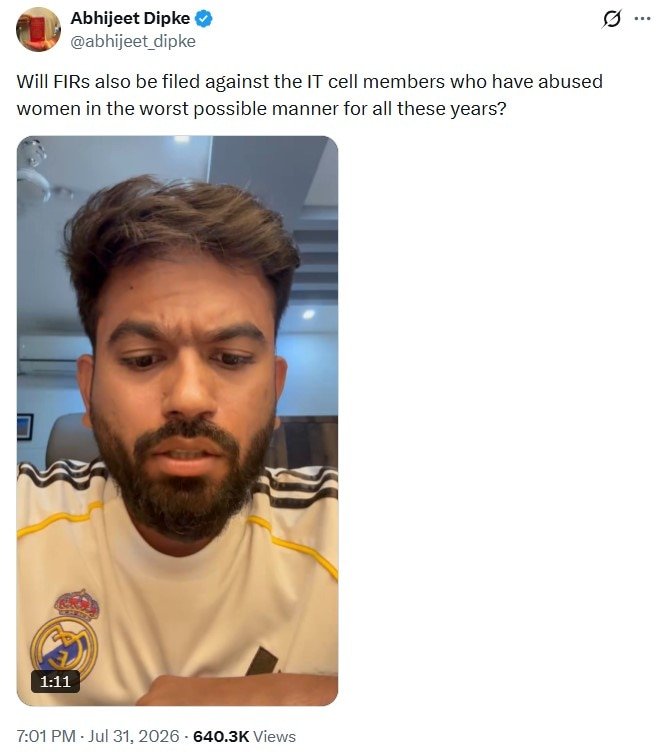
Shortly after the video was posted, CJP founder Abhijeet Dipke commented on the Prime Minister’s Instagram post, asking whether the government’s position on criminal cases against protesting students would also change.
His response questioned whether forgiveness expressed publicly would be accompanied by administrative or legal action regarding FIRs registered during the protests.
The comment quickly gained attention on social media as it shifted the discussion from political messaging to the legal consequences faced by some protesters.
Background: Student Protests Over Examination Issues
The controversy stems from nationwide student protests demanding accountability over alleged examination paper leaks and irregularities affecting competitive recruitment and educational examinations.
The demonstrations involved students, youth organizations, and opposition groups across multiple states.
Among the major demands raised during the protests were:
- Transparent investigations into examination irregularities.
- Stronger safeguards against paper leaks.
- Fair recruitment processes.
- Institutional reforms to improve examination security.
- Greater accountability from education authorities.
The protests eventually resulted in significant political pressure and prompted policy responses from the government.
The Government’s Legislative Response
In response to concerns over examination integrity, the government introduced amendments aimed at strengthening anti-Paper Leak laws.
The revised legal framework seeks to:
- Increase penalties for organized paper leak rackets.
- Improve Investigation mechanisms.
- Strengthen examination security.
- Deter future examination fraud.
- Protect the interests of genuine candidates.
The legislation has been presented as part of broader efforts to restore confidence in India’s competitive examination system.
Why Are FIRs Against Students Becoming a Major Issue?
Although the demonstrations largely focused on education reforms, attention has increasingly shifted toward legal cases filed against some participants.
Student groups and opposition leaders argue that criminal proceedings against peaceful protesters could discourage democratic participation and free expression.
Government authorities, meanwhile, maintain that individual cases are handled according to applicable law and the specific facts surrounding each incident.
The debate has therefore expanded beyond education policy into questions surrounding protest rights, accountability, and law enforcement.
The Noida Teenager Case Explained
One of the most discussed developments involved a 15-year-old student from Noida who appeared in viral videos using abusive language against the Prime Minister during the protests.
Police registered a Zero FIR before transferring the matter to the appropriate jurisdiction for further investigation.
Subsequently, the teenager released a public apology, acknowledging the remarks and stating that she had been influenced by the atmosphere during the protest.
She described the incident as a mistake and expressed regret over her actions.
What Is a Zero FIR?
A Zero FIR is a legal mechanism that allows police to register a complaint regardless of where the alleged offence occurred.
After registration, the case can be transferred to the police station having territorial jurisdiction for investigation.
| Feature | Zero FIR |
|---|---|
| Can be registered anywhere | Yes |
| Jurisdiction required initially | No |
| Later transferred | Yes, to the appropriate police station |
| Purpose | Ensure immediate registration of complaints |
Supreme Court’s Direction on Student Protest Cases
The legal debate has also been shaped by directions issued by the Supreme Court regarding individuals detained during the protests.
According to reports, the Court directed authorities to release minors and individuals without criminal antecedents who had been arrested or detained during the demonstrations, subject to applicable legal procedures.
The decision has become a significant reference point in the ongoing political discussion surrounding cases filed against protesters.
Political Reactions Continue
The issue has generated responses from multiple political parties and student organizations.
CJP leaders argue that while abusive language should not be encouraged, criminal prosecution of young protesters may create a chilling effect on democratic expression.
Government supporters, on the other hand, have emphasized that maintaining public order and addressing unlawful conduct remain important responsibilities of law enforcement agencies.
The differing viewpoints reflect broader debates over balancing freedom of expression with legal accountability.
Why PM Modi’s Instagram Strategy Is Being Closely Watched
The Prime Minister has increasingly used short-form social media videos to communicate directly with citizens, particularly younger audiences.
Instead of relying solely on speeches or press conferences, these videos allow him to address current controversies, explain government decisions, and respond to public criticism in a more informal format.
Political analysts view this digital outreach as part of a broader shift in political communication, where leaders increasingly engage voters through social media platforms.
Expert Insight: The Difference Between Political Messaging and Legal Process
Constitutional experts often point out that public political statements and ongoing legal proceedings operate in separate domains.
While political leaders may express personal views on reconciliation or forgiveness, criminal cases generally proceed according to established legal procedures, evidence, and decisions taken by investigating agencies or the courts.
Whether any particular case is withdrawn depends on applicable laws, prosecutorial decisions, judicial oversight, and the facts of each individual matter.
What Happens Next?
The coming weeks are likely to determine whether the debate remains focused on political messaging or shifts toward concrete legal outcomes.
Authorities are expected to continue handling individual cases according to legal procedures, while political parties and student organizations may continue pressing for broader relief for protesters who do not face serious criminal allegations.
The implementation of the amended anti-paper leak law will also be closely watched as students seek stronger safeguards for future examinations.
Conclusion
Prime Minister Narendra Modi’s message of forgiveness has added a new dimension to the debate surrounding the recent student protests. While his appeal emphasized reconciliation over retribution, Abhijeet Dipke’s response has shifted public attention toward the legal status of FIRs filed against protesters.
The controversy now extends beyond the original issue of examination reforms to broader questions about freedom of expression, accountability, and the relationship between political outreach and the legal process. As investigations continue and policy reforms take effect, the focus is likely to remain on how governments balance maintaining public order with protecting democratic participation and the rights of young citizens.
For breaking news and live news updates, like us on Facebook or follow us on Twitter and Instagram. Read more on Latest India on thefoxdaily.com.






COMMENTS 0