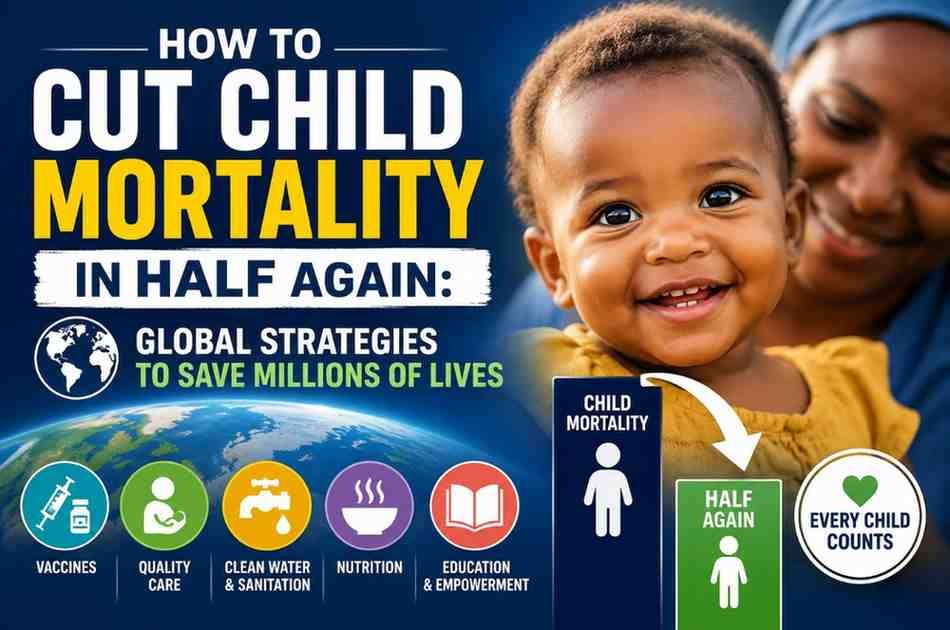
Introduction: Over the past few decades, the world achieved something remarkable child mortality was cut nearly in half. Millions of young lives were saved through vaccines, better nutrition, and improved healthcare access. But progress has slowed, and in some regions, it has even stalled. The urgent question now is: how do we cut child mortality in half… again?
This isn’t just a policy debate it’s a global priority. By understanding what worked before, identifying current gaps, and embracing new innovations, experts believe it’s possible to repeat history and save millions more children.
What Is Child Mortality and Why It Matters
Child mortality refers to the death of children under the age of five. It’s widely considered one of the most important indicators of a country’s overall health, development, and equity.
- High mortality rates often reflect poor healthcare systems
- Low rates indicate better nutrition, sanitation, and medical access
Key insight: Reducing child mortality isn’t just about saving lives it’s about building stronger societies.
How the World Did It Before
The dramatic decline in child mortality over the past decades didn’t happen by chance. It was the result of coordinated global efforts.
1. Vaccination Programs
Mass immunization campaigns protected children from deadly diseases like measles, polio, and pneumonia.
2. Improved Maternal Care
Better care during pregnancy and childbirth reduced complications and early-life risks.
3. Nutrition Interventions
Breastfeeding promotion, vitamin supplementation, and food security programs strengthened immunity.
4. Clean Water and Sanitation
Reducing exposure to infections significantly lowered deaths from diarrhea and related illnesses.
Why Progress Has Slowed
Despite earlier success, several challenges are now slowing momentum:
- Healthcare inequality between regions
- Conflict and displacement disrupting services
- Climate change affecting food and water security
- Emerging diseases and antibiotic resistance
Reality check: The “easy wins” have already been achieved. What remains requires more targeted and innovative solutions.
The Leading Causes of Child Death Today
| Cause | Why It’s Dangerous |
|---|---|
| Pneumonia | Rapidly affects lungs and breathing |
| Diarrhea | Leads to dehydration and malnutrition |
| Malaria | Spreads quickly in vulnerable regions |
| Premature birth complications | Requires advanced neonatal care |
| Malnutrition | Weakens immunity against all diseases |
These causes are largely preventable or treatable making the persistence of high mortality rates even more concerning.
How to Cut Child Mortality in Half Again: The 5 Pillars
1. Next-Generation Vaccines
New vaccines targeting multiple pathogens and improving coverage can dramatically reduce deaths from infectious diseases.
Insight: Prevention remains the most cost-effective strategy in global health.
2. Strengthening Primary Healthcare
Local clinics, trained health workers, and affordable medicines are essential for early diagnosis and treatment.
3. Tackling Malnutrition at Scale
Nutrition is the foundation of child survival. Addressing it requires both food access and education.
4. Leveraging Technology
Digital health tools, telemedicine, and AI driven diagnostics can bridge gaps in underserved areas.
5. Community-Level Interventions
Empowering communities with knowledge and resources ensures sustainable impact.
Deep Analysis: Why Integrated Solutions Work Best
No single intervention can solve child mortality. The biggest gains come from combining strategies.
For example:
- A vaccinated child is safer but only if they are also well nourished
- A clinic is useful—but only if families can access it
Expert insight: The future of child survival lies in integrated, system-wide approaches rather than isolated efforts.
Comparison: Then vs Now
| Factor | Past Strategy | Future Strategy |
|---|---|---|
| Focus | Basic interventions | Targeted, high-impact solutions |
| Technology | Limited | Advanced (AI, digital health) |
| Reach | Broad campaigns | Precision delivery |
| Challenges | Infectious diseases | Complex, interconnected issues |
This shift shows why new thinking is essential to achieve the next breakthrough.
Real World Impact: What Success Would Look Like
If child mortality is cut in half again:
- Millions of families avoid preventable loss
- Healthcare systems become less burdened
- Economic productivity improves long-term
- Global inequality begins to narrow
Big picture: Saving children’s lives creates ripple effects across education, workforce, and national development.
Unique Insight: The “Last Mile” Problem
The hardest challenge today is reaching the most vulnerable populations often in remote or conflict affected areas.
Insight: The next breakthrough won’t come from new technology alone it will come from delivering solutions to the last mile.
Prediction: A Second Global Health Revolution
With the right investments and collaboration, the world could witness another major decline in child mortality.
Prediction: Over the next 10–15 years, integrated healthcare systems combined with innovation could reduce child deaths faster than ever before.
However, success will depend on political will, funding, and global cooperation.
Conclusion: History Can Repeat Itself If We Act Now
The world has already proven that child mortality can be dramatically reduced. The challenge now is to do it again—under more complex conditions.
Final takeaway: Cutting child mortality in half again is not just possible it’s achievable with the right mix of innovation, equity, and commitment.
The question is no longer “can we do it?” but “will we choose to?”
For breaking news and live news updates, like us on Facebook or follow us on Twitter and Instagram. Read more on Latest Health on thefoxdaily.com.






COMMENTS 0