The resurgence of Ebola in the Democratic Republic of the Congo (DRC) is once again forcing the world to confront a difficult truth: global health emergencies are rarely just local problems. When outbreaks are ignored in their early stages, they often become international crises with devastating human and economic consequences.
Health experts, researchers and former outbreak responders are warning that the international community risks repeating the same mistakes made during previous Ebola epidemics in West Africa and Central Africa. Their concern is not only about the virus itself, but about the familiar cycle of delayed action, slow Logistics, underprepared health systems and political hesitation.
The current outbreak involving the Bundibugyo strain of Ebola has reignited debates around emergency preparedness, healthcare worker safety, rapid-response systems and the role of international cooperation. While the world learned painful lessons during Covid-19, many experts fear those lessons are already fading.
The stakes are enormous. Ebola outbreaks can spread rapidly in fragile regions where healthcare infrastructure is weak, Conflict limits access, and public trust in authorities is low. Even a relatively small outbreak can spiral into a humanitarian disaster if containment measures fail during the early stages.
What makes this moment particularly significant is that the world now possesses far more knowledge and technological capability than it did a decade ago. The question is no longer whether the global community understands how to contain Ebola. The real question is whether governments and institutions are willing to act fast enough.
Why the Congo Ebola Outbreak Matters Beyond Africa
The Democratic Republic of the Congo has experienced multiple Ebola outbreaks over the past two decades, making it one of the countries most familiar with the virus. Yet familiarity does not eliminate danger.
The current outbreak is especially concerning because it is unfolding in a region already struggling with instability, weak healthcare access and logistical challenges. In such conditions, even routine medical operations become difficult.
Ebola is one of the deadliest viral diseases known to humans. Depending on the strain and healthcare response, fatality rates can range from 25% to nearly 90%. Symptoms typically include fever, vomiting, diarrhoea and internal bleeding, with transmission occurring through direct contact with bodily fluids.
Unlike airborne viruses such as Covid-19, Ebola spreads through closer contact. That makes containment theoretically easier but only if governments move quickly with testing, isolation, contact tracing and community engagement.
The danger grows when response systems are slow.
Experts repeatedly point out that outbreaks are won or lost during the first few weeks. Every day of delay increases the number of potential contacts, infections and deaths.
The Biggest Lesson From Previous Ebola Epidemics
One of the strongest themes emerging from global health experts is frustration that the world keeps repeating the same mistakes.
During the devastating West African Ebola outbreak between 2014 and 2016, more than 11,000 people died across Guinea, Liberia and Sierra Leone. That epidemic exposed major failures in international coordination and emergency response.
At the time, critics accused governments and international agencies of reacting too slowly despite clear warning signs.
What began as a regional health emergency eventually became a Global Security concern.
Hospitals collapsed under pressure. Healthcare workers died in large numbers. Fear spread faster than facts. Economies were damaged. International travel and trade were disrupted.
The current outbreak is reviving fears of another delayed response cycle.
Several experts involved in earlier Ebola responses argue that the world still lacks properly funded rapid-deployment health teams capable of reaching outbreak zones immediately.
That gap remains one of the biggest weaknesses in global public health infrastructure.
Why Speed Matters More Than Cost
A recurring argument from outbreak specialists is surprisingly simple: fast responses are far cheaper than delayed ones.
Deploying trained teams, medical supplies and mobile treatment infrastructure in the early days of an outbreak may seem expensive. But allowing a virus to spread uncontrollably creates exponentially larger costs later.
The Covid-19 pandemic demonstrated this at an unprecedented scale.
Global economies lost trillions of dollars because governments failed to contain the virus early. In comparison, preventive investments in disease surveillance and emergency response systems would have cost only a fraction of that amount.
The same principle applies to Ebola.
Experts are now advocating for permanent rapid-response units made up of Doctors, epidemiologists, logisticians and community health specialists who can deploy within days instead of weeks.
The concept is similar to emergency rescue systems or disaster response units. The goal is speed, flexibility and immediate containment.
The Critical Role of Local Communities
One of the most important lessons from past Ebola outbreaks is that medical technology alone cannot stop an epidemic.
Community trust matters just as much.
In several previous outbreaks, misinformation and fear created resistance against health workers. Some communities viewed response teams with suspicion, while others feared quarantine measures or distrusted government messaging.
Without local cooperation, contact tracing becomes nearly impossible.
This is why health experts increasingly emphasise the role of community health workers. These local workers often understand regional languages, customs and social dynamics better than international teams.
Their involvement can dramatically improve public trust.
In remote regions of Congo, community networks often become the backbone of outbreak response efforts. They help identify cases, guide medical teams through difficult terrain and educate families about transmission risks.
Experts argue that empowering local healthcare systems should be treated as a long-term investment rather than an emergency afterthought.
The Healthcare Worker Crisis Nobody Talks About Enough
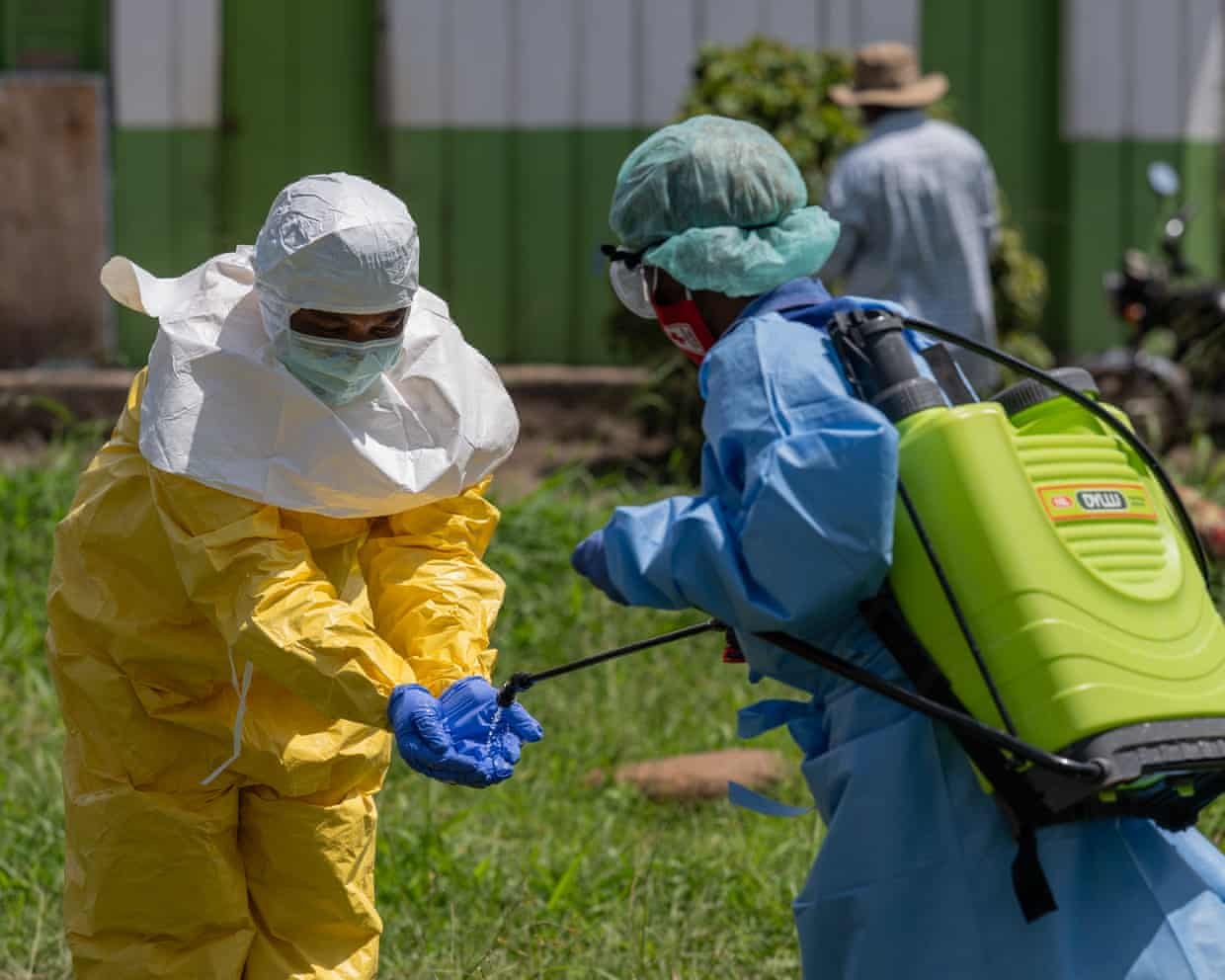
One of the most overlooked aspects of epidemic management is healthcare worker safety.
Doctors, nurses and frontline staff are the first line of defence during outbreaks. But if they lack proper protective equipment, the healthcare system itself can collapse.
During previous Ebola outbreaks, many medical professionals became infected while treating patients. Some healthcare workers refused to report for duty because the risks were too high.
This creates a dangerous chain reaction.
When medical staff become infected or overwhelmed, hospitals reduce services, patients avoid seeking treatment and mortality rates rise for diseases unrelated to the outbreak itself.
The Covid-19 pandemic exposed similar vulnerabilities worldwide.
Shortages of masks, gloves and protective equipment became global headlines. Even advanced healthcare systems struggled to maintain supply chains.
Experts now warn that governments cannot expect healthcare workers to risk their lives indefinitely without adequate protection.
In many ways, epidemic preparedness is ultimately about maintaining trust between healthcare workers and the state.
Why the Bundibugyo Ebola Strain Is Drawing Attention
The current outbreak involves the Bundibugyo strain of Ebola, which has raised additional concerns among researchers.
Although this strain is generally considered less deadly than the Zaire strain responsible for some of the worst outbreaks in history, it still carries significant risks.
One challenge is that existing vaccines and treatments may not provide the same level of protection across all Ebola variants.
This increases pressure on surveillance, testing and containment efforts.
Scientists are closely monitoring the outbreak to understand transmission patterns and evaluate whether current medical countermeasures remain effective.
The situation also highlights the broader challenge of viral evolution. As pathogens continue to mutate and emerge, healthcare systems must constantly adapt.
How Conflict and Instability Complicate Ebola Response
The Democratic Republic of the Congo faces a unique combination of health and security challenges.
Many outbreak-prone regions are affected by armed conflict, political instability and displacement. This creates severe logistical obstacles for health teams attempting to reach vulnerable populations.
In some areas, violence has directly disrupted treatment centres and delayed emergency operations.
Movement restrictions, damaged infrastructure and security threats can slow down sample transport, patient isolation and vaccine deployment.
Outbreak response becomes far more difficult when health workers themselves require military protection.
This is one reason why experts increasingly describe epidemic preparedness as a National Security issue rather than simply a healthcare issue.
A Comparison With Covid-19: Have We Really Learned Anything?
The Covid-19 pandemic fundamentally changed how the world talks about infectious disease preparedness. Governments promised stronger surveillance systems, faster coordination and greater investment in healthcare resilience.
But critics argue that many of those promises remain incomplete.
Some experts now fear a dangerous return to complacency.
Public attention fades quickly once major crises disappear from headlines. Funding declines. Emergency planning slows down. Political priorities shift.
The Ebola outbreak in Congo is becoming an important test of whether global systems truly improved after Covid-19.
| Issue | 2014 Ebola Outbreak | Covid-19 Pandemic | Current Congo Ebola Response |
|---|---|---|---|
| Early Response Speed | Slow | Delayed in many countries | Under global scrutiny |
| Healthcare Worker Protection | Major shortages | Global PPE crisis | Still a major concern |
| Community Trust | Weak in several regions | Misinformation widespread | Critical to containment |
| Global Coordination | Fragmented | Mixed performance | Being tested again |
| Economic Impact | Regional disruption | Global recession | Potential regional instability |
The Naming Debate Around Viruses
The outbreak has also revived a separate but increasingly important discussion: how diseases are named.
Some critics argue that naming viruses after locations can unintentionally stigmatise countries or communities.
During the Covid-19 pandemic, global institutions pushed for more neutral naming systems to avoid discrimination and political tensions.
The Bundibugyo strain takes its name from a district in Uganda, continuing a historical naming convention common in infectious disease research.
While scientists use these names for classification purposes, critics say international organisations should continue moving toward less geographically linked terminology.
The debate reflects broader concerns about how public language shapes perceptions during health emergencies.
What Happens If The World Responds Too Slowly Again?
The consequences extend far beyond Congo.
A poorly managed Ebola outbreak could destabilise regional healthcare systems, strain international aid networks and create broader economic disruptions.
Air travel, trade routes and neighbouring countries could all be affected if transmission accelerates.
More importantly, another failed response would damage public trust in international institutions already facing criticism after Covid-19.
Global health experts argue that the world is entering an era where outbreaks may become more frequent due to climate change, urbanisation, population growth and increased human-animal interaction.
That means preparedness can no longer be treated as optional.
The Bigger Insight Most Coverage Misses
Most discussions about Ebola focus on emergency medicine. But the deeper issue is Governance.
Outbreaks expose the strength or weakness of institutions in real time.
Countries with resilient healthcare systems, public trust and rapid coordination mechanisms tend to contain epidemics more effectively. Those without them struggle even against smaller outbreaks.
The Congo Ebola outbreak is not just a health story. It is a stress test for global preparedness in the post-Covid era.
And unlike previous decades, the world no longer has the excuse of ignorance.
Future Outlook: Can The World Break The Cycle?
The coming weeks will determine whether the Ebola outbreak remains locally contained or develops into a wider international emergency.
There are reasons for cautious optimism.
Medical science has advanced significantly since earlier Ebola crises. Surveillance systems are better. Communication tools are faster. Researchers understand the virus more deeply than before.
But technology alone cannot guarantee success.
Political will, rapid coordination and public trust remain decisive factors.
If governments act quickly, support local health systems and prioritise frontline protection, the outbreak may be controlled before reaching catastrophic levels.
If not, the world risks reliving a painfully familiar pattern one where warnings are ignored until the crisis becomes impossible to contain.
Conclusion
The Ebola outbreak in the Democratic Republic of the Congo is more than a regional health emergency. It is a global warning.
The world has already experienced the devastating cost of delayed outbreak responses, both during previous Ebola epidemics and during Covid-19. Experts now argue that the solutions are already known: rapid deployment teams, strong local healthcare networks, proper protective equipment and immediate international coordination.
The challenge is no longer scientific understanding. It is whether governments and institutions are prepared to act before another preventable crisis spirals out of control.
History has already shown what happens when the world waits too long. The real test now is whether it finally chooses to respond differently.
For breaking news and live news updates, like us on Facebook or follow us on Twitter and Instagram. Read more on Latest World on thefoxdaily.com.





COMMENTS 0