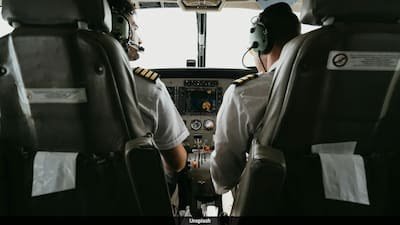
Pilots and flight attendants may face a higher risk of dying from certain radiation-linked cancers than workers in many other occupations, according to a new study published in JAMA Internal Medicine. The research adds fresh evidence to a long-running scientific question: whether repeated exposure to cosmic ionizing radiation at commercial flight altitudes can contribute to Cancer Risk among people who spend their working lives in the air.
The findings are significant because airline crews can accumulate radiation exposure over hundreds or thousands of flights. Unlike passengers, who may fly occasionally, pilots and cabin crew can spend years repeatedly operating at altitudes where the atmosphere provides less protection from high-energy particles originating in space.
However, the study does not prove that cosmic radiation directly caused the cancers recorded among aircrew. The researchers relied on occupational and death-certificate data and could not determine the individual radiation dose received by each worker. Other occupational factors, including irregular schedules, jet lag and circadian-rhythm disruption, may also influence cancer risk.
That distinction is important. The evidence supports concern about occupational exposure, but it should not be interpreted as proof that flying automatically causes cancer.
What did the new aircrew cancer study find?
The researchers examined more than 12 million death certificates from the United States and compared cancer mortality across more than 500 occupations. The analysis included approximately 14,000 pilots and 7,000 flight attendants whose deaths occurred between 2020 and 2024.
The researchers focused on cancers with established or suspected links to ionizing radiation, including cancers affecting the breast, skin, thyroid, prostate and central nervous system, as well as certain blood cancers.
Among the occupations examined, flight attendants had the highest proportion of deaths attributed to the radiation-related cancers included in the analysis, while pilots ranked second. About 6.9% of deaths among flight attendants and 6.7% among pilots were from these cancers, compared with about 5% among the general working population examined in the study.
The study also reported approximately 50% higher odds of dying from the selected radiation-related cancers among flight attendants and about 36% higher odds among pilots compared with the general working population.
Researchers found particularly notable associations involving breast cancer, central nervous system cancers, prostate cancer and melanoma. Pilots also showed an elevated rate of leukemia deaths.
Importantly, the aircrew groups did not show the same elevation for cancers that were not classified as radiation-related. That pattern was considered supportive of a possible occupational-exposure explanation, although it cannot establish causation.
Why are pilots and flight attendants exposed to cosmic radiation?
Earth has a natural shield against much of the radiation arriving from space: its atmosphere and magnetic field.
Commercial aircraft, however, typically cruise at altitudes of roughly 7,000 to 12,000 metres. At these heights, there is considerably less atmosphere above the aircraft to absorb or scatter incoming high-energy particles.
Cosmic radiation is made up of energetic particles originating from outside Earth, including galactic cosmic rays and particles associated with solar activity. When these particles interact with Earth’s atmosphere, they generate secondary radiation that can reach aircraft altitude.
The exposure is still relatively low compared with many radiation-intensive medical or industrial environments. The concern for aircrew comes from repetition.
A passenger might accumulate a small dose from occasional long-haul flights. A flight attendant or pilot can receive additional exposure repeatedly throughout a career.
According to the new research, aircrew may receive roughly 3 to 6 millisieverts of cosmic radiation per year, although actual exposure varies according to factors such as flight altitude, duration, latitude and solar conditions.
Why altitude, latitude and flight routes matter
Cosmic radiation exposure is not identical on every flight.
Altitude matters because less atmospheric shielding exists at higher elevations. Latitude also affects exposure because Earth’s magnetic field provides different levels of protection at different locations.
Long-haul and polar routes can therefore produce substantially different radiation exposures from shorter flights at lower latitudes.
Solar activity introduces another layer of complexity. Periods of unusual solar activity can alter the radiation environment at aviation altitudes.
This means that simply counting the number of flights an aircrew member operates may not provide a complete picture of occupational exposure.
What makes the cancer findings important?
The latest research is not the first investigation to identify unusual cancer patterns among aircrew. Earlier epidemiological studies have reported elevated rates of certain cancers, particularly melanoma and breast cancer, among pilots and cabin crew.
Reviews of previous research have suggested that cosmic radiation could contribute to these patterns, although researchers have repeatedly noted the difficulty of separating radiation exposure from other characteristics of aviation work.
The new study is valuable because of its scale. By examining millions of death records and hundreds of occupations, researchers were able to compare aircrew with a very broad occupational population.
But scale does not eliminate every limitation.
The study does not prove cosmic radiation caused the cancers
This is the most important caveat for interpreting the findings.
The researchers did not have precise individual radiation measurements for every pilot or flight attendant. A death certificate can identify occupation and cause of death, but it cannot tell researchers exactly how many hours someone spent at cruising altitude, which routes they flew or what radiation dose they accumulated during their career.
There is also the possibility of occupational misclassification in death records.
Another important factor is circadian-rhythm disruption.
Flight crews frequently work at night, cross time zones and maintain irregular schedules. Repeated disruption of the body’s internal clock has itself been investigated as a possible contributor to cancer risk.
Therefore, the strongest conclusion from the research is not that cosmic radiation has been proven to cause the excess mortality. Rather, the findings strengthen the case for treating occupational radiation exposure among aircrew as an issue deserving better measurement and continued investigation.
Radiation is only one part of the occupational-health puzzle
The aviation workplace combines several exposures that can overlap.
- Cosmic ionizing radiation: exposure increases at typical cruising altitudes.
- Ultraviolet radiation: particularly relevant when considering skin-cancer patterns, although cockpit and cabin exposure differs.
- Circadian disruption: night work, jet lag and changing schedules can affect biological rhythms.
- Sleep disruption: irregular schedules can make consistent sleep difficult.
- Work-related stress: long duty periods and operational pressures may contribute to broader health effects.
This makes occupational-health research particularly challenging. A higher cancer rate in aircrew may reflect one exposure, several exposures acting together or characteristics of the workforce that researchers have not fully captured.
How much radiation does aircrew receive?
The radiation dose from flying is commonly expressed in millisieverts, or mSv. The amount received during a flight depends on several factors rather than simply whether a person is travelling by air.
| Factor | Effect on exposure |
|---|---|
| Flight altitude | Higher cruising altitudes generally mean greater cosmic-radiation exposure. |
| Flight duration | Longer time at altitude generally increases cumulative exposure. |
| Latitude | Radiation levels can be higher on routes at higher latitudes because of differences in Earth’s magnetic shielding. |
| Solar activity | Changes in solar conditions can alter radiation levels at aviation altitudes. |
| Career flight hours | Repeated exposure can accumulate over years of employment. |
The distinction between a passenger and a professional crew member is therefore cumulative exposure. A single flight represents a small exposure for most travellers; thousands of hours in the air represent a very different occupational scenario.
Why passengers should not panic
The findings are relevant primarily to people whose jobs require frequent flying over long periods.
They do not mean that taking a holiday flight suddenly creates a major cancer threat.
Regulatory and scientific agencies have consistently distinguished occasional passenger exposure from occupational exposure among aircrew. The amount of cosmic radiation received during commercial flights is influenced by route, duration and altitude, and the cumulative exposure of a career crew member can be considerably greater than that of an occasional traveller.
For the average passenger, the study is therefore not a reason to avoid flying. Its more important message concerns occupational monitoring and long-term health protection.
The regulatory question: should aircrew exposure be monitored?
The new findings have renewed attention on a regulatory gap in the United States.
The Federal Aviation Administration recognises that aircrew are occupationally exposed to ionizing radiation. However, U.S. federal rules do not currently impose the same radiation dose limits and individual monitoring requirements on airline crews that apply to some other radiation-exposed workers.
This creates an obvious policy question:
If an occupational exposure is recognised, should workers be able to know how much exposure they are accumulating?
Supporters of stronger protections argue that measurement is the foundation of risk management. Without estimating exposure, it becomes difficult for workers, airlines and regulators to identify who may be receiving higher cumulative doses.
Other countries have taken different approaches to occupational aircrew radiation, particularly by treating frequent flyers among crew as workers who warrant exposure assessment.
What could better radiation protection look like?
Stronger protection does not necessarily mean putting a physical radiation shield around an aircraft. The practical approach is more likely to involve exposure assessment, scheduling strategies, education and health surveillance.
Potential measures could include:
- estimating cumulative radiation doses based on flight schedules and routes;
- identifying crew members with unusually high annual exposure;
- using radiation forecasting tools during periods of unusual solar activity;
- incorporating radiation exposure into occupational-health records;
- providing aircrew with clear information about potential risks;
- strengthening cancer-awareness and preventive-health programmes; and
- conducting additional research on long-term cancer outcomes.
Not every measure would necessarily be appropriate for every airline or route. The objective should be proportional protection based on evidence rather than creating unnecessary alarm.
Could flight scheduling reduce exposure?
This is one of the more interesting possibilities for future aviation policy.
If airlines can estimate radiation exposure associated with different routes, altitudes and flight patterns, scheduling systems could potentially incorporate cumulative exposure alongside traditional considerations such as duty hours and fatigue.
A crew member repeatedly assigned to long-haul, high-latitude routes may accumulate more radiation than another worker flying shorter regional routes.
That creates a potential occupational-health principle: not all flight hours are equal from a radiation perspective.
Modern aviation already uses sophisticated systems to manage fuel, weather, fatigue and operational risk. Adding radiation exposure modelling to that ecosystem could become increasingly feasible as measurement and forecasting technologies improve.
Why cancer screening could become part of the conversation
The study also raises questions about whether aircrew should receive occupationally informed preventive healthcare.
Experts commenting on the research have suggested that people working on high-altitude flights may benefit from particular attention to skin health, while women in the profession may need to discuss breast-cancer screening with their healthcare providers according to personal risk and applicable screening guidance.
This does not mean every pilot or flight attendant needs an aggressive battery of cancer tests. Screening decisions should remain evidence-based and personalised.
The more practical change may be awareness. Doctors treating long-serving aircrew should know that occupational exposure can be part of the patient’s medical history.
The bigger issue is that aircrew are exposed for years, not minutes
The most important distinction in this story is cumulative occupational exposure.
Cosmic radiation is a natural part of the aviation environment. Airlines cannot eliminate it completely, just as they cannot eliminate Earth’s background radiation.
But occupational exposure is different because it is repeated, predictable and connected to a person’s job.
That makes it reasonable to ask whether the aviation industry should do more to measure and manage it, particularly as global air travel continues to grow.
What happens next?
The new research is likely to intensify calls for better occupational radiation data. A particularly valuable next step would be studies that combine individual flight histories with estimated radiation doses and long-term medical outcomes.
Researchers could then determine whether workers with the highest cumulative exposures experience higher cancer risks than those with lower occupational doses.
That would provide stronger evidence than simply comparing occupational categories.
National and international regulators could also examine whether existing aircrew radiation guidelines adequately reflect modern flight patterns, long-haul operations and advances in radiation modelling.
Conclusion: a warning about occupational exposure, not a reason to fear flying
The new study adds an important piece to the growing body of evidence surrounding aircrew and cosmic radiation. Pilots and flight attendants showed unusually high proportions of deaths from selected radiation-linked cancers compared with the broader working population, while the pattern was not observed in the same way for cancers considered unrelated to radiation.
That is a meaningful signal, but it is not definitive proof of causation. The research could not measure each worker’s actual radiation dose and could not completely separate cosmic radiation from other occupational factors such as disrupted sleep and circadian rhythms.
Nevertheless, the findings strengthen an increasingly difficult question for the aviation industry: if aircrew face repeated occupational exposure to ionizing radiation, should that exposure be systematically measured and managed?
The answer may ultimately lie not in restricting air travel but in making aviation workplaces smarter about cumulative risk.
Better exposure monitoring, route-based radiation modelling, occupational-health education and appropriate preventive healthcare could provide a practical path forward. For passengers, the findings should not be a reason for alarm. For people who spend their careers in the sky, however, they provide another reason to demand that occupational health keep pace with modern aviation.
For breaking news and live news updates, like us on Facebook or follow us on Twitter and Instagram. Read more on Latest Health on thefoxdaily.com.

COMMENTS 0