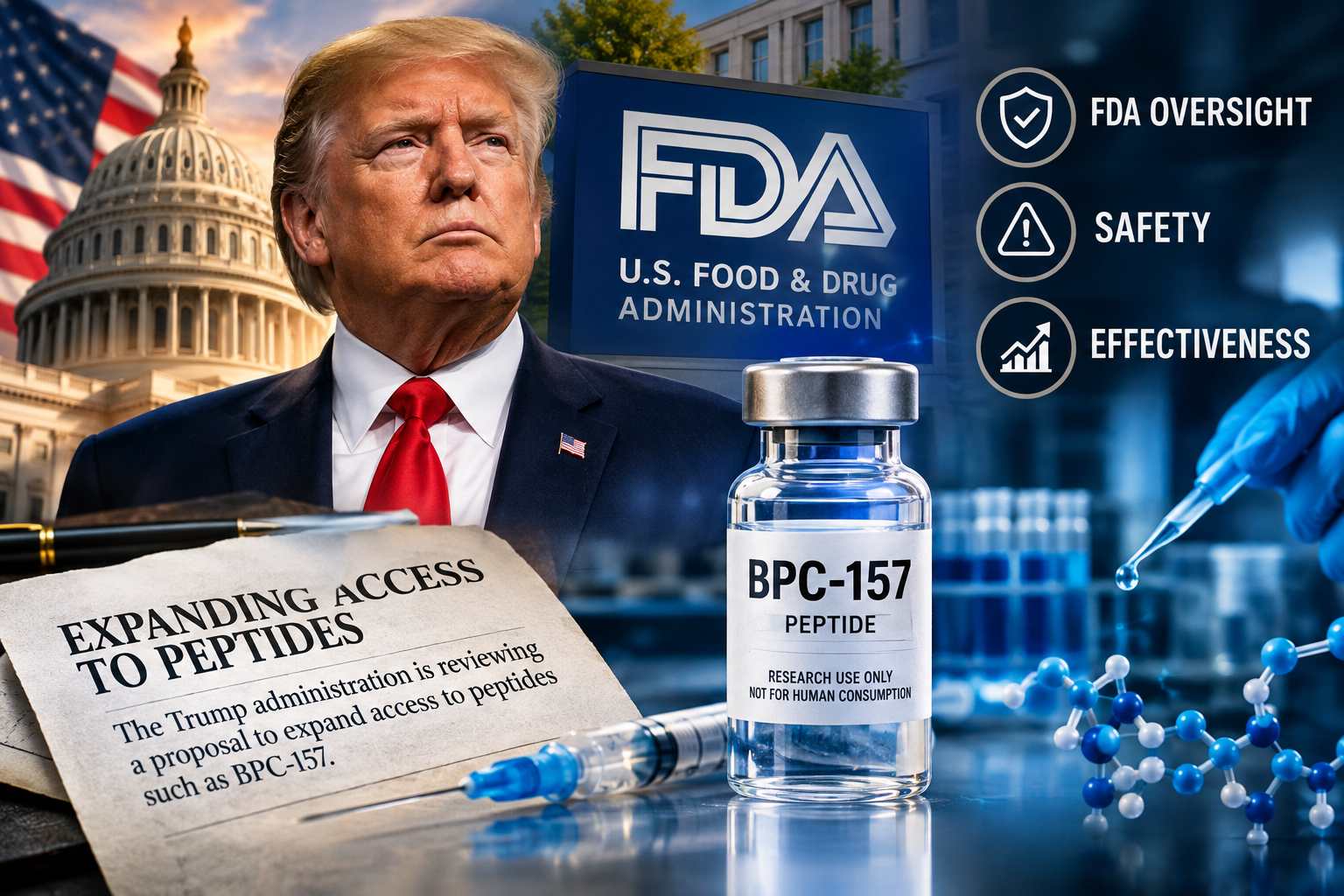
The Trump administration is moving forward with a proposal that could allow specialty pharmacies to produce certain peptide injections promoted by wellness influencers and fitness enthusiasts. The plan, submitted to the White House for review, could make some experimental compounds more accessible despite unresolved questions about their safety, effectiveness and potential risks.
The growing popularity of peptide injections has become a significant talking point in America’s wellness industry, where products promising faster recovery, muscle growth, improved energy and anti-ageing benefits attract considerable attention. Now, the Trump administration is taking steps that could change how some of these substances are accessed in the United States.
The Department of Health and Human Services (HHS), led by Health Secretary Robert F. Kennedy Jr., has submitted a proposed peptide policy to the White House for review. According to a government website posting, the proposal has been sent to the Office of Management and Budget (OMB), which reviews federal rules and regulations that may have significant economic effects.
The proposed policy could allow specialty pharmacies to temporarily compound certain peptides that have faced restrictions from the Food and Drug Administration (FDA). Two people familiar with the plan said it is intended to cover some popular compounds, including BPC-157, which is promoted online for muscle development and injury recovery.
However, the proposal does not mean that these peptides have been established as safe and effective treatments. Many of the compounds under discussion have not undergone the rigorous testing required for approved medicines, and much of the available evidence comes from animal studies.
The development highlights a broader debate over medical access, regulatory oversight and the growing influence of the Make America Healthy Again (MAHA) movement. Supporters describe expanded access as a matter of consumer choice, while concerns remain about whether relaxing restrictions could expose people to inadequately studied substances.
What Is the Trump Administration’s New Peptide Policy?
The proposed policy, described as an interim access policy, has been submitted to the White House for review. Although the government posting confirms the submission, it does not provide detailed information about the compounds that could ultimately be covered or the precise conditions under which pharmacies might produce them.
According to two people familiar with the plan, the proposal is intended to give compounding pharmacies temporary room to produce some of the most popular peptides, including BPC-157. The individuals spoke anonymously because they were discussing confidential government deliberations.
The approach would reportedly rely on a regulatory mechanism known as enforcement discretion. Under this approach, the FDA can choose not to enforce certain regulations in particular circumstances, even when the underlying rules remain in place.
For compounding pharmacies, that could mean greater confidence that producing specified peptides would not automatically trigger enforcement action while the interim policy applies.
However, enforcement discretion is not the same as formal FDA approval. It does not establish that a compound is safe, prove that it works for a particular medical condition or eliminate the risks associated with its production and use.
The distinction is important because the substances being discussed have not all passed through the evidence-based evaluation process required for conventional drug approval.
HHS officials had not immediately responded to requests for comment at the time of the report. The proposal’s final scope, implementation details and timing therefore remained unclear.
What Are Peptides, and Why Are They Popular?
Peptides are short chains of amino acids, the building blocks used to make proteins. In the human body, naturally occurring peptides can perform a range of biological functions, including acting as signalling molecules that influence hormones, metabolism, growth and other physiological processes.
Some peptide-based medicines have undergone extensive research and regulatory review and are used to treat specific medical conditions. Certain approved medicines used in diabetes care and weight management, for example, act through peptide-related biological pathways.
However, the existence of approved peptide medicines does not mean that every substance marketed as a peptide has comparable evidence behind it.
The compounds at the centre of the current debate are largely experimental or insufficiently studied for the uses promoted by wellness influencers. They are marketed to people interested in building muscle, recovering from injuries, improving energy levels or reducing signs of ageing.
These claims have helped peptides gain visibility across online wellness communities, fitness networks and social media platforms. Some consumers are drawn to the possibility of achieving physical or cosmetic benefits without conventional medical interventions.
But popularity is not proof of effectiveness. A substance may generate considerable online attention without having been adequately tested in humans for safety, dosage, long-term effects or its ability to treat a particular condition.
That distinction is central to understanding the proposed policy. The debate is not simply about whether peptides have biological effects. It is about whether individual compounds have enough reliable evidence to justify particular medical uses and whether they can be produced and supplied safely.
Why Is BPC-157 at the Centre of the Debate?
One compound specifically mentioned in connection with the proposed policy is BPC-157, which has attracted attention among fitness enthusiasts and wellness consumers.
The substance is promoted in some online communities for muscle development, tissue repair and injury recovery. These claims have helped it become one of the better-known experimental peptides in the wider wellness market.
However, the uses promoted online are not FDA-approved indications. The available evidence is also insufficient to establish that BPC-157 is a safe and effective treatment for the various conditions for which it is marketed.
Animal research can help scientists investigate how a substance behaves in biological systems and identify questions that warrant further study. But findings in animals do not automatically translate into benefits or acceptable safety profiles in humans.
Human studies are needed to determine whether a treatment works, which doses might be appropriate, what adverse effects may occur and whether its benefits outweigh its risks.
The FDA previously placed BPC-157 and more than a dozen other injectable peptides on a list of substances considered too risky for compounding by pharmacies. The concerns cited by the agency include contamination, allergic reactions and the potential for tumour growth.
These concerns do not mean that every possible adverse outcome has been conclusively demonstrated for every peptide. Rather, they reflect the safety uncertainties associated with substances for which adequate evidence may be lacking.
For consumers, the practical implication is that marketing claims should not be mistaken for established medical benefits. Products advertised for recovery, muscle growth or anti-ageing purposes may carry uncertainties that cannot be resolved by testimonials or influencer endorsements.
Why Did the FDA Previously Restrict Certain Peptides?
The FDA’s role includes evaluating medicines and overseeing relevant aspects of drug manufacturing, quality and safety. Its restrictions on certain peptides reflect concerns about the available evidence and the risks that can arise when substances are prepared or supplied without adequate safeguards.
In this case, the agency placed BPC-157 and numerous other injectable peptides on a list of substances considered too risky for compounding pharmacies to produce under the applicable framework.
Compounding pharmacies prepare customised medications for particular patient needs, including circumstances in which an appropriate commercially available product may not meet those needs. However, compounding is not a general exemption from drug-safety requirements.
The risks associated with poorly characterised substances can extend beyond whether the active ingredient has a beneficial biological effect. Manufacturing quality, purity, contamination, dosage consistency and the way an injectable product is handled can all influence patient safety.
Injections also introduce considerations that differ from simply taking a product by mouth. Contamination or an incorrect formulation can have serious consequences, while allergic reactions and other adverse effects may occur even when a product is marketed as a wellness treatment.
The FDA’s concerns are especially relevant when a compound has not been adequately studied in humans. Without reliable evidence, it can be difficult to establish which doses are safe, how the substance behaves over time or which patients may be particularly vulnerable to harm.
The administration’s proposed policy could change how regulators approach access to some of these products. It would not, by itself, resolve the scientific questions that led to the restrictions.
How Did RFK Jr. Become Involved in the Peptide Debate?
Robert F. Kennedy Jr., the US health secretary, has publicly criticised restrictions affecting peptides and other wellness products. Before joining the administration, he declared that the FDA’s “war” on peptides and similar products would soon end.
After becoming health secretary, Kennedy argued that US compounding pharmacies should be allowed to sell peptides because Americans were increasingly turning to products obtained through so-called grey markets.
These products may be sourced from China and other countries and remain widely available through online platforms, including TikTok, according to the report.
The administration’s position reflects a concern that restricting access through regulated domestic channels may not prevent consumers from obtaining the substances elsewhere. Supporters of expanded access argue that allowing pharmacies to prepare certain peptides could offer an alternative to less-regulated online markets.
However, the existence of a grey market does not establish that a substance is safe or that expanding access will necessarily reduce harm. The outcome would depend on the details of the policy, the standards applied to production and the extent to which consumers receive accurate information about risks.
The proposal also reflects the influence of the MAHA movement, which has made health, wellness and consumer choice central to its public messaging. Some prominent figures associated with the movement sell peptide injections or supplements, creating a commercial dimension to the debate.
The overlap between public advocacy and the sale of wellness products makes it particularly important to distinguish scientific evidence from marketing claims. A product’s popularity among influencers or political supporters does not replace independent research into its safety and effectiveness.
What Happened at the FDA’s July Advisory Panel Meeting?
The proposed policy follows a review process in which an external panel of FDA advisers considered a selection of peptides earlier in the year.
In July, the panel recommended that the agency remove restrictions on six of the seven peptides presented for consideration. The recommendation went against the scientific conclusions reached by FDA staff scientists, who reiterated that none of the compounds had been studied sufficiently to establish their safety and effectiveness.
The panel had been selected by Kennedy’s health department and included doctors, pharmacists and consultants who work in the peptide field.
The disagreement highlights the tension between expanding access to substances sought by consumers and maintaining evidence-based standards for medical products.
Advisory panels provide recommendations and expert perspectives, but their conclusions do not automatically become FDA policy. The agency must consider the relevant evidence and regulatory framework before deciding what action to take.
In this case, the panel’s recommendations supported easing restrictions on most of the compounds it reviewed, while FDA staff scientists emphasised the gaps in the available safety and effectiveness data.
The distinction matters because the absence of adequate evidence is not the same as proof that a substance cannot work. It does, however, mean that consumers and healthcare professionals may lack the information needed to make confident decisions about its use.
For experimental peptides, the central scientific questions remain whether they provide meaningful benefits in humans, which risks they may carry and whether their production can be controlled consistently.
Will the Proposal Make Peptides FDA-Approved Medicines?
No. The proposal described in the report would not automatically give the affected peptides formal FDA approval.
Instead, the administration is considering an approach that would offer certain compounding pharmacies temporary protection from enforcement action when producing specified compounds under the policy.
Formal inclusion on the FDA’s list of substances that can be used in compounding would require federal rulemaking. That process can take years and involves multiple rounds of public comment.
It was not immediately clear whether the administration still intended to pursue that formal process alongside the interim policy.
The difference between these pathways is important. Formal rulemaking provides a structured process for considering evidence, evaluating concerns and obtaining public input. An interim enforcement approach could provide a more immediate change in regulatory practice without resolving all the questions that formal review would address.
Neither a proposed policy nor a decision to exercise enforcement discretion should be interpreted as proof that a peptide is effective for injury recovery, muscle growth, anti-ageing or another claimed use.
Consumers should also distinguish between a product that is legally available under a particular regulatory arrangement and one that has been demonstrated to provide a specific health benefit.
Why Are Wellness Companies Watching the Proposal?
The peptide market has attracted interest from major telehealth providers as well as smaller wellness businesses. Companies such as Hims & Hers and Noom have announced plans to offer peptides to customers if federal policy changes make access easier.
Wall Street analysts estimate that the market could be worth between $2 billion and $3 billion, according to the report.
That potential market value helps explain why the policy debate has attracted attention beyond medical and regulatory circles. Expanded access could create commercial opportunities for providers hoping to serve consumers interested in wellness treatments.
At the same time, the possibility of a lucrative market raises questions about how products are presented to consumers. Companies may have commercial incentives to promote the appeal of treatments, while the strength of the scientific evidence can vary substantially between compounds and claimed uses.
Some Kennedy allies who sell peptides quickly praised the proposal online. Brigham Buhler, a wellness clinic operator who sells peptides through an online service, described the development as significant and framed the issue as one of medical freedom.
Such reactions illustrate how the debate extends beyond pharmacology. It also involves competing views about personal choice, regulatory authority, commercial access and the role of government in deciding which substances pharmacies can prepare.
For patients and consumers, however, the key question remains whether a particular product is appropriate for a specific medical need and whether its benefits and risks are adequately understood.
What Should Consumers Know Before Considering Peptide Injections?
The growing visibility of peptides can make experimental products appear more established than they are. Consumers may encounter confident claims about muscle growth, injury recovery, energy or anti-ageing benefits, but the level of scientific support for these uses is not uniform.
Before considering an injectable peptide, it is important to understand that evidence from animal studies cannot establish that a product will be safe or effective in humans. Testimonials and personal accounts also cannot reliably determine how a treatment will affect another individual.
People should be cautious about products obtained through unverified online sellers, particularly when information about their composition, purity, manufacturing conditions or dosage is uncertain.
Potential risks identified by the FDA include contamination, allergic reactions and tumour growth. The precise risks may differ between compounds, and insufficient evidence can make it difficult to predict the likelihood of particular adverse effects.
Anyone considering a peptide for a medical condition should discuss the decision with a qualified healthcare professional who can explain established treatment options and the limitations of the available evidence.
It is also important not to confuse the existence of approved peptide-based medicines with evidence supporting unapproved compounds promoted in wellness communities. Each substance needs to be assessed on its own merits, including the specific use being proposed.
The Bottom Line
The Trump administration’s move to advance an interim policy on peptide drugs could change how certain experimental injections are accessed through US compounding pharmacies. The proposal has been submitted to the White House for review and is reportedly intended to cover popular compounds such as BPC-157.
The initiative follows pressure from Health Secretary Robert F. Kennedy Jr. and a July advisory panel that recommended lifting restrictions on six of seven peptides it reviewed. FDA staff scientists, however, maintained that the compounds had not been studied sufficiently to establish their safety and effectiveness.
The proposed approach would rely on enforcement discretion rather than automatically granting formal FDA approval. Whether the administration will pursue a longer rulemaking process remains unclear.
As commercial interest in peptides grows, the debate is likely to remain focused on the balance between consumer access and evidence-based safeguards. For consumers, the essential point is that popularity, online availability and regulatory changes do not establish that an experimental peptide is safe or effective for a particular purpose.
Disclaimer: This article is for informational purposes only and is not a substitute for medical advice. Experimental or inadequately studied injectable substances may carry significant risks. Consult a qualified healthcare professional before considering any peptide treatment, and do not start, stop or replace prescribed medication without appropriate medical guidance.
For breaking news and live news updates, like us on Facebook or follow us on Twitter and Instagram. Read more on Latest Health on thefoxdaily.com.

COMMENTS 0