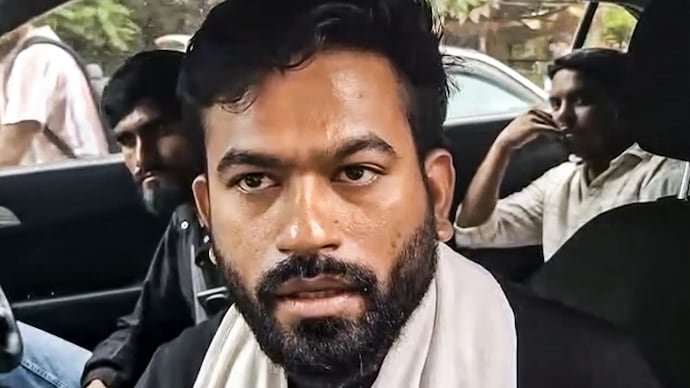
Cockroach Janta Party founder Abhijeet Dipke has alleged that money power plays a decisive role in elections, citing the Akhil Bharatiya Vidyarthi Parishad’s performance in the Delhi University Students’ Union polls as an example. His comments came after the RSS-affiliated student organisation won three of the four central panel positions in the DUSU election.
Dipke used the result to raise broader questions about the fairness of elections and institutions, including universities, competitive examinations and student welfare systems. He also criticized what he described as ideological favouritism on campuses and alleged unequal treatment of students involved in protests.
The ABVP won the president, secretary and joint secretary positions in the DUSU polls, while the congress-backed National Students’ Union of India failed to secure any of the four central panel posts. The vice-president position was won by independent candidate Deepanshu Shokeen, who had previously been denied an NSUI ticket.
Dipke’s remarks followed a period of student activism that included protests associated with the CJP-led Gen Z movement. His comments focused not only on the DUSU outcome but also on what he described as wider concerns over access, accountability and institutional trust.
Dipke alleges money power influenced DUSU elections
Responding to questions about the ABVP’s victory, Dipke alleged that financial resources had a major influence on campaigning at Delhi University.
“Money works in elections and nothing else,” Dipke told reporters, claiming that some campaigners at Delhi University Travel in expensive luxury vehicles. He specifically referred to Rolls-Royce, Audi and BMW cars and argued that such displays demonstrated the importance of financial resources in Student Politics.
The allegation was presented by Dipke as a broader criticism of the way elections are conducted rather than simply an assessment of the DUSU result. He argued that access to substantial financial resources can provide candidates with greater visibility and campaigning capacity.
His comments did not establish that the ABVP’s victory was caused by spending or that the election itself was conducted improperly. The DUSU result reflects the votes cast in the election, while questions about campaign expenditure, compliance with election rules or financial violations require evidence and, where applicable, examination by the relevant authorities.
ABVP wins three central DUSU posts
The ABVP secured three of the four central panel positions in the latest DUSU election. Its candidates won the posts of president, secretary and joint secretary.
The Congress-backed NSUI, one of the ABVP’s principal rivals in university politics, did not win any of the four central panel positions. The remaining vice-president position went to independent candidate Deepanshu Shokeen.
The result provides the ABVP with a strong presence in the student union’s central leadership. DUSU elections have traditionally attracted attention beyond the university because student politics at Delhi University has often served as an important platform for India’s major political organisations and their affiliated student groups.
At the same time, a student election result should not automatically be interpreted as evidence of broader public opinion. The electorate consists of Delhi University students, and voting patterns can reflect campus-specific issues, candidate profiles, student concerns and organisational networks.
Claims of ideological favouritism in universities
Dipke also raised concerns about ideological influence within higher Education institutions. Referring to comments by Congress MP Rahul Gandhi about the alleged promotion of people with ideological affiliations, he said he shared similar concerns.
Dipke specifically referred to Kumud Sharma, vice chancellor of Mahatma Gandhi Antarrashtriya Hindi Vishwavidyalaya in Wardha, and alleged that she had an RSS ideological background. He further claimed that more than 50 students had faced FIRs since she became vice chancellor.
Dipke alleged that students who protest against institutional decisions are more likely to face police cases, while claiming that ABVP activists do not face similar consequences when they protest or lock gates.
He characterized what he described as selective action against Dalit and Adivasi students as part of a broader attempt to reshape educational institutions along ideological lines.
These are Dipke’s allegations and were not independently established in the information provided. Claims concerning specific FIRs, individual students and comparative treatment of different student organisations would require examination of police records, university records and the circumstances of each case.
MPSC protests and concerns over examination transparency
Dipke also linked his criticism of university politics to concerns among students preparing for competitive examinations in Maharashtra.
Referring to protests by Maharashtra Public Service Commission aspirants, he said students had been demanding the resignation of MPSC Chairman Vivek Bhimanwar over allegations of corruption. Dipke argued that the controversy had weakened students’ confidence in the examination system.
He questioned how candidates could maintain confidence in the transparency of examinations while the protesters continued to demand Bhimanwar’s resignation.
Dipke said the CJP planned to work with MPSC aspirants on an online campaign called “Bhimanwar Rajinama Dya”. According to him, the campaign would explain who Bhimanwar is, discuss what the group describes as his achievements, examine his alleged relationship with Maharashtra Chief Minister Devendra Fadnavis and argue why protesters believe he should resign.
Allegations of corruption and demands for a resignation remain political and activist claims unless established through official investigations or other evidence. The dispute illustrates the wider issue Dipke was raising: whether students have confidence that competitive examinations are being administered transparently and impartially.
IIT Bombay student’s death raises questions about student support
Dipke also commented on the death of an IIT Bombay student who was found hanging in his hostel room after reportedly being caught using a mobile phone and ChatGPT during a mid-semester examination.
Officials said the student was found on Friday evening, hours after he was allegedly caught using the devices during the examination. The circumstances surrounding the death prompted discussion about academic pressure, disciplinary procedures and the mental Health support available to students.
Dipke said the death was deeply painful and argued that being caught cheating could not justify suicide. He questioned whether disciplinary action should be accompanied by stronger counselling and support for students facing academic consequences.
He also compared the treatment of students accused of academic misconduct with the public response to corruption allegations involving politicians and businesspeople, arguing that students should not feel that a single mistake has ended their future.
Dipke emphasized Mental health counselling as an important part of the response to student distress. His comments reflect a broader debate in Indian higher education about academic pressure, disciplinary systems and whether institutions provide adequate support when students face serious setbacks.
However, the circumstances of an individual suicide cannot be reduced to a single cause without a complete investigation. Academic disciplinary action, personal circumstances, mental health and other factors can intersect, and assumptions about causation can be misleading.
Concerns over facilities at tribal residential schools
Dipke also used his recent tour of Vidarbha to raise concerns about conditions at tribal residential schools, commonly known as ashram schools.
He alleged that students in some institutions were not receiving basic facilities despite the schools receiving government funding. Among the issues he highlighted were inadequate sleeping arrangements, sanitation problems and a lack of privacy for students.
Dipke referred to the deaths of three students from snakebite in Gadchiroli and claimed that some students were still sleeping on the ground without adequate beds. He also alleged that girls were forced to bathe in open areas and that some boys’ bathrooms lacked proper roofs or doors.
These claims point to a wider question concerning the implementation of welfare programs for students from tribal communities. Residential schools require reliable funding not only for classrooms but also for accommodation, sanitation, healthcare, food, electricity and basic safety.
Dipke said his “Adivasi School Thik Karo” campaign would continue and expand beyond Maharashtra. He said he planned to visit Gujarat as part of the effort.
Election Commission decision draws another criticism
Dipke also criticized the Election Commission over its decision concerning the Trinamool Congress’ name and election symbol.
He targeted Chief Election Commissioner Gyanesh Kumar and sarcastically suggested that the Election Commission should instead have the ruling BJP contest alone, with Opposition parties dissolved and their symbols frozen.
His remarks were framed as a criticism of what he views as unequal treatment of political parties. The comments reflect a broader concern among Opposition groups and political activists about the independence and functioning of electoral institutions.
Decisions involving party names and election symbols are governed by India’s electoral framework and can be challenged or reviewed through established legal and institutional processes. Political criticism of those decisions does not by itself establish that the Election Commission acted improperly.
DUSU result becomes a platform for wider institutional criticism
Dipke’s comments demonstrate how a university election can become a starting point for a much broader political discussion. The ABVP’s DUSU victory was the immediate subject of his remarks, but he connected the result to concerns about campaign finance, ideological influence, examination systems, student mental health, tribal education and electoral institutions.
Those issues are distinct and involve different institutions. Questions about campaign spending in a student election require electoral or university records; allegations involving police cases require examination of FIRs and legal proceedings; examination-system disputes depend on the relevant commission’s rules and findings; and claims about residential schools require inspection of facilities and government records.
Separating these issues is important because allegations made in one context cannot automatically establish wrongdoing in another.
Money, student politics and institutional trust
The DUSU result has nevertheless renewed attention on the role of resources and organisation in student elections. Campaigning for major university positions can require substantial logistical support, volunteer networks, publicity and access to students.
Financial resources can influence a campaign’s ability to organize events and reach voters, but an election outcome can also depend on candidate popularity, student issues, organisational strength, ideological affiliation and voter turnout.
For that reason, the question raised by Dipke about “money power” is ultimately part of a larger debate about how student elections should be regulated and how transparent campaign financing should be.
Delhi University student politics also carries significance because organisations such as the ABVP and NSUI are connected to India’s wider political landscape. Success on campus can provide student leaders with political experience and visibility, although a university election should not be treated as a direct measure of national electoral preferences.
A wider debate over fairness and accountability
Dipke’s remarks bring several ongoing controversies under one political argument: students should be able to trust the institutions that determine their education, examinations, safety and political representation.
Whether that trust has weakened, however, is a question that requires evidence beyond individual allegations. Complaints about university administration, competitive examinations, student welfare and political institutions need to be evaluated separately, with official records and independent investigations where appropriate.
The DUSU election itself has produced a clear result, with the ABVP taking three of the four central panel positions and an independent candidate winning the remaining post. Dipke’s response has shifted attention from the result alone toward questions about the resources, institutional practices and political environment surrounding student elections.
As student organisations and political groups respond to the outcome, the broader debate is likely to continue around campaign resources, ideological competition, disciplinary action and the ability of educational institutions to provide fair treatment and adequate support to students.
With PTI Inputs
For breaking news and live news updates, like us on Facebook or follow us on Twitter and Instagram. Read more on Latest India on thefoxdaily.com.





COMMENTS 0