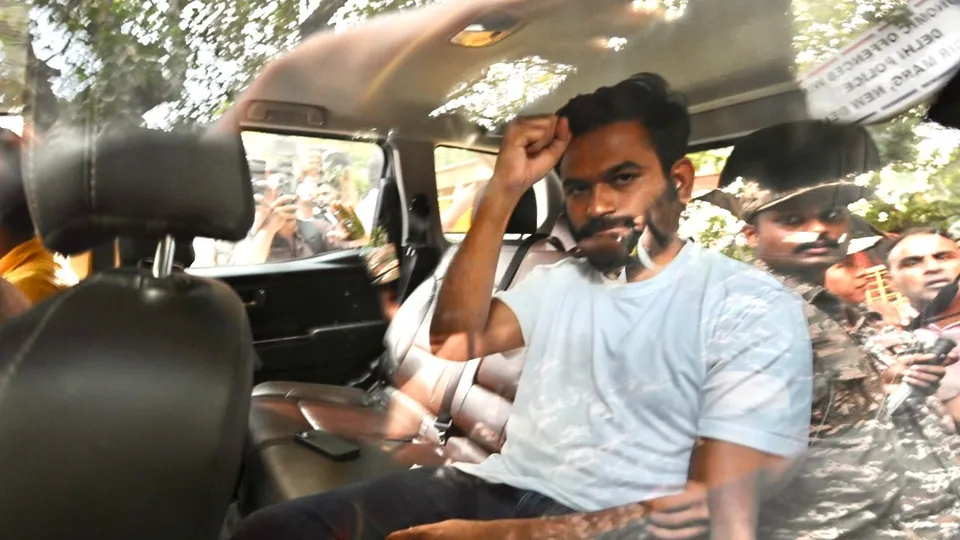
CJP founder Abhijeet Dipke was granted conditional bail on Saturday after being detained on his way to Connaught Place in Delhi and subsequently arrested. The bail was granted by the Special Executive Magistrate, subject to conditions that include ensuring there is no breach of peace on his part for one year.
Dipke’s release came a day after Delhi Police detained him while he was travelling towards Connaught Place to participate in a march he had called under the slogan “Lehra Do Tiranga.” He was produced before the Special Executive Magistrate at Mandir Marg on Saturday, following his arrest over an alleged violation of a peace bond he had furnished earlier in October.
Although the magistrate ordered his release on conditional bail, the complete set of conditions was not immediately available. Further details are expected to become clear once the formal order is issued.
Abhijeet Dipke Granted Bail With One-Year Peace Condition
The central condition attached to Dipke’s bail requires him to ensure that there is no breach of peace on his part for a period of one year. The condition places an obligation on him to avoid conduct that could lead to a disturbance of public order during that period.
Conditional bail is different from an unconditional release because the person concerned must comply with the requirements specified by the authority granting bail. In Dipke’s case, the one-year peace condition has been identified as a primary requirement, while the remaining terms are expected to be clarified through the official order.
Dipke was brought before the Special Executive Magistrate at Mandir Marg after his arrest on Saturday morning. According to the reported account of the case, Delhi Police alleged that he had violated a peace bond submitted on October 10. The bail decision followed the proceedings before the magistrate.
The precise implications of the conditions will depend on the written order. Until the complete terms are available, it would be premature to assume that the one-year requirement is the only restriction imposed on Dipke or to draw conclusions about the legal consequences of any alleged future violation.
Why Delhi Police Detained Abhijeet Dipke
The events leading to Dipke’s arrest began with a march he had called for Friday, October 16, at 5pm. The proposed gathering was associated with the slogan “Lehra Do Tiranga” and was intended to take place in the Connaught Place area of the national capital.
Hours before the scheduled march, Dipke received a notice from Delhi Police asking him not to participate. The notice cited prohibitory orders under Section 163 of the Bharatiya Nagarik Suraksha Sanhita (BNSS), the legislation that governs criminal procedure in India.
Section 163 empowers an executive magistrate to issue orders in urgent cases of nuisance or apprehended danger when immediate action is considered necessary to prevent harm, danger to human life or safety, public disturbance, or other circumstances covered by the law. Such orders may impose temporary restrictions on specified activities, depending on the circumstances and the terms of the order.
Despite receiving the police notice, Dipke left for Connaught Place on Friday evening. He was detained shortly afterwards. AISA activist Neha Bora was also detained near Mandi House during the same period.
Following the detentions, both the All India Students’ Association (AISA) and CJP said that Dipke and Bora’s whereabouts were unknown. The developments prompted concern among members and representatives of the organisations as they sought information about the detained individuals.
According to the account attributed to news agency PTI, Dipke was arrested on Saturday morning for allegedly violating a peace bond he had furnished on October 10. His arrest was therefore linked not only to the proposed march but also to the allegation that he had breached an earlier undertaking intended to prevent a disturbance of peace.
What Is a Peace Bond and Why Does It Matter?
A peace bond is an undertaking associated with legal proceedings in which a person may be required to maintain peace or refrain from conduct that could disturb public order. Depending on the applicable legal provisions and the circumstances, authorities may require such an undertaking when there are concerns about a potential breach of peace.
In Dipke’s case, the reported police allegation centres on a peace bond furnished on October 10. Police allegedly considered his subsequent conduct a violation of that undertaking, leading to his arrest on Saturday.
However, an allegation that a peace bond has been violated should not be treated as a final determination of wrongdoing. The circumstances of the alleged breach, the terms of the original bond and the relevant proceedings are important in understanding the legal position.
The conditional bail order introduces a further requirement for Dipke: ensuring that there is no breach of peace on his part for one year. The complete written order will be necessary to establish all applicable conditions and the consequences of non-compliance.
Saurav Das and Ashutosh Ranka Remain in Custody
While Dipke’s release was ordered, CJP spokespersons Saurav Das and Ashutosh Ranka continued to remain in custody. Their cases are linked to a separate incident involving the group’s protest activities at Jantar Mantar.
A Special Executive Magistrate had sent Das and Ranka to five days of judicial custody on Wednesday. The decision came a day after the two, along with several other CJP members, allegedly entered the Jantar Mantar protest site after it had been de-notified.
Their continued custody means that Dipke’s release did not result in the immediate release of all the CJP representatives detained in connection with the recent events. Each person’s legal position depends on the allegations and proceedings applicable to their individual case.
According to the lawyer representing Das and Ranka, Delhi Police accused the two of criminal trespass and alleged that they had violated a previous bond. The bond was reportedly signed before a Special Executive Magistrate at Delhi Cantt Police Station on Sunday and required the accused not to engage in conduct that would result in a breach of peace.
The allegations against Das and Ranka therefore involve both the reported entry into the protest site and the alleged violation of an earlier undertaking. Their lawyer’s account provides the stated basis for the police action, but the allegations remain distinct from any final judicial determination.
CJP Leader Ajinkya Shinde Released on Personal Bond
CJP leader Ajinkya Shinde was also released, but under a personal bond. His release represents a separate development from Dipke’s conditional bail and the continued custody of Das and Ranka.
A personal bond is generally an undertaking by an individual to comply with specified legal requirements, without necessarily providing a surety. The precise obligations depend on the terms imposed by the relevant authority.
The different outcomes for Dipke, Shinde, Das and Ranka underline that the proceedings have not resulted in a single uniform decision for all those associated with the organisation. Some have been released subject to undertakings, while others remain in custody as the allegations against them are addressed.
Jantar Mantar Protest Dispute and Public Order Restrictions
The latest developments have unfolded amid disagreements over protest activity and restrictions imposed by authorities in Delhi. The proposed “Lehra Do Tiranga” march towards Connaught Place and the earlier incident at Jantar Mantar are separate events, although both have featured in the wider sequence of detentions involving CJP members.
Jantar Mantar is a recognised site for demonstrations in the capital, but permission to assemble or protest can depend on the applicable rules, authorisations and restrictions in force at a particular time. The reported allegation against Das and Ranka concerns their entry into a protest site that had been de-notified.
In Dipke’s case, the police notice referred to prohibitory orders under Section 163 of the BNSS. Such orders are intended to address specified risks to public safety or order, but their scope depends on the wording of the particular order and the circumstances in which it was issued.
These distinctions matter because a proposed march, an alleged violation of a peace bond and an alleged act of criminal trespass are not identical legal issues. Each must be assessed on the basis of the relevant facts, applicable restrictions and proceedings.
What Happens Next in the Abhijeet Dipke Case?
The next significant development is likely to be the clarification of the full conditions attached to Dipke’s conditional bail. The available account identifies the one-year requirement to ensure no breach of peace as a primary condition, but the remaining terms were not yet clear when the bail decision was reported.
The formal order will be important in determining the precise scope of the conditions and the obligations Dipke must follow after his release. Any assessment of compliance will depend on those terms and the relevant legal process.
Meanwhile, Das and Ranka remain in custody following the magistrate’s order for five days of judicial custody. Their allegations involving criminal trespass and the reported breach of an earlier peace bond remain separate from the decision granting Dipke conditional bail.
The cases also raise broader questions about how public-order restrictions are applied to demonstrations and how authorities respond when they believe a gathering or an individual’s conduct could breach an existing order or undertaking. The legal outcome will depend on the specific circumstances of each case rather than the fact that the individuals are associated with the same organisation.
Key Takeaways From the Latest CJP Developments
- Abhijeet Dipke granted conditional bail: The CJP founder was released by a Special Executive Magistrate on Saturday.
- One-year peace condition: One of the primary conditions requires Dipke to ensure there is no breach of peace on his part for one year.
- Arrest followed Friday’s detention: Dipke was detained while travelling towards Connaught Place after receiving a police notice asking him not to join the proposed march.
- Peace-bond allegation: Police reportedly arrested him over an alleged violation of a bond furnished on October 10.
- Two CJP spokespersons remain in custody: Saurav Das and Ashutosh Ranka were sent to five days of judicial custody following the Jantar Mantar incident.
- Ajinkya Shinde released: The CJP leader was released on a personal bond.
- Full bail terms awaited: Further details of Dipke’s conditions are expected to become clear once the written order is available.
Dipke’s conditional bail marks a change in his immediate legal status, but the proceedings involving other CJP representatives continue. The full bail order and further developments in the cases against those who remain in custody will help clarify the legal obligations and next steps in the matter.
For breaking news and live news updates, like us on Facebook or follow us on Twitter and Instagram. Read more on Latest India on thefoxdaily.com.





COMMENTS 0