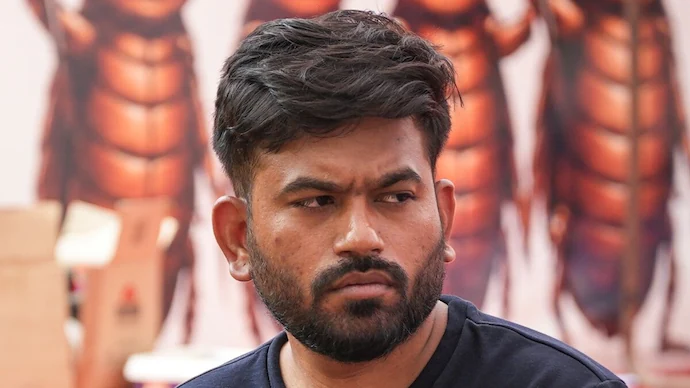
Cockroach Janata Party (CJP) founder Abhijeet Dipke has predicted that the Narendra Modi-led government will be voted out of power in the 2029 Lok Sabha elections, urging citizens to prepare for a change of government at the Centre.
Speaking at a protest in Kochi on Saturday, November 7, 2026, Dipke criticised the Special Intensive Revision (SIR) of electoral rolls and demanded the resignation of Chief Election Commissioner (CEC) Gyanesh Kumar. He argued that an independent and impartial electoral system was essential for ensuring public confidence in elections.
The gathering was organised under the CJP’s ‘Jantar Mantar at Kochi’ campaign, which brought together protesters, youth groups and civil society participants. Dipke used the platform to raise questions about electoral transparency, political accountability, freedom of expression and the treatment of young protesters.
‘Be Prepared for 2029’: Dipke Predicts Modi Government’s Defeat
Addressing the gathering, Dipke challenged the BJP’s political confidence about continuing in power and urged people to prepare for the next general election.
“Be prepared for 2029. He will definitely go,” he said, referring to Prime Minister Narendra Modi.
Dipke repeatedly asked the protesters whether Modi would lose power in the 2029 elections, drawing cheers from the audience. However, he also emphasised that any change in government must happen through the democratic electoral process.
“The change in the government will only happen through elections,” he said.
His remarks were political predictions and campaign rhetoric rather than an indication of an established electoral outcome. The next Lok Sabha election is scheduled for 2029, and its result will depend on voters’ decisions at that time.
Dipke linked his prediction to his criticism of the Election Commission and its handling of electoral roll revision. He argued that voters must have confidence that electoral processes are independent, transparent and impartial.
Why Dipke Demanded CEC Gyanesh Kumar’s Resignation
A central demand of the Kochi Protest was the resignation of Chief Election Commissioner Gyanesh Kumar. Dipke argued that the Election Commission must function independently and that public confidence in the electoral system was essential to democracy.
“Gyanesh Kumar has to go. If he goes, Narendra Modi will also go,” Dipke said.
He questioned why Kumar had become such an important figure for the prime minister and alleged that the government was protecting the Chief Election Commissioner at the expense of young protesters.
The criticism was connected to the Special Intensive Revision of electoral rolls, an exercise undertaken by the Election Commission to review and update voter lists. Such revisions are intended to improve the accuracy of electoral rolls, including by identifying eligible voters and addressing entries that may be outdated or incorrect.
However, SIR has also generated political controversy, with critics raising concerns about the possibility of eligible voters being excluded, documentation requirements and the transparency of the process.
Dipke and the CJP demanded that the exercise be withdrawn, arguing that the process could undermine confidence in elections. These are allegations made by the protesters; they do not, by themselves, establish that the Election Commission has manipulated electoral outcomes.
What Is the Special Intensive Revision of Electoral Rolls?
The Special Intensive Revision is an electoral roll verification exercise conducted by the Election Commission of India. Its purpose is to review voter records and ensure that electoral rolls contain accurate information about eligible electors.
Electoral rolls are fundamental to the voting process because only registered and eligible voters can exercise their franchise in an election. Maintaining accurate lists helps prevent duplicate entries, remove records of deceased or permanently shifted electors and include eligible citizens who may not have registered previously.
However, intensive verification exercises can create practical difficulties, particularly for people who have moved homes, lack readily available documents or face administrative barriers. Migrant workers, elderly citizens and economically vulnerable households may require additional assistance to complete verification procedures.
For this reason, the implementation of voter-list revisions can become politically sensitive. The central question is whether the process improves electoral accuracy while ensuring that no eligible citizen is unfairly deprived of the right to vote.
Any assessment of SIR must therefore consider the Election Commission’s procedures, published instructions, opportunities for corrections and appeals, and evidence of actual exclusions or irregularities. Political allegations and verified instances of administrative error should be examined separately.
Dipke Recalls Arrest With CJP Leaders During Delhi Protest
During his Kochi address, Dipke also referred to his earlier arrest in Delhi along with CJP leaders Saurav Das and Ashutosh Ranka. He said they had been detained after entering the Jantar Mantar area with the national flag.
Dipke described the incident as an attack on their right to express dissent and said he would continue carrying the Tricolour wherever he travelled.
“I was sent behind bars for raising this Tricolour. Saurav and Ashu, my two brothers, were also sent behind bars for raising it,” he said.
He added that he would continue organising demonstrations even if authorities arrested him in different states.
“I want to tell Narendra Modi that I will carry this Tricolour everywhere, in every part of this country. If you want to arrest me, you can arrest me in Delhi, Maharashtra, Keralam or Tamil Nadu,” Dipke said.
He also compared the treatment of protesters with restrictions imposed during British colonial rule. The comparison formed part of his political criticism and should be understood as his characterisation of the government’s actions rather than an established equivalence between the two periods.
Dipke Accuses Government of Restricting Personal and Voting Choices
Another major theme of Dipke’s speech was his allegation that government policies were increasingly interfering with individual freedoms.
He argued that citizens were facing restrictions over personal choices, including food, relationships and political participation. He connected these concerns to the controversy surrounding the electoral roll revision.
“They first wanted to control what you eat, then whom you can marry and love, and now they have come to a point where they want to control whom you vote for,” he said.
Dipke claimed that the SIR exercise was being used to influence election outcomes. However, the allegation was not accompanied by independently established evidence demonstrating that the exercise had been manipulated to determine electoral results.
His comments reflected wider debates in India about civil liberties, religious freedom, personal autonomy and the independence of institutions. These issues have become important subjects of political disagreement, with opposition groups and civil society organisations questioning several government decisions.
For voters, the distinction between criticism of a policy and proof of wrongdoing remains important. Concerns about electoral fairness require examination through documented evidence, transparent procedures and appropriate legal or institutional review.
Ambedkar, Gandhi and Nehru: Dipke’s Message to Modi
Dipke invoked the legacy of three major figures in India’s political history: B R Ambedkar, Mahatma Gandhi and Jawaharlal Nehru. He described their contributions through symbolic comparisons, calling Gandhi the soul of India, Ambedkar its backbone and Nehru its mind.
He argued that their contributions to India’s political and constitutional development could not be surpassed simply through the length of time a leader remained in power.
“Even if you remain in power for 120 years, you will never become bigger than Ambedkar, Gandhi and Nehru,” he said, addressing Modi.
Ambedkar played a central role in the drafting of the Indian Constitution and became one of the country’s most influential advocates for social equality and the rights of historically marginalised communities.
Gandhi was a leading figure in the freedom movement, known for his emphasis on non-violent resistance and mass political mobilisation. Nehru, India’s first prime minister, shaped the country’s early post-independence institutions, economic planning and foreign policy.
By invoking these leaders, Dipke sought to frame his criticism around constitutional values, democratic participation and the historical foundations of the republic.
Dipke Targets Modi Over India’s Relationship With Donald Trump
The CJP founder also criticised the prime minister’s foreign policy, accusing him of compromising India’s interests to protect his political image and avoid embarrassment in dealings with US President Donald Trump.
Dipke rejected allegations that his organisation was receiving foreign funding or attempting to destabilise India. Instead, he turned the criticism towards the government and questioned its handling of international relations.
“Who is selling the interests of this nation? It is you, not the CJP and not the cockroaches,” he said.
His remarks reflected his criticism of the government’s approach towards the United States and its relationship with Trump. However, the claims about political pressure or compromised national interests were allegations made during the speech and were not independently established by the protest statements.
India-US relations cover several areas, including trade, defence cooperation, technology, energy and strategic coordination. Differences between the two countries can emerge over tariffs, market access, foreign policy priorities and other bilateral issues.
Evaluating whether any government decision compromises national interests requires examining the specific agreements, policy outcomes and evidence involved rather than relying solely on political accusations.
Why Dipke Said India’s Youth Were Finding Their Voice Again
Dipke described young people as an important force behind the protest movement and argued that their willingness to question political leaders was being met with government pressure.
He said the country had remained relatively silent for the previous 10 to 12 years but that the Jantar Mantar demonstrations had encouraged people to speak more openly.
“For the last 10-12 years, somewhere this country had lost its voice. But what happened at Jantar Mantar, because of that, the country has found its voice again,” he said.
He also objected to young protesters being described as anarchists, saying they identified with the political and social ideas associated with Ambedkar and Gandhi.
“This is the youth of this country whom you are calling anarchists. No, sir, we are not anarchists. We are Ambedkarites, we are Gandhians,” he said.
The remarks placed youth participation and freedom of expression at the centre of the CJP’s campaign. They also reflected a broader debate about the role of students, activists and young citizens in challenging government decisions.
Peaceful protest and criticism of public officials are important elements of democratic participation. At the same time, the circumstances of any arrest or restriction on a demonstration must be assessed through the relevant legal provisions and documented facts.
Manmohan Singh’s Tenure and the Debate Over Freedom of Criticism
Dipke also compared the current political environment with the period when Manmohan Singh served as prime minister from 2004 to 2014.
He argued that people had greater freedom to criticise the prime minister during that period, while acknowledging that the Congress-led government was not perfect.
“I am not saying that government was perfect. But that India was more democratic, where you were allowed to criticise the prime minister. And that is how democracy should be,” he said.
His comments were part of a wider argument about political accountability and the space available for opposition voices in a democracy. The comparison represents Dipke’s assessment and is not a comprehensive measurement of democratic conditions under the two administrations.
India’s democratic record across different governments can be examined through several indicators, including press freedom, civil liberties, parliamentary functioning, judicial independence, electoral competition and the treatment of political dissent.
Such comparisons require evidence across different periods and institutions. Individual speeches and political experiences can contribute to the debate but cannot independently establish an overall conclusion about the state of democracy.
Prakash Raj Leads Protest March From Marine Drive
The Kochi gathering took place at Rajendra Maidan and attracted participants from different age groups. Representatives of youth organisations and socio-cultural groups also attended the meeting, while cultural programmes formed part of the event.
Earlier, actor and activist Prakash Raj led a protest march from Marine Drive to Rajendra Maidan. The march brought the campaign’s demands into a public space before the main meeting addressed the political and electoral issues raised by the organisers.
The protest was organised as part of the CJP’s effort to expand its campaign beyond Delhi. Its central demands included the withdrawal of the SIR exercise and the resignation of Chief Election Commissioner Gyanesh Kumar.
The Kochi event followed earlier demonstrations associated with the Jantar Mantar campaign in the national capital. CJP leaders have sought to make electoral transparency and institutional accountability central issues in their public mobilisation.
What Dipke’s 2029 Prediction Means for Indian Politics
Dipke’s prediction places the 2029 Lok Sabha elections at the centre of the CJP’s political messaging. By urging citizens to prepare for a change of government, he sought to connect current protests over electoral procedures with the next national election.
However, the statement remains a political prediction rather than an indication of how voters will decide in 2029. Electoral outcomes depend on a wide range of factors, including alliances, candidate selection, regional political conditions, economic performance, campaign strategies and voter turnout.
The immediate issue raised by the Kochi protest is the controversy over electoral roll revision and public confidence in the Election Commission. The debate involves questions about how voter lists are updated, how citizens can challenge errors and whether administrative procedures protect every eligible voter’s right to participate.
For the CJP, the campaign also offers a platform to mobilise young people and civil society groups around issues of democratic accountability. Whether that mobilisation develops into a broader political movement remains to be seen.
Dipke’s central message was that political change must come through elections and that citizens should be able to participate in a process they consider fair and impartial. His prediction about Modi’s defeat in 2029 was therefore closely tied to his demand for electoral transparency and his criticism of the current political establishment.
For breaking news and live news updates, like us on Facebook or follow us on Twitter and Instagram. Read more on Latest India on thefoxdaily.com.




COMMENTS 0