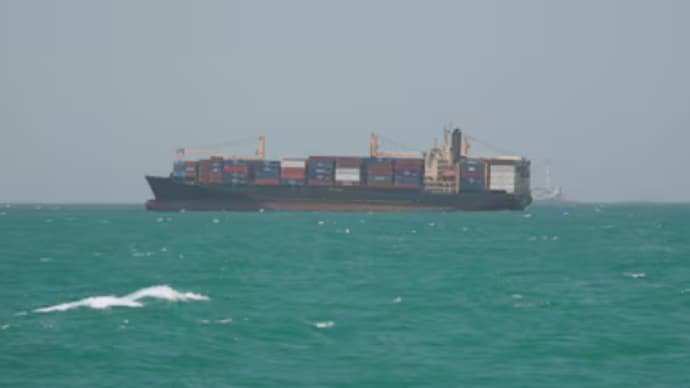
Geopolitical tensions in West Asia have intensified once again after an India-bound Saudi Crude Oil tanker altered its route in the Red Sea following a security warning issued by Yemen’s Houthi movement. The development underscores the growing uncertainty surrounding global energy supply chains as maritime security concerns spread beyond the Strait of Hormuz to the Bab el-Mandeb Strait.
The tanker, carrying approximately 700,000 barrels of Saudi crude destined for India, reportedly abandoned its planned southbound journey and instead headed north toward the Suez Canal. Another Saudi crude carrier bound for china also changed course on the same day, suggesting that shipping companies are reassessing operational risks across the region.
Although there is currently no indication of an immediate disruption to India’s crude oil availability, the incident has renewed concerns about higher transportation costs, longer delivery times and increased volatility in Global Energy Markets.
What Happened to the India-Bound Oil Tanker?
The vessel reportedly changed course after Yemen’s Houthi movement warned international shipping companies against transporting cargo connected to Saudi ports.
According to reports, the group announced a naval blockade targeting Saudi-linked maritime trade and warned that vessels involved in loading or unloading cargo at Saudi ports could face security risks.
Following the warning:
- An India-bound Saudi crude tanker reversed course.
- A second Saudi crude tanker destined for China also changed direction.
- Additional crude carriers reportedly reconsidered entering the Red Sea.
The developments illustrate how security warnings alone can significantly influence commercial shipping decisions even before any direct disruption occurs.
Why Saudi Arabia Is Important for India’s Energy Security
Saudi Arabia remains one of India’s largest crude oil suppliers and plays a crucial role in meeting the country’s growing energy demand.
India imports the majority of its crude oil requirements, making uninterrupted maritime transportation essential for maintaining stable fuel supplies.
Saudi crude supports several sectors, including:
- Petrol production.
- Diesel refining.
- Aviation fuel.
- Industrial energy demand.
- Petrochemical manufacturing.
Reliable shipping routes are therefore critical to ensuring consistent energy availability for one of the world’s fastest-growing major economies.
Understanding the Bab el-Mandeb Strait
The Bab el-Mandeb Strait connects the Red Sea with the Gulf of Aden and the Arabian Sea, making it one of the world’s most strategically important maritime chokepoints.
Ships transporting oil from Saudi Arabia’s Red Sea export terminals typically pass through this narrow waterway before continuing toward Asian markets, including India.
Its strategic importance comes from:
- Heavy international shipping traffic.
- Energy exports to Asia.
- Global container trade.
- Access to the Suez Canal.
- Connectivity between Europe, Africa and Asia.
Any disruption in this region has the potential to affect global shipping schedules and transportation costs.
Why the Red Sea Has Become More Important
Recent geopolitical developments have increased the significance of the Red Sea for oil exporters.
With heightened security concerns affecting traditional Gulf shipping routes, Saudi Arabia has increasingly relied on its Red Sea infrastructure to move crude oil toward international markets.
As a result, maintaining safe navigation through the Bab el-Mandeb Strait has become increasingly important for exporters, importers and shipping companies alike.
Could India’s Oil Supply Be Affected?
At present, analysts generally believe India’s immediate Energy Security remains stable.
India sources crude oil from a diversified group of international suppliers, reducing dependence on any single shipping corridor or exporting nation.
However, prolonged disruptions could lead to:
- Longer delivery schedules.
- Higher shipping expenses.
- Increased insurance premiums.
- Greater freight costs.
- Higher import costs for refiners.
These additional costs may eventually influence domestic fuel pricing depending on international market conditions.
Alternative Shipping Routes Are Much Longer
If vessels avoid the Bab el-Mandeb Strait, shipping companies have limited alternatives.
One possible option involves traveling through the Suez Canal before navigating around western Europe or Africa to reach Asian destinations.
Compared with the standard Red Sea route, such diversions can result in:
- Significantly longer voyages.
- Higher fuel consumption.
- Additional operating expenses.
- Reduced shipping efficiency.
- Greater scheduling uncertainty.
Longer transit times also reduce the availability of commercial tankers, placing additional pressure on global freight markets.
Insurance Costs Continue to Rise
One of the first financial impacts of maritime security risks is usually higher insurance costs.
War-risk insurance premiums often increase when shipping routes pass through conflict-prone regions.
Higher insurance expenses ultimately affect:
- Shipping companies.
- Energy traders.
- Oil refiners.
- Importing countries.
- Consumers over time.
Even if crude supplies remain uninterrupted, transportation costs can rise substantially during periods of geopolitical instability.
Comparison: Normal Route vs Diversion
| Route | Typical Journey | Potential Impact |
|---|---|---|
| Via Bab el-Mandeb Strait | Direct Red Sea route to the Arabian Sea | Faster delivery and lower transport costs |
| Alternative diversion | Longer international maritime route | Higher fuel, freight and insurance costs |
How Global Oil Markets React to Shipping Risks
Oil Prices are influenced not only by production levels but also by transportation reliability.
When major shipping routes become uncertain, markets often react because traders anticipate possible supply delays even if production remains unchanged.
Factors affecting prices include:
- Shipping disruptions.
- Geopolitical conflict.
- Insurance costs.
- Freight rates.
- Supply Chain uncertainty.
These variables collectively shape short-term price movements in international crude markets.
India’s Energy Strategy Provides Some Protection
India has steadily diversified its crude oil imports over the past decade by sourcing supplies from multiple producing regions.
The country’s energy strategy includes:
- Diversified import partners.
- Strategic petroleum reserves.
- Expansion of refining capacity.
- Long-term supply agreements.
- Increasing renewable energy investments.
These measures help reduce vulnerability to disruptions affecting individual suppliers or shipping routes.
Expert Insight: Why Shipping Confidence Matters as Much as Oil Production
One often-overlooked aspect of energy security is that crude oil must not only be produced but also transported safely and efficiently.
Even if oil-producing countries maintain stable output, uncertainty surrounding shipping lanes can increase transportation costs, delay deliveries and influence global prices. As a result, maritime security has become almost as important as production capacity in determining the stability of international energy markets.
This explains why governments, refiners and shipping companies closely monitor developments around critical maritime chokepoints such as the Bab el-Mandeb Strait and the Strait of Hormuz.
What to Watch Next
Several developments could shape the situation in the coming weeks:
- Commercial shipping movements in the Red Sea.
- Security conditions around the Bab el-Mandeb Strait.
- Insurance premium trends.
- Global crude oil prices.
- Regional diplomatic efforts.
- Alternative export routing by Gulf producers.
These factors will help determine whether the current disruption remains temporary or evolves into a broader challenge for global energy markets.
Conclusion
The decision by an India-bound Saudi crude tanker to reverse course highlights the growing influence of geopolitical tensions on global energy transportation. While India’s immediate oil supplies remain supported by diversified sourcing and established refining infrastructure, prolonged instability in the Red Sea could increase freight costs, insurance premiums and delivery times for crude imports.
As maritime security challenges expand across key international shipping corridors, governments, energy companies and financial markets will continue monitoring developments closely. The coming weeks will be critical in determining whether diplomatic efforts can reduce regional tensions or whether continued uncertainty places additional pressure on global energy supply chains.
For breaking news and live news updates, like us on Facebook or follow us on Twitter and Instagram. Read more on Latest World on thefoxdaily.com.






COMMENTS 0