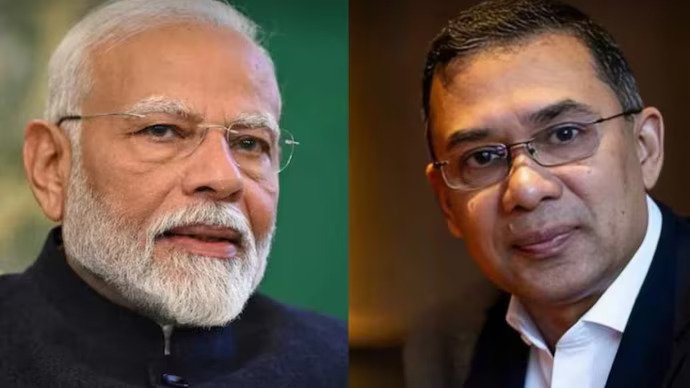
Bangladesh is signaling a possible new phase in its relationship with India, with Dhaka saying it wants to “reset” bilateral ties and move toward a relationship based more clearly on mutual interests, respect and direct engagement. The message comes after months of diplomatic friction surrounding former prime minister Sheikh Hasina, who has remained in India since her ouster in August 2024, and a recent dispute over Prime Minister Tarique Rahman’s proposed participation in the BRICS summit in New Delhi.
Bangladesh State Minister for Foreign Affairs Humaiun Kobir has argued that the next phase of India-Bangladesh relations should be handled through bilateral discussions rather than multilateral platforms. He has also suggested that Dhaka needs to avoid viewing India through an overly dominant lens and instead treat New Delhi as one important partner within a broader foreign-policy strategy.
The remarks are significant because they combine two seemingly different messages. Dhaka is making clear that it wants better relations with India, while simultaneously insisting that any reset must take place on terms that reflect Bangladesh’s own interests and diplomatic priorities.
That distinction could shape the future of one of South Asia’s most consequential bilateral relationships.
Bangladesh wants to move beyond the Hasina-era relationship
India and Bangladesh share a long border, extensive economic links, cultural connections and common interests in regional connectivity and security. Yet the political relationship has deteriorated sharply since Sheikh Hasina’s government was removed following mass protests in August 2024.
Hasina subsequently moved to India, creating one of the most sensitive issues between Dhaka and New Delhi. Bangladesh has repeatedly sought her return, while her continued presence in India has remained a major obstacle in efforts to normalize relations.
For the current Bangladeshi government, the challenge is therefore not simply to improve day-to-day diplomacy. It is to establish a relationship with India that is visibly different from the one associated with the previous government.
Kobir described the relationship during Hasina’s tenure as “uncomfortable” and said Bangladesh wants to move toward a new relationship. His comments indicate that Dhaka does not want the post-Hasina period to become merely a continuation of the previous diplomatic framework under a different political leadership.
That does not mean Bangladesh is seeking confrontation with India. Quite the opposite: the language coming from Dhaka suggests that it wants stable relations but with greater emphasis on reciprocity.
Why Dhaka is emphasizing bilateral talks
The distinction between bilateral and multilateral diplomacy has become particularly important because of the BRICS summit hosted by India in New Delhi on September 12 and 13.
India invited Tarique Rahman to attend the BRICS outreach session in his capacity as chairman of the Bay of Bengal Initiative for Multi-Sectoral Technical and Economic Cooperation (BIMSTEC). India had also extended a separate invitation for a bilateral visit to Bangladesh’s prime minister.
Dhaka, however, objected to the characterization of the BRICS invitation. Kobir said Rahman had not been invited in his capacity as Bangladesh’s prime minister and argued that his first visit to India should be bilateral rather than connected to a multilateral event.
Bangladesh subsequently decided not to participate officially in the summit through Rahman.
On the surface, the disagreement may appear to be a matter of diplomatic protocol. But its significance goes deeper. For Dhaka, the issue touches on how the new government wants its relationship with India to be framed.
A bilateral visit would place Bangladesh and India directly at the center of the diplomatic conversation. A multilateral visit, by contrast, would place Rahman in a wider gathering involving several countries and international groupings.
By insisting on bilateral engagement, Dhaka is effectively saying that the most difficult questions between the two countries should be addressed directly rather than being folded into broader regional diplomacy.
What Bangladesh means by a “reset”
A reset does not necessarily mean that all existing disputes will disappear. In fact, the opposite is more likely. A meaningful reset would require the two sides to establish mechanisms for discussing disagreements without allowing individual disputes to dominate the entire relationship.
Several issues are likely to remain central to that process.
- Sheikh Hasina’s presence in India: Dhaka continues to regard the former prime minister’s stay in India and its extradition request as a major issue.
- Political trust: Bangladesh’s new leadership wants greater confidence that its political interests will be treated with respect by New Delhi.
- Trade and economic relations: Both sides have strong economic reasons to preserve and expand cross-border commerce.
- Border management: The long India-Bangladesh border requires continuous cooperation on security, movement and local disputes.
- Connectivity: Rail, road, river and port links can provide economic benefits to both countries if managed through stable political relations.
- Regional diplomacy: Bangladesh wants stronger relationships with china, the United States, Japan, Gulf countries and other partners while maintaining ties with India.
A successful reset would therefore be less about a single summit or political gesture and more about creating a sustainable framework for managing these issues.
“India is just another country”: The message behind Dhaka’s new approach
Kobir’s unusually blunt remarks about Bangladesh’s relationship with India provide an important clue to the thinking behind the proposed reset.
He argued that Bangladesh needs to move beyond what he called an “excessive preoccupation” with India and approach the relationship in a more balanced way. His comparison of India with other countries was designed to underline a broader principle: Dhaka does not want its foreign policy to be defined primarily by its relationship with New Delhi.
That is an important change in tone.
Bangladesh’s geography makes India unavoidable as a strategic partner. The two countries share a border and have extensive commercial and transport links. India’s northeastern states are also closely connected to Bangladesh geographically, making Bangladeshi territory relevant to regional connectivity.
At the same time, Bangladesh has increasingly sought to diversify its international partnerships. China remains a major economic partner, while the United States, Japan, Gulf states and European countries also have important roles in Bangladesh’s Economy and diplomacy.
Dhaka’s message therefore appears to be that good relations with India remain desirable, but they should exist within a broader foreign-policy strategy rather than define it.
Why India also has reasons to avoid a prolonged confrontation
New Delhi has its own strategic reasons for wanting stable relations with Dhaka.
Bangladesh is geographically important to India’s northeastern region. Cooperation with Dhaka can make transportation and commercial connectivity between mainland India and the Northeast more efficient. Bangladesh is also important for India’s broader approach to the Bay of Bengal and the wider Indo-Pacific region.
Security is another major consideration. A stable relationship reduces the risk of border tensions and provides opportunities for cooperation against cross-border crime, trafficking and militant networks.
Economic interests are equally important. Bangladesh is a significant neighboring market for India, while Indian businesses have interests in sectors ranging from consumer goods and Infrastructure to energy and connectivity.
For these reasons, a prolonged deterioration in relations would carry costs for both sides.
But New Delhi also has to navigate a complicated political environment in Bangladesh. The close relationship that existed between the Indian government and the Hasina administration has influenced perceptions of India among sections of Bangladesh’s political establishment and public.
The new government is therefore likely to expect India to demonstrate that its engagement is not tied to any single Bangladeshi political party.
The Sheikh Hasina issue remains the biggest obstacle
Any serious discussion of an India-Bangladesh reset has to confront the Sheikh Hasina question.
Hasina has remained in India since leaving Bangladesh during the 2024 political upheaval. Dhaka has sought her extradition, making the issue a recurring feature of bilateral diplomacy.
Bangladesh has also objected to political statements and activities involving Hasina while she is in India. From Dhaka’s perspective, allowing the former leader to remain in India has political and legal implications for the new government.
For India, the issue is considerably more complicated. Any decision concerning extradition has legal, diplomatic and political dimensions. That means it is unlikely to be resolved simply through a symbolic political gesture.
This is where the proposed bilateral framework could become important. Instead of allowing the Hasina issue to block every other area of cooperation, the two governments could potentially create channels in which sensitive legal and political questions are handled separately from economic, connectivity and security discussions.
That would not remove the disagreement, but it could prevent one dispute from paralyzing the entire relationship.
Trade and connectivity offer a practical route back
If Bangladesh and India genuinely want to reset relations, economic cooperation may provide the easiest starting point.
Unlike political disputes, commercial and connectivity projects can produce visible benefits for both sides. Cross-border transport, energy cooperation, logistics, ports and trade facilitation can create constituencies that have a direct interest in stable relations.
Bangladesh’s geographical position also gives it significance beyond the bilateral relationship. Improved connectivity can link India’s Northeast more efficiently with ports and markets, while Bangladesh can benefit from greater transit, logistics and commercial activity.
The challenge will be ensuring that such cooperation is perceived as mutually beneficial rather than one-sided.
That is precisely why the language of “mutual interests” in Dhaka’s latest messaging matters. Bangladesh appears to be looking for a relationship in which economic cooperation is accompanied by a greater sense of reciprocity in political and strategic matters.
Bangladesh’s wider foreign policy is changing
The proposed India reset should also be understood within Bangladesh’s broader diplomatic diversification.
Dhaka has been strengthening engagement with multiple major powers and regional partners. China has significant economic influence in Bangladesh, while relations with the United States and other Western countries remain important for trade, investment and diplomacy.
Bangladesh’s relationship with Pakistan has also attracted greater attention since the political transition, while ties with Turkey and other countries have become part of a wider effort to expand diplomatic options.
For Bangladesh, this approach creates greater room for maneuver. Instead of relying heavily on any one major power, Dhaka can attempt to negotiate with multiple partners based on specific economic and strategic interests.
For India, however, this means that influence in Bangladesh can no longer be assumed simply because of geography.
New Delhi will have to compete through economic value, connectivity, political credibility and sustained diplomatic engagement.
Tarique Rahman’s India visit could become the real test
The BRICS episode may have delayed a high-level India visit, but it has also clarified what Dhaka wants from such an engagement.
Kobir has indicated that a bilateral visit could take place when the diplomatic environment is considered conducive and mutual respect is maintained. That leaves open the possibility of a future Rahman visit specifically designed to address bilateral concerns.
Such a meeting would be considerably more consequential than an appearance on the sidelines of a large international summit.
The two sides could use it to establish a political framework for discussions on trade, connectivity, border management, water-related issues, security cooperation and the outstanding questions surrounding Hasina.
But expectations would have to be managed carefully. A single summit cannot resolve years of political mistrust. Nor would a handshake automatically represent a full reset.
What happens next for India-Bangladesh ties
Bangladesh’s latest position presents India with both a challenge and an opportunity.
The challenge is that Dhaka wants a relationship less dependent on the political assumptions of the Hasina era. It wants greater diplomatic space and is making clear that it intends to maintain strong relationships with countries beyond India.
The opportunity is that Dhaka has explicitly said it wants good bilateral relations with New Delhi.
That distinction matters. The current message from Bangladesh is not one of strategic disengagement. It is a demand for a different kind of engagement.
For India, the most effective response may therefore be to focus on practical bilateral diplomacy rather than treating every disagreement as a broader strategic contest. For Bangladesh, the test will be whether its pursuit of greater strategic autonomy can coexist with the geographic and economic realities that make India an indispensable neighbor.
The future of the relationship will ultimately depend on whether both governments can separate political disagreements from areas where cooperation remains mutually beneficial.
A genuine India-Bangladesh reset is unlikely to happen through one invitation, one summit or one political statement. It will require sustained dialogue, careful management of the Sheikh Hasina dispute, greater economic reciprocity and a willingness on both sides to acknowledge that the post-2024 relationship is fundamentally different from the one that existed before.
Dhaka has now made its preference clear: it wants a new relationship with New Delhi, but it wants that relationship built directly, bilaterally and on the basis of mutual interests. Whether India and Bangladesh can turn that diplomatic message into a durable framework will be the real test of the reset.
For breaking news and live news updates, like us on Facebook or follow us on Twitter and Instagram. Read more on Latest World on thefoxdaily.com.





COMMENTS 0