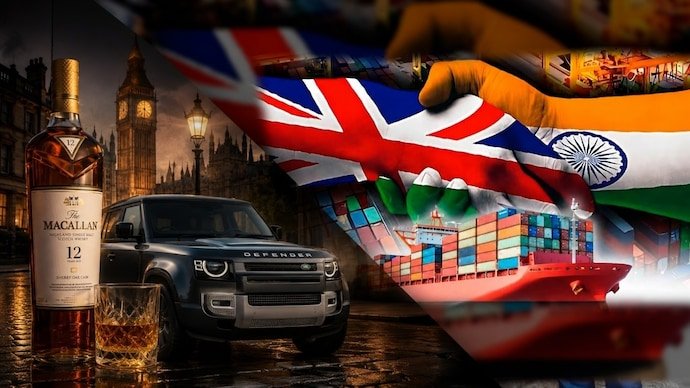
India has entered a new chapter in international trade with the implementation of the India-UK Comprehensive Economic and Trade Agreement (CETA). After years of negotiations, the landmark pact officially comes into effect, making it one of the most comprehensive bilateral trade agreements India has signed.
Unlike traditional free trade agreements that primarily focus on reducing tariffs, the India-UK FTA covers trade in goods and services, digital commerce, investment, intellectual property, government procurement, innovation, sustainability, financial services, and the temporary movement of skilled professionals. The agreement reflects the changing nature of global trade, where Technology, supply chains, and services play an equally important role alongside manufacturing.
For Indian businesses, the biggest advantage lies in expanded access to one of the world’s largest developed markets. For consumers, the agreement is expected to gradually make several premium British products more affordable. More importantly, the FTA is expected to strengthen India’s export competitiveness while encouraging long-term investment and economic cooperation between the two countries.
India-UK FTA at a Glance
| Feature | Key Benefit |
|---|---|
| Agreement Name | India-UK Comprehensive Economic and Trade Agreement (CETA) |
| UK Market Access | Zero-duty access on nearly 99% of tariff lines for Indian exports |
| Indian Tariff Cuts | Reduced or eliminated duties on around 90% of UK tariff lines over time |
| Coverage | Goods, services, technology, investment, digital trade and mobility |
| Major Beneficiaries | Exporters, MSMEs, professionals, manufacturers and consumers |
1. Indian Exporters Receive Near-Complete Duty-Free Access to the UK
The most significant achievement of the agreement is the preferential access provided to Indian exporters. Nearly all major Indian export categories will now enjoy zero customs duty while entering the UK market.
This improves India’s competitiveness against countries that already benefit from preferential trade arrangements and gives exporters greater pricing flexibility in one of Europe’s largest consumer markets.
Lower import duties can increase demand for Indian products, improve profit margins, and encourage companies to expand production for exports.
2. Labour-Intensive Industries Could See Strong Growth
Several sectors that generate large-scale employment are expected to benefit immediately from improved market access.
- Textiles and garments
- Leather products
- Footwear
- Sports goods
- Toys
- Engineering products
- Marine products
- Gems and jewellery
- Auto components
- Chemicals
These industries employ millions of workers across India and could witness increased production as exports become more competitive.
3. Scotch Whisky and Premium Spirits Become More Affordable
One of the most visible consumer benefits is the phased reduction in customs duties on Scotch whisky and gin.
The import duty on Scotch whisky falls substantially at the start of the agreement and will continue decreasing gradually over the coming years.
Although retail prices may not fall immediately because of taxes, distribution costs, and pricing strategies, consumers are expected to see more competitive prices over time.
4. Premium British Cars Could Become More Accessible
The agreement also opens the Indian market further to British automobile manufacturers.
Import duties on eligible vehicles will be reduced gradually under a quota-based framework designed to balance consumer benefits with the protection of India’s domestic automobile industry.
Luxury vehicles, electric cars, and hybrid models are expected to benefit from the phased tariff reductions.
5. Everyday Imported Consumer Goods May Cost Less
Besides automobiles and alcoholic beverages, several imported British products will gradually attract lower duties.
These include:
- Premium chocolates
- Biscuits
- Packaged foods
- Cosmetics
- Personal care products
- Selected beverages
As tariffs reduce, competition among importers may eventually translate into lower prices and wider product choices for Indian consumers.
6. Indian Professionals Gain Through Social Security Relief
One of the most valuable provisions for professionals is the Double Contributions Convention.
Eligible Indian professionals working temporarily in the United Kingdom will avoid making duplicate social security contributions in both countries.
This means qualified workers can continue contributing to India’s provident fund system while avoiding additional mandatory contributions abroad during eligible assignments.
The measure is expected to benefit:
- IT professionals
- Consultants
- Engineers
- Financial experts
- Healthcare professionals
- Business executives
7. Sensitive Agricultural Sectors Remain Protected
While the agreement significantly liberalizes trade, India has safeguarded several sensitive agricultural products.
Products excluded from tariff concessions include:
- Dairy products
- Sugar
- Apples
- Cheese
- Milled rice
- Pork
- Chicken
- Eggs
These exclusions aim to protect domestic farmers and ensure that vulnerable agricultural sectors are not adversely affected by sudden import competition.
8. The Agreement Goes Beyond Tariff Reduction
Unlike many older FTAs, the India-UK agreement reflects the realities of today’s digital Economy.
Its provisions extend to:
- Digital trade
- Financial services
- Telecommunications
- Innovation partnerships
- Intellectual property
- Government procurement
- Small and medium enterprises
- Transparency measures
- Sustainability
- Rules of origin
- Professional mobility
This broader scope makes the agreement more relevant for modern industries where services and technology increasingly drive economic growth.
9. Bilateral Trade Is Expected to Expand Significantly
Trade between India and the United Kingdom has steadily increased over recent years, and policymakers expect the FTA to accelerate this trend.
Lower trade barriers can encourage:
- Higher exports
- Greater foreign investment
- Technology transfers
- Joint ventures
- Manufacturing partnerships
- Cross-border innovation
As businesses gain easier market access, bilateral commercial ties are expected to deepen across multiple industries.
10. MSMEs Could Become the Biggest Winners
Small and Medium Enterprises (MSMEs) account for a substantial share of India’s exports and employment.
Reduced tariffs and simplified market access provide smaller businesses with opportunities to compete internationally without the pricing disadvantages previously created by import duties.
Improved access to export financing, logistics, digital commerce, and global supply chains could further strengthen the sector’s contribution to India’s export growth.
Sector-Wise Impact of the India-UK FTA
| Sector | Expected Impact |
|---|---|
| Textiles | Higher exports and stronger competitiveness |
| Automobiles | Gradual reduction in tariffs on eligible UK vehicles |
| Alcoholic Beverages | Lower import duties on Scotch whisky and gin |
| Technology | Greater digital and innovation collaboration |
| Services | Expanded opportunities for professionals |
| Manufacturing | Improved export competitiveness and investment |
| MSMEs | Better market access and export potential |
Why This FTA Is Strategically Important
The agreement arrives at a time when countries worldwide are reconfiguring supply chains, diversifying trade partnerships, and reducing dependence on concentrated markets.
For India, closer economic integration with the UK strengthens access to advanced markets while reinforcing its position as a global manufacturing and services hub.
For the UK, the agreement supports stronger engagement with one of the world’s fastest-growing major economies and creates new opportunities for businesses across technology, finance, education, healthcare, and advanced manufacturing.
How Consumers Could Benefit
Although tariff reductions will be phased over several years, consumers can expect a gradual increase in product availability and competitive pricing.
Potential long-term benefits include:
- Lower prices on selected imported goods.
- Greater product variety.
- Improved competition among brands.
- Better access to premium international products.
- Increased investment in retail and distribution.
Potential Challenges to Watch
While the agreement offers substantial opportunities, successful implementation will depend on several factors.
- Businesses must understand new rules of origin.
- Exporters need to meet UK quality and regulatory standards.
- Supply chains must adapt to increased trade volumes.
- MSMEs may require easier access to trade finance and logistics support.
- State governments and industry bodies will play an important role in helping exporters capitalize on the agreement.
Future Outlook
The India-UK Comprehensive Economic and Trade Agreement is expected to strengthen economic cooperation for decades to come. As tariff reductions continue, trade flows are likely to expand across goods, services, technology, investment, and innovation.
The agreement also positions India more strongly in global value chains while encouraging businesses to explore new export opportunities, attract foreign investment, and enhance international competitiveness.
Conclusion
The implementation of the India-UK Free Trade Agreement marks a major milestone in India’s global trade strategy. Beyond lower tariffs on products such as Scotch whisky, premium cars, chocolates, and cosmetics, the agreement offers far-reaching benefits for exporters, manufacturers, professionals, startups, and small businesses.
With nearly complete duty-free access to the UK market, stronger collaboration in technology and innovation, easier mobility for skilled professionals, and expanded opportunities for MSMEs, the agreement is set to deepen one of India’s most important economic partnerships. While the full benefits will unfold over several years, the India-UK FTA lays the foundation for stronger bilateral trade, increased investment, and sustainable long-term economic growth for both nations.
For breaking news and live news updates, like us on Facebook or follow us on Twitter and Instagram. Read more on Latest Business on thefoxdaily.com.






COMMENTS 0