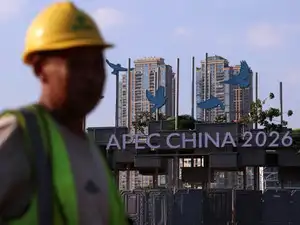
World leaders are preparing to gather in Shenzhen, China, for the 2026 Asia-Pacific Economic Cooperation (APEC) Economic Leaders’ Meeting, scheduled for November 18 and 19. The summit is expected to bring together US President Donald Trump, Chinese President Xi Jinping and Russian President Vladimir Putin, placing trade, regional security and major-power relations in the spotlight.
China is hosting the annual leaders’ meeting for the third time since 2001. The gathering comes amid trade tensions, geopolitical disputes and uncertainty over global energy supplies and supply chains. Leaders and representatives from Australia, Canada, Mexico, Indonesia and several other Asia-Pacific economies are also expected to attend, while Taiwan will be represented by an appointed envoy.
Here are five important facts about APEC, its role in the Global Economy and the issues likely to shape the Shenzhen summit.
1. APEC Was Founded in 1989 to Promote Regional Economic Cooperation
The Asia-Pacific Economic Cooperation forum was established in 1989 in Canberra, Australia, as an informal dialogue involving 12 economies. Its original purpose was to strengthen economic cooperation across the Asia-Pacific region at a time when trade and investment links were becoming increasingly important.
Over the years, APEC developed into one of the region’s principal platforms for discussing trade, investment, economic growth and cooperation. It now brings together 21 member economies, including major global economic powers such as the United States, China, Japan and Russia.
APEC uses the term “member economies” rather than countries because its membership includes both sovereign states and separately participating economies. This arrangement allows Hong Kong, officially known in APEC as Hong Kong, China, and Chinese Taipei to participate in the forum.
The grouping represents approximately 62 per cent of global gross domestic product and around half of worldwide trade, according to figures cited in reporting on the 2026 summit. Its economic importance comes from the scale of its members and the extensive trade and investment connections across the region.
India is not an APEC member, despite its large population, growing economy and expanding commercial links with Asia-Pacific markets.
2. APEC Decisions Are Voluntary and Based on Consensus
Unlike organisations that operate through binding treaties or enforceable regulations, APEC works through voluntary commitments and consensus-based cooperation. Its decisions are not legally binding on member economies.
This approach allows governments with different political systems, economic structures and national priorities to participate in discussions without being required to adopt identical policies. Members work towards shared objectives in areas such as trade facilitation, investment, digital development and economic integration.
APEC also provides a platform for governments to discuss barriers to cross-border business, improve customs procedures and encourage investment. Its work can influence regional economic policies, although individual members remain responsible for implementing measures within their own jurisdictions.
The forum’s consensus-based structure is particularly important because its members include economies with significant political and strategic differences. The United States, China and Russia, for example, participate in the same economic forum despite disagreements over trade, security and International Relations.
3. Shenzhen Is Hosting APEC for the Third Time in China
China is hosting the APEC Economic Leaders’ Meeting for the third time. The country previously hosted the gathering in Shanghai in 2001 and Beijing in 2014. The 2026 meeting in Shenzhen marks its return as host after 12 years.
The choice of Shenzhen carries economic and strategic significance. Located in Guangdong province near Hong Kong, the city is one of China’s leading technology, manufacturing and innovation centres. It is home to major companies in sectors including telecommunications, electric vehicles and consumer technology.
Shenzhen is also part of the Greater Bay Area development initiative, which seeks to strengthen economic connections among Guangdong, Hong Kong and Macau. The region is intended to become a major centre for finance, technology, manufacturing and international trade.
China’s theme for APEC 2026 is “Building an Asia-Pacific Community to Prosper Together”. Its stated priorities are openness, innovation and cooperation.
The choice of Shenzhen gives China an opportunity to showcase its industrial and technological development while presenting its vision for stronger economic links across the Asia-Pacific region.
4. Trump, Putin and Xi Are Expected to Attend, but a Three-Way Meeting Is Not Confirmed
The expected presence of US President Donald Trump, Russian President Vladimir Putin and Chinese President Xi Jinping is one of the main reasons the Shenzhen summit is attracting international attention.
Xi Jinping is confirmed to attend and chair the 33rd APEC Economic Leaders’ Meeting, according to China’s Foreign Ministry. Trump and Putin are also expected to participate, according to reports ahead of the gathering.
However, the possibility of a direct trilateral meeting involving all three leaders remains separate from their expected attendance at the wider summit. Discussions about such a meeting have been reported, but its format and whether it will take place have not been formally confirmed by all three governments.
Other leaders expected at the gathering include Australian Prime Minister Anthony Albanese, Canadian Prime Minister Mark Carney, Mexican President Claudia Sheinbaum, Indonesian President Prabowo Subianto and Philippine President Ferdinand Marcos Jr. Leaders from Malaysia, South Korea and Vietnam are also expected to participate.
Taiwan will send Stan Shih, founder of Acer, as its representative or envoy. APEC’s membership arrangement allows Taiwan to participate as Chinese Taipei, despite Beijing’s claim over the island.
The gathering could create opportunities for bilateral discussions on trade, technology and security alongside the formal economic programme. Any meeting between Trump, Putin and Xi would carry particular diplomatic significance because of the influence their countries have on global markets and international security.
5. Trade, Energy Security and Geopolitical Tensions Will Shape Discussions
Although APEC is primarily an economic forum, the issues confronting its members are closely connected to international politics and security. The 2026 summit is expected to address the economic consequences of geopolitical instability, particularly disruptions to energy supplies, trade routes and global supply chains.
Middle East Instability and Energy Security
Instability in the Middle East is expected to feature prominently in discussions because conflicts in the region can affect oil and gas supplies, shipping routes and international energy prices.
Higher energy costs can increase inflation, raise manufacturing expenses and make transportation more expensive. For economies that depend heavily on imported fuel, prolonged disruptions can affect industrial production and household spending.
APEC members have different levels of energy dependence and access to domestic resources. Discussions could therefore focus on supply-chain resilience, energy cooperation and ways to reduce the economic impact of international disruptions.
US-China Trade Relations
Trade relations between Washington and Beijing are another major issue likely to attract attention. The two economies remain deeply connected through manufacturing, technology, investment and consumer markets, but disagreements over tariffs, export restrictions and access to critical materials have created uncertainty for businesses.
Rare earth supplies are particularly important because these materials are used in products ranging from electric vehicles and electronics to defence equipment and renewable-energy technologies. Restrictions or disruptions in their supply can affect manufacturers across several countries.
Artificial intelligence is also likely to be part of the wider discussion. Competition over advanced chips, computing infrastructure and AI development has become an important part of US-China economic and technological relations.
The summit could provide an opportunity for the two governments to discuss areas of cooperation and disagreement. However, major breakthroughs should not be assumed before any official announcements are made.
Regional Security Disputes
Relations between China and several regional neighbours are another source of diplomatic tension. Disputes involving Japan and the Philippines, as well as wider concerns about security in the Indo-Pacific, could influence discussions on the sidelines of the economic gathering.
Although APEC is not a military or security alliance, regional tensions can directly affect investment decisions, shipping, tourism and cross-border trade. Political disagreements can also make economic cooperation more difficult when governments impose restrictions or businesses become concerned about uncertainty.
Why the Shenzhen APEC Summit Matters
The 2026 APEC summit comes at a time when global economic cooperation faces pressure from trade disputes, geopolitical competition and uncertainty over energy and technology supplies. Its importance extends beyond the formal meetings because the gathering brings together leaders whose decisions can influence international markets and diplomatic relations.
For China, hosting the event provides an opportunity to present Shenzhen as a centre of technological innovation and international commerce. For the United States, Russia and other participating economies, the summit offers a platform to discuss trade and regional economic interests while managing broader political differences.
The forum’s voluntary and consensus-based structure means that its success is unlikely to be measured through binding agreements alone. Progress may instead emerge through bilateral discussions, policy coordination and commitments to strengthen regional economic connections.
Whether the expected presence of Trump, Putin and Xi leads to a direct three-way meeting remains an important question ahead of the event. What is already clear is that the Shenzhen gathering will place major economic and geopolitical issues on the same diplomatic stage.
For breaking news and live news updates, like us on Facebook or follow us on Twitter and Instagram. Read more on Latest World on thefoxdaily.com.






COMMENTS 0