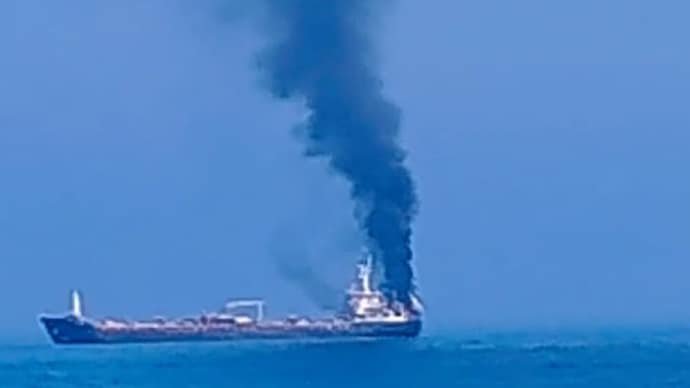
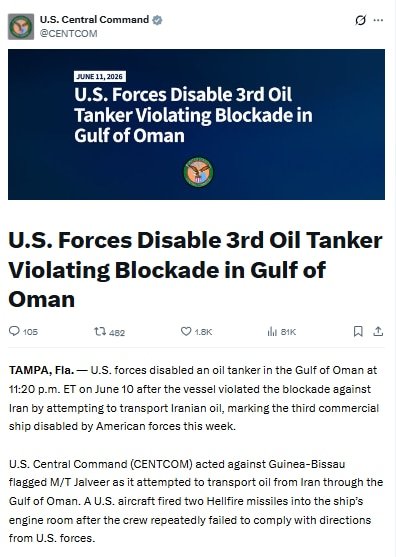
The deaths of three Indian sailors in a US military strike near Oman have triggered one of the most serious diplomatic confrontations between India and the United States in recent years. New Delhi has formally condemned the attack, summoned the US Chargé d’affaires, and called for an immediate end to attacks on commercial shipping operating in the Gulf region.
The incident occurred amid an expanding conflict involving the United States, Iran, and multiple regional actors. While Washington maintains that the targeted vessel was violating a naval blockade imposed on Iran, India’s response signals a broader concern: the growing danger faced by thousands of Indian seafarers and the potential disruption of critical maritime trade routes that support the Indian economy.
The issue goes beyond a single strike. Within four days, three separate vessels carrying Indian crew members were reportedly targeted by US military action. The developments raise difficult questions about international maritime law, regional security, energy supply chains, and India’s strategic balancing act between competing global powers.
For India, the crisis is not merely a diplomatic disagreement. It represents a test of its ability to protect citizens abroad while maintaining relationships with major global powers during a rapidly escalating geopolitical confrontation.
5W1H: Understanding the Incident
Who? Three Indian seafarers lost their lives after a commercial vessel carrying Indian crew members was struck off the coast of Oman.
What? India strongly condemned the attack, summoned the top American diplomat in New Delhi, and demanded an end to attacks on commercial shipping.
When? The diplomatic protest followed a series of incidents occurring over several days amid heightened tensions in the Middle East.
Where? The attacks occurred near Oman and the Strait of Hormuz, one of the world’s most strategically important maritime corridors.
Why? The United States claims the vessels were violating a naval blockade linked to Iran. India argues that attacks on commercial shipping are unacceptable and place civilian lives at risk.
How? According to military statements, precision weapons including Hellfire missiles were used to disable vessels suspected of violating restrictions imposed around Iranian waters.
The Strait of Hormuz: Why This Narrow Waterway Matters to the World
The Strait of Hormuz is often described as the world’s most important energy chokepoint. Located between Iran and Oman, it serves as the gateway through which a substantial portion of global oil exports pass every day.
For India, the significance of Hormuz cannot be overstated. As one of the world’s largest energy consumers and oil importers, India depends heavily on stable shipping routes through the Gulf.
Any military disruption in this region can have consequences far beyond the battlefield.
- Higher crude oil prices
- Increased shipping costs
- Rising insurance premiums
- Pressure on domestic fuel prices
- Supply chain disruptions
- Broader inflationary pressures
This is why developments in the Gulf are closely watched in New Delhi, even when India is not directly involved in the conflict.
Why India Responded So Strongly
India’s diplomatic response reflects both humanitarian and strategic concerns.
The immediate issue is the loss of Indian lives. The deaths of three citizens working aboard a commercial vessel naturally demand a response from the government.
However, the broader concern involves the thousands of Indian nationals currently employed across Gulf shipping routes.
According to government figures, more than 18,000 Indian seafarers are operating in the region. Hundreds serve aboard vessels navigating some of the world’s most volatile maritime zones.
When military tensions escalate, these workers often find themselves caught in situations they neither created nor control.
The government therefore faces pressure to ensure their safety while maintaining diplomatic relations with multiple stakeholders involved in the conflict.
The Growing Risks Faced by Indian Seafarers
Indian sailors form one of the largest maritime workforces globally. They are employed across international shipping fleets carrying energy products, manufactured goods, food supplies, and industrial materials.
As Global Trade has expanded, Indian seafarers have become essential participants in the movement of international commerce.
Yet their profession increasingly exposes them to geopolitical risks.
Modern maritime conflicts are different from traditional wars. Rather than targeting military ships alone, confrontations often involve Sanctions enforcement, blockades, drone surveillance, and inspections of commercial vessels.
As a result, civilian crews frequently find themselves operating in dangerous environments.
The recent incidents demonstrate how quickly a commercial voyage can become entangled in international disputes.
Understanding the US Position
From Washington’s perspective, the strikes are part of a broader effort to enforce restrictions against Iran and limit activities that US authorities consider a violation of sanctions or blockade measures.
US military officials argue that warnings were issued and that actions were designed to disable vessels rather than sink them.
The United States has stated that several vessels have been intercepted or redirected since the maritime restrictions were introduced.
However, incidents involving civilian casualties inevitably generate diplomatic and legal scrutiny, particularly when foreign nationals are affected.
This creates a complex situation where military objectives and humanitarian concerns collide.
How the Gulf Conflict Is Affecting Global Trade
The consequences of the crisis extend well beyond the immediate parties involved.
The Gulf region remains central to global commerce. Energy exports, container traffic, and industrial shipments all depend on secure maritime access.
When instability increases, the effects ripple across international markets.
| Sector | Potential Impact |
|---|---|
| Energy Markets | Volatile oil and gas prices |
| Shipping Industry | Higher insurance and freight costs |
| Importing Nations | Increased energy bills |
| Consumers | Higher transportation and fuel costs |
| Global Trade | Delays and supply chain disruptions |
| Seafarers | Greater operational and security risks |
Even limited disruptions can trigger uncertainty in commodity markets and increase costs throughout the Global Economy.
India’s Delicate Diplomatic Balancing Act
The crisis places India in a difficult diplomatic position.
India enjoys strong strategic ties with the United States in areas ranging from defence cooperation to technology and trade. At the same time, India has historically maintained engagement with Iran because of energy interests and regional connectivity projects.
As tensions rise, New Delhi must carefully balance these relationships.
India’s response reflects a policy focused on protecting national interests rather than taking sides in a broader geopolitical confrontation.
By condemning attacks on commercial shipping while emphasizing dialogue and Diplomacy, India is attempting to preserve room for engagement with all parties.
This approach is increasingly important in a world where major powers are becoming more polarized.
The Legal Debate Around Commercial Shipping and Naval Blockades
The incidents also raise important questions about international maritime law.
Commercial vessels often operate under foreign flags, transport cargo across multiple jurisdictions, and employ multinational crews. This creates legal complexity when military forces attempt to enforce sanctions or blockades.
International law generally seeks to protect civilian shipping during conflicts. However, disputes arise when governments believe commercial vessels are supporting sanctioned entities or prohibited activities.
As geopolitical tensions increase globally, these legal questions are becoming more significant.
The Oman incident may contribute to future discussions about how commercial ships and civilian crews should be protected during periods of international conflict.
The Human Cost Behind the Headlines
Much of the public discussion focuses on military strategy, sanctions, and diplomacy. Yet the most immediate impact is felt by families who lose loved ones.
The three Indian nationals who died were not political leaders or military personnel. They were workers earning a livelihood in one of the world’s most demanding professions.
Their deaths highlight a reality often overlooked in geopolitical analysis: ordinary people frequently bear the greatest costs of international conflicts.
For the families affected, debates about maritime enforcement or regional security provide little consolation.
The tragedy underscores the need for stronger protections for civilian crews operating in conflict-prone waters.
What Happens Next?
Several developments are likely in the coming weeks.
- India will continue diplomatic engagement with the United States.
- Maritime advisories for Indian seafarers may be strengthened.
- Shipping companies could reassess routes through high-risk areas.
- Insurance costs for Gulf operations may rise further.
- Regional powers may face increased pressure to reduce tensions.
The broader trajectory of the crisis will depend largely on whether diplomatic efforts succeed in preventing further military escalation.
If tensions continue to intensify, commercial shipping could face even greater challenges in one of the world’s most strategically important waterways.
Why This Incident Matters Beyond India
The deaths of three Indian sailors represent more than a bilateral issue between India and the United States. They illustrate how regional conflicts increasingly affect global trade, international labour, and economic stability.
In an interconnected world, a military action near Oman can influence fuel prices in Asia, shipping costs in Europe, and supply chains across multiple continents.
The incident serves as a reminder that Maritime Security is no longer a niche strategic concern. It has become a central pillar of global economic stability.
Conclusion: A Warning Signal for the Global Maritime System
India’s condemnation of the US strike near Oman reflects growing concern about the expanding risks facing commercial shipping in the Gulf. The deaths of three Indian nationals have transformed a regional security issue into a matter of national importance for New Delhi.
Beyond the immediate tragedy, the incident highlights deeper challenges confronting the international community: protecting civilian workers, maintaining freedom of navigation, ensuring energy security, and preventing regional conflicts from spiraling into broader economic crises.
As military tensions continue to affect one of the world’s busiest maritime corridors, the need for diplomacy has rarely been greater. The Gulf remains essential to global trade, and any prolonged instability could carry consequences far beyond the Middle East.
For India, the priority remains clear: protecting its citizens, safeguarding vital trade routes, and advocating for a return to stability before more lives are lost in a conflict that increasingly threatens the global maritime order.
For breaking news and live news updates, like us on Facebook or follow us on Twitter and Instagram. Read more on Latest India on thefoxdaily.com.






COMMENTS 0