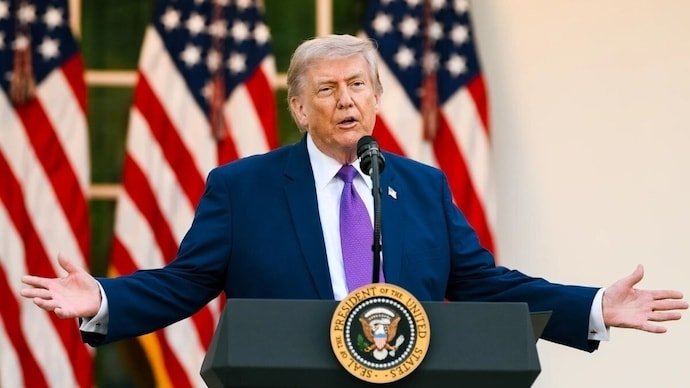
President Donald Trump is scheduled to deliver a primetime speech focused on US election security, placing one of the most divisive issues in American Politics back at the center of national attention. Coming just months before the 2026 midterm elections, the address is expected to discuss election administration, voting integrity, foreign interference concerns, and possible intelligence related to China‘s activities during the 2020 presidential election.
The speech arrives at a politically sensitive moment. Republicans are defending narrow congressional majorities, Democrats are seeking opportunities to regain control of the House of Representatives, and election administration has once again become a defining campaign issue. While the White House has not confirmed the final contents of the address, reports suggest officials debated whether previously classified intelligence concerning China should be referenced. Importantly, available information indicates that the intelligence does not conclude that vote totals were altered or that the outcome of the 2020 election was changed.
The address is expected to extend beyond past election controversies and frame the administration’s broader Vision for strengthening election security. Regardless of political affiliation, the speech is likely to influence public discussion about voting procedures, cybersecurity, election transparency, and federal-state responsibilities.
Why Election Security Has Returned to the National Spotlight
Election security has become one of the most debated Public Policy issues in the United States over the past several election cycles. The topic now extends far beyond voting machines and ballot counting. Modern election security includes protecting voter databases, defending election infrastructure from cyberattacks, combating foreign influence campaigns, preventing misinformation, and ensuring that election officials can administer elections safely and transparently.
Following the highly contested 2020 presidential election, public confidence became sharply divided. While multiple recounts, audits, and court decisions found no evidence of widespread fraud capable of changing the election outcome, political debate over voting procedures has continued. Since then, election laws have been revised in numerous states, with supporters arguing the changes improve security and critics warning they may reduce voter access.
Trump’s upcoming speech places these ongoing debates back into national focus just as campaigning accelerates for another major federal election.
What Is Known About the China Intelligence Discussion?
One of the most closely watched aspects of the speech involves reports that the administration considered discussing intelligence gathered during Trump’s first presidential term regarding China.
According to multiple reports, intelligence agencies collected information concerning China’s intentions and capabilities relating to the 2020 election. However, officials familiar with the intelligence reportedly stated that the information does not demonstrate that China manipulated votes, changed election results, or successfully interfered with ballot counting.
This distinction is significant because election interference can include a broad range of activities beyond altering votes. Intelligence agencies often distinguish between:
- Cyber espionage targeting political organizations.
- Online influence campaigns on social media.
- Attempts to shape public opinion through propaganda.
- Disinformation operations.
- Efforts to collect intelligence on political candidates or government institutions.
Foreign governments have long attempted to influence democratic societies through information campaigns rather than direct manipulation of election infrastructure.
Understanding Foreign Election Interference
Election interference has become an increasingly global concern as elections rely more heavily on digital technologies and online communication. Rather than attempting to change vote counts directly, modern interference efforts frequently focus on influencing public opinion before ballots are cast.
Security experts generally divide election threats into several categories:
- Cyberattacks targeting election systems.
- Disinformation campaigns designed to confuse voters.
- Social media influence operations.
- Hacking of political organizations.
- Attempts to undermine trust in democratic institutions.
Many democratic governments have invested heavily in cyber defenses since 2016, when election interference became a major international security concern. Election agencies now coordinate closely with cybersecurity specialists, intelligence agencies, and Technology companies to monitor potential threats.
The Constitutional Balance: Federal vs State Control of Elections
One of the central policy debates surrounding Trump’s speech concerns the respective roles of federal and state governments in administering elections.
Under the US Constitution, states hold primary responsibility for conducting elections. They establish polling locations, maintain voter registration systems, certify election results, and determine many voting procedures. The federal government, however, retains authority over certain election laws and civil rights protections while providing cybersecurity assistance and coordinating intelligence related to election threats.
This division of authority often produces policy disagreements whenever proposals emerge that would expand federal involvement in election administration.
| State Responsibilities | Federal Responsibilities |
|---|---|
| Voter registration | Election security coordination |
| Polling locations | Protection of voting rights |
| Ballot design | Cybersecurity assistance |
| Vote counting | Foreign threat intelligence |
| Election certification | National election laws where applicable |
The balance between these responsibilities frequently becomes a major issue during election years.
The SAVE America Act and the Broader Voting Debate
Another issue expected to receive attention is the administration’s support for legislation commonly referred to as the SAVE America Act.
Supporters argue that requiring proof of citizenship during voter registration and strengthening voter identification requirements could increase confidence in election integrity. They believe additional verification measures would help prevent unlawful registration while improving public trust.
Opponents, including many voting rights organizations and Democratic lawmakers, argue that voter fraud remains extremely rare and that stricter documentation requirements could make voting more difficult for eligible citizens WHO lack immediate access to required records.
The debate illustrates the broader challenge policymakers face: balancing election security with accessible voting.
Political Stakes Ahead of the 2026 Midterm Elections
The timing of Trump’s address is particularly important because the United States is entering one of its most competitive midterm election cycles in recent history.
Midterm elections traditionally serve as a national referendum on the sitting president’s administration. They determine control of Congress and influence the legislative agenda for the remainder of a presidential term.
Current political dynamics include:
- Republicans defending narrow congressional majorities.
- Democrats seeking gains in competitive districts.
- Economic concerns remaining a dominant voter priority.
- Foreign policy developments influencing public opinion.
- Election administration becoming an increasingly visible campaign issue.
Even if election security is not the top issue for every voter, it remains highly significant because public confidence in electoral institutions affects democratic legitimacy itself.
Why Some Republicans Want the Focus to Shift
Not all Republican leaders share the same messaging priorities.
Several senior lawmakers have suggested that campaigns should emphasize Inflation, household costs, energy prices, employment, and economic growth rather than revisiting disputes surrounding the 2020 presidential election.
This reflects an important strategic calculation. Polling in recent election cycles has consistently shown that many voters rank economic conditions above election administration when deciding how to vote. As a result, some Republican officials believe focusing primarily on future policy proposals may resonate more broadly with independent voters.
Democratic Concerns Over Election Administration
Democratic leaders have expressed concerns that additional federal election changes could complicate voting procedures or create unnecessary barriers for eligible voters.
Party leaders have also argued that repeated challenges to certified election results may reduce public confidence in democratic institutions. They maintain that protecting elections requires both strong cybersecurity and public acceptance of verified outcomes after legal challenges and recounts are completed.
This disagreement illustrates how election security has evolved into both a policy issue and a broader political debate about institutional trust.
Public Confidence Is Becoming the Real Battleground
One overlooked aspect of election security is that confidence itself has become part of National Security.
Even when election infrastructure remains secure, widespread public distrust can weaken confidence in democratic governance. Experts increasingly argue that resilience depends not only on protecting voting systems but also on maintaining transparency throughout the election process.
Election officials across the country have expanded public education efforts by publishing audit procedures, livestreaming ballot counting in many jurisdictions, strengthening cybersecurity partnerships, and providing more detailed explanations of certification processes.
These transparency measures aim to reduce uncertainty regardless of which political party ultimately wins.
How Election Security Has Changed Since 2020
Since the last presidential election, election administration has undergone substantial modernization.
- Improved cybersecurity monitoring.
- Enhanced information sharing between federal and state agencies.
- Expanded risk-limiting audits.
- Greater physical protection of election infrastructure.
- More sophisticated detection of foreign cyber threats.
- Increased training for local election officials.
These developments demonstrate that election security is an evolving process rather than a single policy decision.
Why Trump’s Speech Could Shape the Election Narrative
Regardless of its final content, Trump’s address has the potential to influence campaign messaging throughout the remainder of the election season.
If the speech emphasizes foreign threats, it could shift discussion toward national security and election resilience. If it focuses primarily on domestic election reforms, lawmakers may intensify debates over voter identification requirements, citizenship verification, and federal oversight.
The speech may also affect how media organizations, political campaigns, and independent voters frame election-related issues during the final months before voting begins.
A Broader Perspective: Election Security Is a Global Challenge
The United States is far from alone in confronting election security concerns. Democracies across Europe, Asia, Australia, and North America continue strengthening protections against cyber threats, disinformation campaigns, and foreign influence operations.
As elections become increasingly digital, governments face the shared challenge of protecting both technological infrastructure and public trust. International experience shows that transparency, cybersecurity investment, independent oversight, and voter education all play important roles in strengthening democratic resilience.
This broader perspective demonstrates that election security is no longer simply a domestic political issue it has become part of modern national security policy worldwide.
Future Outlook
As the 2026 midterm elections approach, election security will likely remain a central topic in American political discourse. Policymakers from both parties are expected to continue debating voting laws, cybersecurity investments, voter identification requirements, and the balance between federal authority and state responsibility.
The effectiveness of future election reforms will ultimately depend on whether they can achieve two goals simultaneously: protecting elections against genuine threats while preserving broad public confidence in the democratic process.
Trump’s primetime speech is therefore significant not only because of what it may reveal about intelligence or policy proposals, but also because it could shape how millions of Americans view election security during one of the country’s most consequential political seasons.
Conclusion
President Donald Trump’s upcoming election security address comes at a pivotal moment for American democracy. The discussion surrounding alleged foreign interference, voting integrity, federal oversight, and proposed election reforms reflects broader questions about how the United States can protect both the security and credibility of its elections.
While political leaders continue to disagree over the best path forward, one principle commands broad support across the political spectrum: elections must remain secure, transparent, and trusted by the public. As campaigning intensifies ahead of the 2026 midterms, debates over election administration are likely to remain at the forefront of national politics, influencing legislative priorities, voter confidence, and the future direction of American democratic institutions.
For breaking news and live news updates, like us on Facebook or follow us on Twitter and Instagram. Read more on Latest World on thefoxdaily.com.





COMMENTS 0