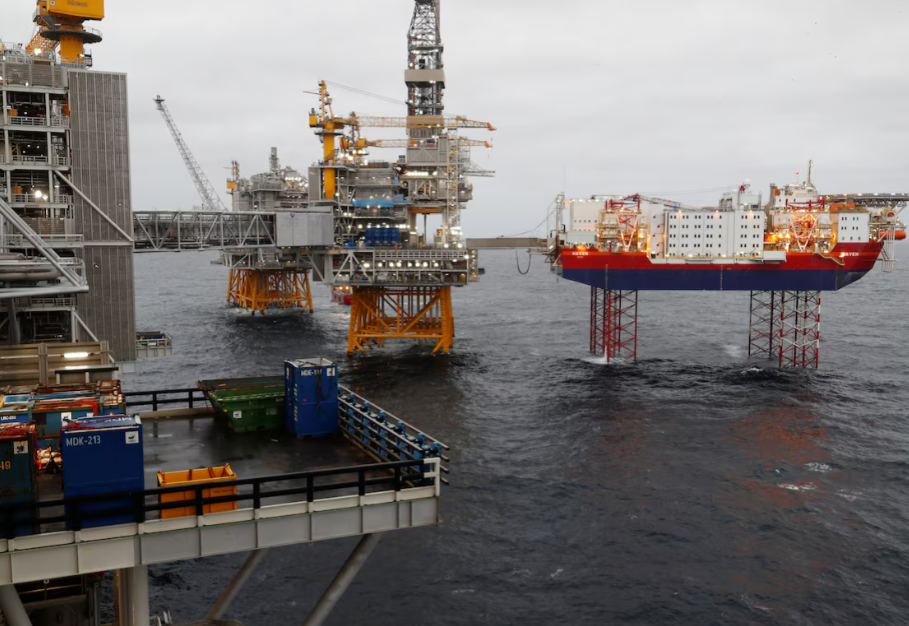
Oil Prices were broadly stable on Friday as traders assessed conflicting signals over global energy supplies, with improving Middle Eastern exports partly offset by concerns about renewed US-Iran tensions and tighter refined-product availability.
Brent crude futures slipped 3 cents, or 0.03%, to $102.28 a barrel at 0350 GMT after moving slightly higher earlier in the session. Despite Thursday’s more than $4 gain, Brent was on track for a weekly decline of about 2%.
US West Texas Intermediate (WTI) crude fell 19 cents, or 0.2%, to $92.68 a barrel. WTI was heading for a weekly gain of roughly 0.3%.
Oil Market Takes a Breather After Thursday’s Volatility
The oil market entered Friday’s session in a more cautious mood after a sharp move higher on Thursday. Traders are now balancing several competing developments rather than reacting to a single dominant supply signal.
KCM Trade chief analyst Tim Waterer described the market as weighing a mixed set of signals. He said traders were taking a pause after a volatile session as they assessed developments involving Middle Eastern crude exports, US military movements and China’s refined-product export policy.
A healthier Saudi export picture has provided some relief for the market. At the same time, reports that the United States could deploy additional military forces to the Middle East have raised concerns about the potential for renewed disruption to regional oil supplies.
That combination has kept crude prices close to the psychologically important $100-a-barrel level for Brent, while traders continue to monitor developments that could influence the physical availability of crude and refined fuels.
US Military Movements Add Geopolitical Risk
Geopolitical uncertainty remains one of the main factors supporting oil prices. The Wall Street Journal reported that the United States was preparing to send a third aircraft carrier and as many as 10,000 additional troops to the Middle East.
The report also said US President Donald Trump was considering the possibility of resuming strikes on Iran after the US midterm elections. Such developments have increased market attention on the security of oil production, transportation routes and export infrastructure across the region.
For oil traders, the immediate issue is not simply the possibility of military action. Any escalation could affect how crude and refined products move from major Middle Eastern suppliers to consumers in Asia, Europe and other markets.
Priyanka Sachdeva, head of market insights at Phillip Nova, said the more immediate market concern was the availability and movement of Middle Eastern crude and refined products around the world.
The uncertainty is particularly important because the region remains a critical source of global energy supplies. Even when physical production is not immediately affected, concerns about transportation and supply-chain reliability can influence prices and market positioning.
Saudi Supply Offers Some Relief
Signs of improving Saudi exports are providing a counterweight to geopolitical concerns. A healthier export picture suggests that some Middle Eastern supply flows are recovering after recent disruptions.
This has helped prevent the oil market from moving sharply higher despite renewed concerns about the regional security situation.
However, improving exports do not eliminate broader supply risks. Traders are watching whether higher shipments can continue and whether other regional producers can maintain reliable exports of both Crude Oil and refined products.
The market is therefore focused not only on headline production numbers but also on actual cargo movements, refinery operations, shipping availability and inventories in major consuming regions.
China’s Fuel Export Halt Adds Pressure to Refined Products
China has emerged as another important factor in the oil market this week. Chinese refiners suspended oil-product exports for October, according to a Reuters report, as Beijing sought to preserve domestic fuel stocks.
The decision pushed prices higher during Thursday’s trading session because it raised concerns about the availability of refined products in international markets.
China is a major participant in global petroleum markets, and changes in its refined-product exports can have consequences well beyond its domestic market. When Chinese refiners retain more fuel at home, fewer barrels may be available to buyers elsewhere.
The impact is particularly significant for diesel and other middle distillates, which are already facing supply concerns in parts of the global market.
China’s decision therefore represents a different type of supply risk from geopolitical tensions. Rather than threatening production infrastructure, it reduces the amount of refined fuel available for international trade.
US Pressures Europe to Release Diesel Stocks
Another development keeping pressure on refined-product markets is the reported US request for European countries to draw down emergency diesel inventories.
The Trump administration has told Germany and France to release emergency diesel stocks to help ease global fuel prices, according to three people familiar with the discussions. The discussions reportedly include the possibility of a US diesel export ban if European countries do not take action.
A source told Reuters that the United States had asked the European Union to release 120 million barrels of diesel over six months.
European countries hold nearly 109 million tons of emergency crude and fuel stocks, according to the report. Releasing part of those reserves could increase the amount of fuel available to the market and potentially reduce pressure on diesel prices.
However, the scale and timing of any release remain important. Emergency inventories are designed to provide a buffer during supply disruptions, and governments must balance immediate market needs against the need to retain sufficient reserves for future shocks.
Why Diesel Supplies Matter for the Oil Market
Diesel is particularly important because it is widely used in freight transportation, agriculture, construction and industrial activity. Changes in diesel availability can therefore have wider economic consequences than movements in crude prices alone.
A shortage of diesel can raise transportation and operating costs for businesses. Conversely, releasing emergency stocks can increase near-term supply and potentially reduce some of the pressure on fuel markets.
Mukesh Sahdev, chief oil analyst at XAnalysts, said US pressure on European nations to release oil was also helping place a check on prices.
The comments highlight the competing forces currently affecting crude. Geopolitical risks are supporting prices, while government efforts to release or preserve fuel supplies are working in the opposite direction.
$100 Brent Becomes Key Market Threshold
The $100-a-barrel level has become an important psychological and market-positioning threshold for Brent crude. Prices above that level can influence expectations among producers, consumers, investors and policymakers.
Phillip Nova’s Sachdeva said the market was increasingly pricing a scenario in which supply chains could remain vulnerable for an extended period.
That does not necessarily mean a prolonged physical shortage will occur. Instead, it reflects the market’s growing sensitivity to disruptions that could make it harder for crude and refined products to move normally between producing and consuming regions.
For traders, sustained movement around the $100 level can also affect hedging decisions and expectations for energy-related inflation.
Brent and WTI Follow Different Weekly Paths
Despite the recent volatility, Brent and WTI were heading in different directions on a weekly basis.
- Brent crude was down roughly 2% for the week.
- WTI crude was on track for a weekly gain of about 0.3%.
- Brent was trading near $102.28 a barrel.
- WTI was trading near $92.68 a barrel.
The difference reflects the distinct market structures and supply dynamics affecting the two benchmarks. Brent has greater exposure to international seaborne crude markets, while WTI is closely linked to US production, inventories and domestic infrastructure.
Even so, both benchmarks remain sensitive to developments involving Middle Eastern supply and global refined-product markets.
What Traders Are Watching Next
Several factors are likely to remain central to oil-market trading as investors assess whether recent volatility will continue.
Middle Eastern Export Flows
Traders will monitor whether Saudi Arabia and other regional producers can maintain improving export flows. Any renewed disruption could quickly change the supply outlook.
US-Iran Tensions
Developments involving the United States and Iran will remain important because escalation could affect expectations for regional oil and fuel supply chains.
Chinese Fuel Exports
China’s decision to curb refined-product exports could influence diesel and other fuel markets, particularly if restrictions persist beyond October.
European Emergency Stocks
The market will also watch whether European countries release emergency diesel inventories and how much fuel becomes available internationally as a result.
Shipping and Supply Chains
Physical oil movements remain critical. Even when production continues normally, shipping disruptions or changes in trade flows can tighten regional markets and increase price volatility.
Oil Market Faces Competing Supply Signals
The latest price action illustrates how quickly oil markets can shift when geopolitical risks and physical supply developments point in different directions.
Improving Saudi exports and possible releases from European emergency inventories could increase available supplies and limit price gains. At the same time, China’s fuel-export restrictions and heightened US military activity in the Middle East are creating fresh uncertainty.
For now, traders appear to be taking a pause after Thursday’s sharp move, with Brent remaining just above $100 a barrel. The direction of the market will depend heavily on whether Middle Eastern supply continues to recover or whether geopolitical developments create new disruptions.
FAQs
Why are oil prices stable on Friday?
Oil prices are broadly stable because traders are balancing improving Middle Eastern supply conditions against concerns about renewed US-Iran tensions and tighter refined-product supplies.
What is the current Brent crude price?
Brent crude was trading around $102.28 a barrel at 0350 GMT on Friday, down 3 cents from the previous close.
What is the current WTI crude price?
WTI crude was trading around $92.68 a barrel, down 19 cents or 0.2% at the time of the reported market update.
Why is China’s fuel export policy important?
China’s decision to suspend oil-product exports for October could reduce the amount of refined fuel available to international buyers and increase pressure on global fuel markets.
Why is Europe being asked to release diesel stocks?
The US administration has reportedly urged European countries to draw down emergency diesel inventories to increase fuel availability and help ease global prices.
Why is the $100 oil price level important?
The $100-a-barrel level is an important psychological and market-positioning threshold for Brent and can influence expectations among traders, consumers and producers.
How do Middle Eastern tensions affect oil prices?
Heightened tensions can raise concerns about crude production, shipping routes, refined-product supplies and the reliability of exports from the region.
What could influence oil prices next?
Traders are likely to focus on Middle Eastern export flows, US-Iran developments, China’s refined-product exports, European fuel inventories and global shipping conditions.
For breaking news and live news updates, like us on Facebook or follow us on Twitter and Instagram. Read more on Latest Business on thefoxdaily.com.






COMMENTS 0