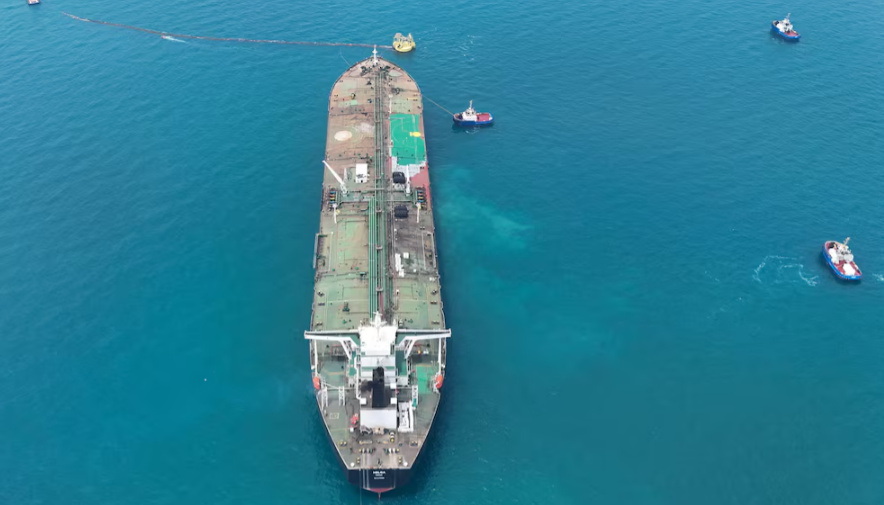
Oil Prices declined on Tuesday as investors weighed signs of recovering crude exports from the Middle East against continuing concerns that the conflict involving the United States, Israel and Iran could disrupt regional energy supplies. Brent crude remained on track for a strong monthly gain despite the latest decline. 0
Brent crude futures fell $1.96, or 1.86%, to $103.32 a barrel at 1306 GMT, while U.S. West Texas Intermediate crude dropped $1.95, or 2.11%, to $90.65. Both benchmarks were still headed for substantial monthly gains, with Brent up about 14% and WTI about 5.6% for September.
Why Oil Prices Are Falling
The decline in oil prices reflects growing evidence that some Middle Eastern crude exports are recovering after severe disruptions to regional energy flows.
Saudi Arabia has resumed crude loadings from its Red Sea port of Yanbu after restarting its East-West Pipeline. The development improves the outlook for oil shipments because the pipeline provides an alternative route that can bypass some of the disruption affecting tanker traffic through the Strait of Hormuz.
Reuters reported that Saudi Aramco has notified customers of its October loading schedule from Yanbu, while trade sources and shipping data indicated that crude loadings had resumed. 1
Saudi Arabia Restarts Yanbu Oil Loadings
The restart of Saudi Arabia’s East-West Pipeline is an important development for global oil markets.
The pipeline had been shut after drone attacks that Saudi Arabia blamed on Iraqi militias. Its partial restart has allowed crude shipments from the kingdom’s oil-producing regions to reach the Red Sea and the Yanbu export terminal.
According to Kpler estimates cited by Reuters, pipeline throughput was around 2.65 million barrels per day and could increase to between 3 million and 4 million barrels per day in the coming days. A return to the pre-attack rate of approximately 5.5 million barrels per day could take longer. 2
The resumption of Yanbu loadings provides an additional outlet for Saudi crude at a time when shipping through the Gulf remains affected by the regional conflict.
Middle East Oil Exports Are Recovering
Crude exports from major Middle Eastern producers increased to approximately 12.8 million barrels per day in September, according to preliminary Kpler data cited by Reuters.
That was the highest level since February and was supported by increased shipments from Saudi Arabia and the United Arab Emirates.
The improvement suggests that oil producers have found ways to restore part of the supply that was disrupted by the conflict. However, the recovery has not completely removed concerns about the reliability and cost of transporting crude.
Ship-to-Ship Transfers Remain a Complication
Some of the additional oil reaching international markets is being moved through workarounds such as ship-to-ship transfers.
KCM Trade chief analyst Tim Waterer said these methods are less efficient and more expensive than normal transportation arrangements. That helps explain why crude prices remain elevated even as export volumes recover.
The market is therefore balancing two opposing developments: more barrels are becoming available, but the logistics required to move some of those barrels remain more complicated than before.
Strait of Hormuz Remains a Major Oil Market Concern
The Strait of Hormuz remains central to the oil market because it is a critical route for energy shipments from the Persian Gulf.
The conflict has disrupted normal shipping patterns through the region, forcing producers and traders to use alternative routes and transportation arrangements.
Saudi Arabia’s East-West Pipeline is particularly important because it provides a land-based route to the Red Sea. The restoration of pipeline operations therefore reduces some of the pressure created by disruptions around the Gulf, although it does not eliminate wider geopolitical risks.
Brent Still Heading for Strong Monthly Gain
Despite Tuesday’s decline, oil prices remain significantly higher for the month.
Brent crude was heading for a monthly gain of around 14%, while WTI was on course for an increase of approximately 5.6%.
The large monthly gains show that the latest price decline has not erased the risk premium that developed after the disruption of Middle Eastern energy supplies.
For consumers and businesses, the monthly increase remains important because sustained increases in crude prices can affect transportation, fuel costs, manufacturing expenses and inflation.
U.S.-Iran Talks Add Uncertainty to the Oil Market
Diplomatic efforts are also being closely monitored by oil traders.
U.S. and Iranian officials have spoken separately with mediators in an attempt to end the conflict. However, U.S. President Donald Trump said he had offered Iran nothing to end the war, rejecting reports that the United States was prepared to ease sanctions or release frozen funds in exchange for specific steps involving Iran’s nuclear programme.
The conflicting signals have made it difficult for markets to establish whether diplomatic efforts could lead to a sustained reduction in geopolitical risk.
For oil traders, any credible improvement in relations could reduce concerns about supply disruptions, while renewed tensions could increase the risk premium embedded in crude prices.
European Diesel Prices Remain Under Pressure
The oil market is also dealing with unusually high diesel prices.
European diesel futures declined on Tuesday to around $1,379 per metric ton, after reaching as high as $1,535 per ton the previous week.
European diesel futures have more than doubled during 2026, reflecting disruptions and tightness in refined-product markets.
The diesel market is particularly important because diesel is widely used in freight transportation, agriculture, construction and industrial activity. Prolonged price increases can therefore affect costs across multiple sectors.
Trump Considers Changes to U.S. Diesel Policy
The United States is considering measures to address elevated diesel prices. Reuters reported that the administration was considering regulatory relief that could allow broader sales of red-dyed diesel.
Red-dyed diesel is generally intended for specific tax-exempt uses, including certain agricultural and industrial applications. Expanding access could provide an alternative approach to a broader diesel export ban as policymakers look for ways to increase domestic fuel availability.
The proposal emerged while U.S. officials were also considering measures related to diesel exports.
Why Diesel Matters for the Global Economy
Diesel prices can have a broader economic effect than crude prices alone because diesel is an important fuel for commercial transportation.
Higher diesel costs can raise the expense of moving goods by road, operating agricultural equipment and running machinery. Those costs can eventually feed into prices for food and other consumer goods.
Europe is particularly sensitive to diesel-market conditions because disruptions to global refined-product supply can quickly affect regional fuel prices.
U.S. Oil Inventories in Focus
Investors are also awaiting U.S. inventory data for further clues about the balance between crude supply and demand.
A preliminary Reuters poll indicated that U.S. Crude Oil and gasoline inventories were expected to have fallen during the previous week, while distillate inventories were expected to have remained broadly unchanged.
Official inventory data can influence oil prices because stockpile movements provide an indication of domestic demand, refinery activity and available supply.
A larger-than-expected inventory decline can support crude prices by suggesting tighter supply, while an unexpected build can have the opposite effect.
Oil Market Faces Two Opposing Forces
The current oil market is being shaped by two competing forces.
On one side, recovering exports from Saudi Arabia and the UAE, along with the restart of the East-West Pipeline, are improving the physical supply outlook. Higher export volumes can reduce the immediate pressure on global crude availability.
On the other side, geopolitical risks remain substantial. Continued conflict involving Iran and uncertainty surrounding shipping routes mean that traders cannot assume that supply conditions have returned to normal.
This tension explains why oil prices can fall on improving export data while remaining substantially higher than they were before the latest supply disruption.
What Oil Traders Are Watching Next
- Middle East exports: Traders will monitor whether Saudi Arabia and other producers can continue increasing crude shipments.
- Yanbu pipeline operations: Further increases in East-West Pipeline throughput could improve the regional supply outlook.
- Strait of Hormuz traffic: Shipping activity through the key energy route remains a major source of uncertainty.
- U.S.-Iran diplomacy: Any meaningful diplomatic progress could reduce geopolitical risk in oil prices.
- U.S. inventories: Weekly crude and fuel stockpile data will provide additional information about demand and supply conditions.
- Diesel availability: Refined-product shortages and potential U.S. policy changes could continue affecting global fuel markets.
What the Oil Price Decline Means for Consumers
A one-day decline in crude prices does not necessarily translate immediately into lower fuel prices for consumers. Retail fuel prices also depend on refining costs, taxes, transportation expenses, currency movements and regional market conditions.
However, sustained declines in crude prices can eventually reduce input costs for refiners and fuel distributors. Conversely, if geopolitical risks keep crude prices elevated, transportation and production costs can remain under pressure.
The direction of oil prices will therefore remain important for inflation, businesses and consumers around the world.
Oil Outlook Remains Tied to Middle East Supply
Tuesday’s decline in oil prices reflects improving evidence that Middle Eastern crude exports are recovering, particularly after Saudi Arabia resumed oil loadings at Yanbu following the restart of its East-West Pipeline. 3
Nevertheless, the recovery remains incomplete. Alternative shipping arrangements are more costly and less efficient, while uncertainty surrounding the conflict and the Strait of Hormuz continues to influence the market.
With Brent still on track for a roughly 14% monthly gain, the oil market remains highly sensitive to developments in regional supply, diplomatic efforts and transportation routes. Investors will continue to weigh improving export volumes against the possibility of further disruptions as they assess the next direction for crude prices.
Frequently Asked Questions
Why did oil prices fall on September 29, 2026?
Oil prices fell as investors focused on signs that crude exports from the Middle East were recovering, particularly after Saudi Arabia resumed oil loadings from Yanbu.
What was the Brent crude price in the Reuters report?
Brent crude futures were down $1.96, or 1.86%, at $103.32 per barrel at 1306 GMT on September 29.
What was the WTI crude price?
U.S. West Texas Intermediate crude was down $1.95, or 2.11%, at $90.65 per barrel at the time reported by Reuters.
Why is Saudi Arabia’s Yanbu port important?
Yanbu provides Saudi Arabia with a Red Sea export route. Restarting the East-West Pipeline improves the kingdom’s ability to move crude toward the Red Sea and helps reduce reliance on disrupted shipping routes.
How much did Middle Eastern crude exports reach in September?
Preliminary Kpler data cited by Reuters showed crude exports from major Middle Eastern producers rising to about 12.8 million barrels per day in September, the highest level since February.
What is happening to European diesel prices?
European diesel futures declined to around $1,379 per metric ton on Tuesday after reaching about $1,535 per ton the previous week. Prices have more than doubled during 2026.
How could U.S. diesel policy affect oil markets?
The United States is considering regulatory relief that could allow broader sales of red-dyed diesel. The proposal has emerged as an alternative to a broader diesel export ban as officials consider ways to address high fuel prices.
What will determine oil prices next?
Key factors include Middle Eastern crude exports, Strait of Hormuz shipping conditions, U.S.-Iran diplomatic developments, U.S. inventory data and the availability of refined products such as diesel.
“` 45
For breaking news and live news updates, like us on Facebook or follow us on Twitter and Instagram. Read more on Latest Business on thefoxdaily.com.






COMMENTS 0