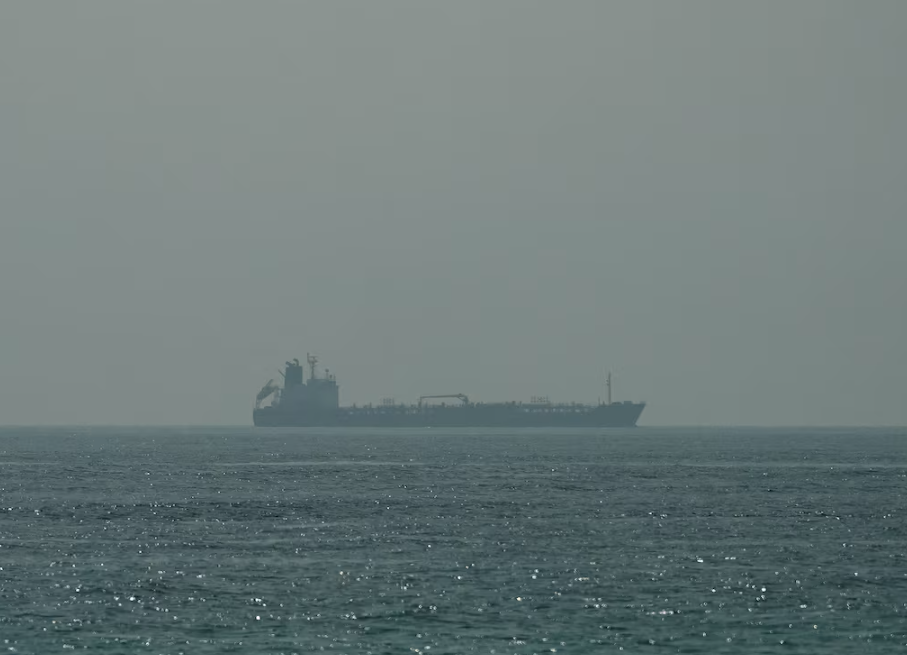
Oil Prices rose more than 1% on Monday as uncertainty over US-Iran peace talks kept geopolitical risks elevated and renewed concerns about crude supplies moving through the Strait of Hormuz.
Brent crude futures gained $1.32, or 1.27%, to $105.64 a barrel by 0036 GMT, while US West Texas Intermediate crude rose 70 cents, or 0.76%, to $93.11. The move followed US President Donald Trump’s rejection of an Iranian proposal aimed at resolving the conflict and reopening the Strait of Hormuz.
Trump nevertheless indicated that US negotiators could hold additional discussions with Iran during the week, leaving markets caught between the possibility of renewed diplomacy and the risk that the regional conflict could continue disrupting energy supplies.
Why Oil Prices Are Rising Again
The latest rise in crude prices reflects a combination of diplomatic uncertainty, attacks involving Iran-backed Houthi forces and concerns about the security of Middle Eastern energy infrastructure.
Oil traders have been closely watching the Strait of Hormuz because the waterway is a major route for crude and petroleum products leaving the Gulf. The International Energy Agency says nearly 20 million barrels per day of oil passed through the strait in 2025, including about 15 million barrels per day of crude and condensates. 0
Any sustained disruption could therefore affect refiners and fuel markets well beyond the Middle East, particularly in Asia, where a large share of Gulf oil is consumed.
The current market, however, is not experiencing a complete shutdown of Hormuz shipments. Preliminary Kpler data showed that crude exports from major Middle Eastern producers increased to about 12.8 million barrels per day in September, the highest level since the conflict began in February. 1
Trump Rejects Iran Peace Proposal but Signals More Talks
Iran presented a peace proposal at the United Nations General Assembly in New York last week and said the proposal had been transmitted to the United States through Qatari mediators.
Trump rejected the proposal on Saturday but subsequently said he expected US negotiators to engage in additional discussions with Iran during the week.
The mixed diplomatic signals have created uncertainty for Energy Markets. A successful agreement could reduce the risk premium embedded in crude prices, while a breakdown in negotiations could keep traders focused on possible supply disruptions.
Reuters reported earlier in September that oil markets had already reacted to uncertainty surrounding the timing of a potential US-Iran agreement. Increased flows through Hormuz and diplomatic signals from Tehran had provided some relief, but concerns about sanctions, military tensions and refined-product shortages continued to influence prices. 2
Brent and WTI Move in Different Directions Over the Week
Although both major crude benchmarks rose on Monday, their weekly performances had been different.
Brent gained about 0.4% during the previous week, while WTI fell 7.9%. The divergence reflected concerns surrounding the US refined-products market, particularly the possibility of restrictions on diesel exports.
US diesel prices have reached unusually high levels, increasing pressure on policymakers and raising concerns about inflation. A potential restriction on diesel exports could keep more fuel inside the United States, but it could also reduce supplies available to international buyers.
European fuel markets are particularly sensitive to changes in US refined-product exports because American supply can help balance shortages in other regions.
Middle East Oil Exports Rebound in September
One of the most important developments in the current oil market is that regional crude exports have not remained at the sharply reduced levels seen earlier in the conflict.
Kpler data showed that crude exports from key Middle Eastern producers were expected to reach about 12.8 million barrels per day in September. That included Saudi Arabia, the United Arab Emirates, Iraq, Oman, Qatar, Kuwait and Iran.
Despite the rebound, exports remained about 6 million barrels per day below the 18.8 million barrels per day recorded in February, according to Kpler data reported by Reuters. 3
The figures show why the oil market remains highly sensitive to developments in the region. Supply has recovered from its lowest levels, but it has not returned to the volumes seen before the conflict.
Saudi Arabia Changes Its Export Routes
Saudi Arabia has played a major role in the recent recovery in Middle Eastern oil shipments.
The kingdom has redirected some crude exports toward terminals on the Gulf after attacks damaged its East-West pipeline and disrupted shipments from the Red Sea port of Yanbu.
As a result, Saudi crude exports through the Strait of Hormuz were expected to rise substantially in September. Kpler data indicated that Saudi shipments through Hormuz were on track to reach about 3.6 million barrels per day, compared with roughly 900,000 barrels per day in August. 4
Saudi Arabia’s Ras Tanura terminal also recorded a significant increase in shipments, with September exports expected to reach around 3.6 million barrels per day compared with 929,000 barrels per day in August, according to Kpler data cited by Reuters. 5
This rerouting has helped maintain crude exports but has also increased dependence on the Strait of Hormuz.
Hormuz Remains the Key Oil-Market Chokepoint
The Strait of Hormuz is one of the world’s most important energy chokepoints. It connects the Persian Gulf with the Gulf of Oman and the Arabian Sea, providing a critical export route for major oil producers.
In 2025, nearly 20 million barrels per day of oil and petroleum products moved through the strait, according to the IEA. Most of the crude exports were destined for Asian markets, with China, India and Japan among the major destinations. 6
This makes the stability of the waterway particularly important for Asian refiners and importers.
Reuters reported that 19 very large crude carriers carrying Saudi oil exited Hormuz during one week in September. Each of these vessels can carry roughly 2 million barrels of crude. 7
However, tanker movements remain well below the normal traffic levels seen before the conflict. Reuters reported that the strait previously handled about 125 large commercial vessels per day, including tankers, gas carriers, bulk carriers and container ships. 8
Shipping Costs Add Another Layer of Pressure
Maintaining oil flows through a more complicated network of shipping routes has increased logistical pressure on the energy market.
Saudi Arabia and other producers have increasingly relied on tankers and ship-to-ship transfers to move crude through the Gulf of Oman. Reuters reported that the increased demand for very large crude carriers has reduced vessel availability and raised shipping costs. 9
These higher transportation costs can affect the delivered price of crude even when physical oil production remains available.
For refiners, the issue is therefore not simply how much oil is produced. The location of crude, the route required to transport it, the availability of tankers and the cost of insurance and freight can all influence the final price.
Houthi Attacks Keep Regional Supply Risks Elevated
Geopolitical risks are also being influenced by continued attacks involving Yemen’s Iran-backed Houthi forces.
Saudi Arabia’s Saudi-led coalition said it intercepted two ballistic missiles and two drones launched toward the kingdom.
The attacks add another layer of uncertainty because Saudi oil infrastructure and shipping routes have already faced disruptions. Earlier attacks damaged infrastructure connected to the kingdom’s East-West pipeline, contributing to the decision to redirect more crude through Gulf terminals.
Reuters has reported that the broader regional conflict has already affected shipping routes and forced oil producers to use alternative methods to maintain exports. 10
Why Diesel Prices Matter for the Oil Market
Crude Oil is not the only part of the energy market under pressure. Refined fuels, particularly diesel, have become another important source of concern.
Diesel is widely used in transportation, agriculture, construction and industrial activity. Higher diesel prices can therefore feed into the cost of moving goods and operating businesses.
Record-high US diesel prices have increased inflation concerns and prompted renewed discussion about possible export restrictions. Analysts cited by Reuters said restrictions on US diesel exports could tighten supplies outside the United States, with European prices particularly exposed to changes in American availability.
For oil markets, this creates a complicated situation. A policy designed to increase domestic fuel availability could simultaneously reduce supplies in international markets.
Oil Markets Face Two Competing Forces
The current crude market is being pulled in two different directions.
On one side, increased Middle Eastern exports and the recovery in shipments through Hormuz are providing additional physical supply. If these flows continue to improve, pressure on crude prices could ease.
On the other side, diplomatic uncertainty and continued attacks create the possibility of renewed supply disruptions. Traders therefore have to assess not only today’s oil shipments but also the risk that future shipments could be interrupted.
This helps explain why oil prices can rise even while regional exports are recovering. The market price reflects expectations about future supply as well as current physical availability.
What Could Happen to Oil Prices Next?
The next major driver for crude prices is likely to be the direction of US-Iran diplomacy and the security of oil transportation routes.
If negotiations produce a credible agreement and tensions around Hormuz decline, traders could place greater weight on recovering exports and improving physical supply. That could reduce some of the geopolitical premium currently embedded in crude prices.
If talks fail and attacks or shipping disruptions increase, the market could instead focus on the possibility of lower exports and higher transportation costs.
Recent Reuters reporting shows that the market has already responded to diplomatic developments in both directions. Earlier signals of increased dialogue and improving Hormuz flows reduced some supply concerns, while warnings about continued conflict kept geopolitical risks elevated. 11
What Higher Oil Prices Could Mean for Consumers
A sustained increase in crude prices can affect consumers through several channels.
Higher crude prices can raise the cost of producing gasoline, diesel and other petroleum products. The effect on retail fuel prices varies by country because taxes, subsidies, refining margins, currency movements and government policies also influence what consumers pay.
For countries that import significant quantities of crude, higher international prices can also increase import bills and put pressure on currencies and inflation.
India and other major Asian oil importers are particularly exposed to developments around Hormuz because a large proportion of Gulf crude exports ultimately move toward Asian markets. The IEA identifies China, India and Japan among the major destinations for oil transported through the strait. 12
Why the Market Has Not Seen a Complete Supply Shock
Despite the conflict and repeated concerns about Hormuz, Middle Eastern producers have found ways to continue moving significant volumes of crude.
Saudi Arabia’s rerouting of exports, increased tanker movements and ship-to-ship transfers have helped maintain supplies. Reuters reported that ship-to-ship transfers in the Gulf of Oman had expanded significantly as producers adapted to disruptions affecting traditional routes. 13
These measures do not eliminate the risks. Instead, they provide alternative ways to keep oil moving while increasing transportation complexity and costs.
The distinction matters because a temporary disruption can be managed differently from a prolonged closure of a major export route. The longer a disruption lasts, the greater the pressure can become on tanker availability, inventories, refinery operations and alternative supply routes.
What Traders Will Watch This Week
Several developments will be particularly important for oil markets in the coming days.
- US-Iran negotiations: Further diplomatic talks could influence expectations about the duration of the conflict.
- Strait of Hormuz traffic: Tanker movements will remain an important indicator of actual physical oil flows.
- Saudi export routes: The continued use of Gulf terminals will affect how much crude moves through Hormuz.
- Houthi activity: Further attacks could increase concerns about regional energy infrastructure and shipping.
- US diesel policy: Any decision affecting diesel exports could influence refined-fuel prices outside the United States.
The Bigger Picture for Global Energy Markets
The latest oil-price move illustrates how closely energy markets are linked to diplomacy, shipping and infrastructure.
The immediate issue is not simply whether the world has enough crude underground. The critical question is whether producers can move that crude safely and economically from production fields to refineries.
The September rebound in Middle Eastern exports provides evidence that producers have been able to adapt. However, exports remain below pre-conflict levels, while the continued dependence on Hormuz leaves the market sensitive to any major disruption.
For now, oil prices remain caught between improving physical flows and persistent geopolitical uncertainty. The direction of US-Iran negotiations, the security of regional shipping routes and the availability of refined fuels will determine which force becomes more important for the market.
Frequently Asked Questions
1. Why are oil prices rising on September 28, 2026?
Oil prices rose as uncertainty surrounding US-Iran peace talks increased concerns about continued geopolitical risks and the security of crude shipments through the Strait of Hormuz.
2. What was the Brent crude price on Monday?
Brent crude futures rose $1.32, or 1.27%, to $105.64 a barrel by 0036 GMT, according to the Reuters report.
3. What was the WTI crude price?
US West Texas Intermediate crude was trading at $93.11 a barrel, up 70 cents, or 0.76%, at the time cited in the Reuters report.
4. Why is the Strait of Hormuz important for oil prices?
The Strait of Hormuz is a major export route for crude oil and petroleum products from Gulf producers. The IEA says nearly 20 million barrels per day of oil passed through the strait in 2025.
5. Are Middle Eastern oil exports recovering?
Yes. Preliminary Kpler data showed crude exports from key Middle Eastern producers reaching about 12.8 million barrels per day in September, although that remained below February’s level.
6. Why is Saudi Arabia using the Strait of Hormuz more?
Attacks damaged Saudi Arabia’s East-West pipeline and disrupted shipments from the Red Sea port of Yanbu. Saudi Arabia subsequently redirected more crude exports toward Gulf terminals and through Hormuz.
7. Could US diesel export restrictions affect global oil prices?
Potential restrictions could increase domestic US fuel availability but reduce diesel supplies available to international markets. European fuel prices could therefore be affected if American exports decline.
8. What will determine oil prices next?
Key factors include the progress of US-Iran negotiations, crude flows through the Strait of Hormuz, regional attacks, Saudi export routes, tanker availability and developments in the US diesel market.
For breaking news and live news updates, like us on Facebook or follow us on Twitter and Instagram. Read more on Latest Business on thefoxdaily.com.





COMMENTS 0