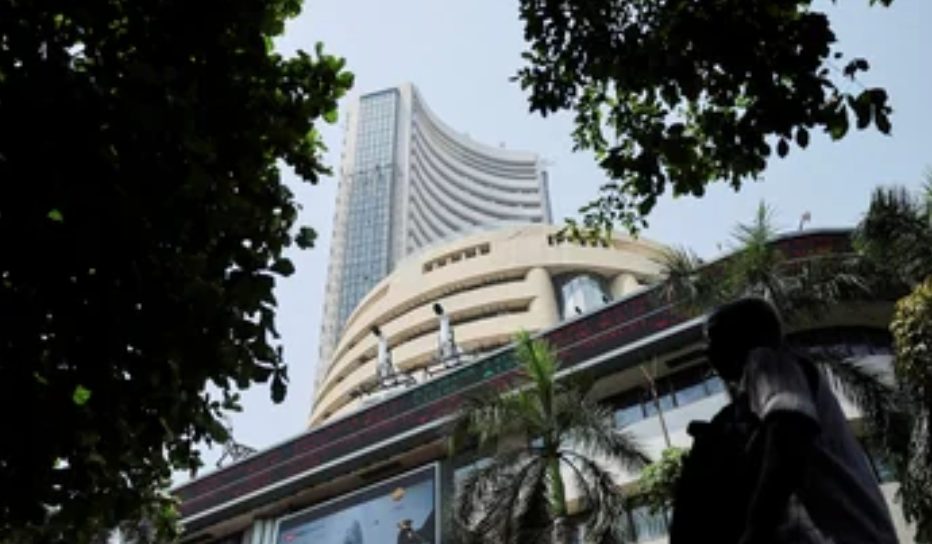
Indian stock markets opened slightly higher on Friday, September 25, 2026, after the Sensex and Nifty 50 suffered their steepest single-session decline in more than two months in the previous trading session. The modest recovery came as investors continued to monitor Crude Oil prices, Middle East tensions, foreign fund outflows and rising global bond yields.
The Nifty 50 rose 0.16% to 23,099.55 in early trading, while the Sensex gained 0.18% to 73,627.13. The positive opening followed a sharp sell-off on Thursday, when concerns over surging oil prices and geopolitical uncertainty weighed heavily on Indian equities.
Sensex and Nifty Open Higher on Friday
The Nifty 50 opened at 23,099.55, up 0.16%, while the BSE Sensex climbed 0.18% to 73,627.13 points.
The gains were relatively small compared with the losses recorded in the previous session. Thursday’s sell-off pushed both major Indian benchmarks sharply lower as investors reacted to rising crude oil prices and continuing uncertainty surrounding the Middle East conflict.
The early recovery suggests that some buying interest returned to the market, although investors remained cautious because several risks affecting Indian equities had not disappeared.
Thursday’s Market Sell-Off Was the Worst in 10 Weeks
Indian equities suffered a sharp decline on Thursday. The Nifty 50 fell to 23,063.10 points, while the Sensex dropped more than 1,200 points to close at 73,580.54.
The decline marked the worst trading session for the Indian stock market in roughly 10 weeks. Rising crude oil prices were a major concern because India imports a large share of the crude oil it consumes.
Higher oil prices can increase India’s import bill and put pressure on inflation, corporate costs and the country’s external finances. This makes crude oil an especially important variable for Indian financial markets.
Crude Oil Remains the Key Market Variable
Crude oil prices remained central to investor sentiment on Friday. Brent crude fell slightly to $105.73 a barrel, while West Texas Intermediate crude declined to $93.05 a barrel, according to the figures cited in the report.
The decline in oil prices provided some relief to markets, but crude remained well above the $100-per-barrel level that had become an important focus for investors.
Hemang Gor, senior research analyst for derivatives and technical research at Axis Direct, described crude as a key variable for India and said the renewed rise in oil prices had revived supply concerns.
For India, sustained high crude prices can have several consequences. Higher fuel and transportation costs can feed into the prices of goods and services, potentially complicating the inflation outlook.
Middle East Tensions Keep Investors Cautious
Geopolitical developments in the Middle East continued to influence global financial markets. Investors were monitoring developments involving the United States, Iran and the wider region, including hopes for a possible truce.
Any escalation that threatens oil production, transportation routes or supply could potentially place additional upward pressure on global crude prices. Conversely, signs of de-escalation could reduce some of the risk premium embedded in oil markets.
This uncertainty is particularly important for oil-importing economies such as India because a prolonged period of elevated crude prices could increase costs for businesses and consumers.
Foreign Investors Continue to Sell Indian Shares
Foreign investor activity has also remained an important factor for Indian equities. According to the Reuters figures cited in the report, foreign investors sold Indian shares worth 50.27 billion rupees, or about $523.89 million, on Thursday.
Foreign institutional flows can have a significant short-term influence on Indian equity markets, particularly during periods of global risk aversion.
When international investors reduce exposure to emerging markets, Indian stocks can face additional selling pressure. Conversely, a return of foreign buying can provide support to domestic benchmarks.
Indian Markets on Track for Seventh Weekly Decline
Despite Friday’s early gains, both major benchmarks remained under pressure on a weekly basis.
Before Friday’s opening, the Nifty 50 was down around 1.2% for the week, while the Sensex had fallen about 1%. If the losses persist through the end of the week, both indices would record a seventh consecutive weekly decline.
A prolonged sequence of weekly declines highlights the pressure facing Indian equities even though individual trading sessions can still produce temporary recoveries.
Rising Global Bond Yields Add to Market Pressure
Another concern for investors is the rise in global bond yields. US 30-year Treasury yields have reached their highest level in more than 20 years, according to the report.
Higher government bond yields can influence equity markets because they affect the relative attractiveness of bonds compared with stocks. Rising yields can also increase borrowing costs for companies and consumers.
For emerging markets, higher US yields can create additional pressure because global investors may reassess the returns available from riskier assets. Currency movements and capital flows can also be affected by changes in US interest-rate expectations and bond yields.
Inflation Concerns Are Back in Focus
Higher crude prices are particularly important because of their potential effect on inflation. If energy costs remain elevated, businesses can face higher transportation and production expenses, while consumers may pay more for fuel and other goods.
Persistent inflation can complicate monetary-policy decisions because central banks must balance price stability with economic growth.
For Indian investors, the combination of high crude prices and rising global bond yields creates an environment in which inflation and interest rates remain important factors in determining market valuations.
Why Oil Prices Matter So Much for India
India relies heavily on imported crude oil to meet domestic energy demand. As a result, changes in international oil prices can influence the country’s trade balance, inflation and corporate profitability.
When crude becomes significantly more expensive, companies that depend heavily on fuel or transportation may face higher operating expenses. Industries with limited ability to pass those costs on to customers can experience pressure on profit margins.
Higher oil prices can also affect household budgets by increasing fuel-related expenses, potentially leaving consumers with less money for discretionary spending.
Markets Look for Relief From Geopolitical Risks
Friday’s slight decline in oil prices was partly linked to hopes for a truce amid continuing Middle East tensions. Investors were closely watching developments for signs that the conflict could become less disruptive to global energy supplies.
However, geopolitical markets can change rapidly. A temporary decline in crude prices does not necessarily eliminate the risks created by disruptions to production, shipping or regional infrastructure.
For Indian equities, the sustainability of any market recovery could therefore depend partly on whether oil prices stabilize at lower levels.
What Investors Are Watching on Friday
- Crude oil prices: Brent remained above $105 a barrel despite a modest decline.
- Middle East tensions: Investors were watching developments surrounding the conflict and potential truce efforts.
- Foreign fund flows: Large foreign selling remained a source of pressure on Indian equities.
- Global bond yields: Rising US Treasury yields continued to affect risk sentiment.
- Inflation: Higher energy prices raised concerns about future price pressures.
- Banking and financial stocks: Financial shares remained among the areas under pressure.
- Weekly trend: The Sensex and Nifty remained on track for another weekly decline despite Friday’s positive opening.
Can Friday’s Gains Reverse the Recent Weakness?
The positive opening provided some relief after Thursday’s heavy selling, but a single session of gains does not by itself change the broader market trend.
Investors are likely to continue tracking crude oil, foreign institutional flows and geopolitical developments. The direction of global bond yields will also remain important because higher yields can affect both equity valuations and international capital allocation.
The sustainability of any recovery could depend on whether the major sources of uncertainty begin to ease. A sustained decline in crude prices and reduced geopolitical tensions could improve sentiment, while another sharp increase in energy prices could renew pressure on equities.
Indian Stock Market Outlook Remains Closely Linked to Crude
The latest market action illustrates how strongly Indian equities can respond to developments outside the domestic economy. While company earnings, economic growth and domestic liquidity remain important, international oil prices and global financial conditions can quickly influence investor sentiment.
For now, the Sensex and Nifty are attempting to recover from Thursday’s sharp losses. Friday’s modest gains show that buyers were willing to return to the market, but the broader weekly decline and continuing geopolitical risks indicate that investors remain cautious.
Crude oil will remain one of the most closely watched variables because sustained prices above $100 a barrel could have implications for inflation, corporate costs and India’s external position. Global bond yields and foreign investor flows will also remain important indicators for the direction of Indian equities.
Frequently Asked Questions
How did Sensex and Nifty open on September 25, 2026?
The Nifty 50 opened 0.16% higher at 23,099.55, while the Sensex gained 0.18% to 73,627.13 points.
Why did Indian markets fall sharply on Thursday?
Indian equities were pressured by rising crude oil prices, Middle East tensions, concerns about inflation, higher global bond yields and foreign investor selling.
How much did the Sensex fall on Thursday?
The Sensex dropped more than 1,200 points and fell to 73,580.54, marking one of its weakest sessions in about 10 weeks.
What was the Nifty 50 level after Thursday’s sell-off?
The Nifty 50 fell to 23,063.10 points during Thursday’s market decline.
What was Brent crude trading at on Friday?
Brent crude was down 87 cents, or 0.82%, at $105.73 a barrel at 0212 GMT, according to the figures cited in the report.
Why are high crude oil prices a concern for India?
India is heavily dependent on imported crude oil, so higher international oil prices can increase import costs and contribute to inflationary pressure.
How much did foreign investors sell on Thursday?
Foreign investors sold Indian shares worth 50.27 billion rupees, or approximately $523.89 million, according to the Reuters figures cited in the report.
Why are US bond yields important for Indian stocks?
Higher US bond yields can influence global investment flows, borrowing costs and the relative attractiveness of equities, creating additional pressure for emerging-market assets such as Indian stocks.
For breaking news and live news updates, like us on Facebook or follow us on Twitter and Instagram. Read more on Latest Business on thefoxdaily.com.






COMMENTS 0