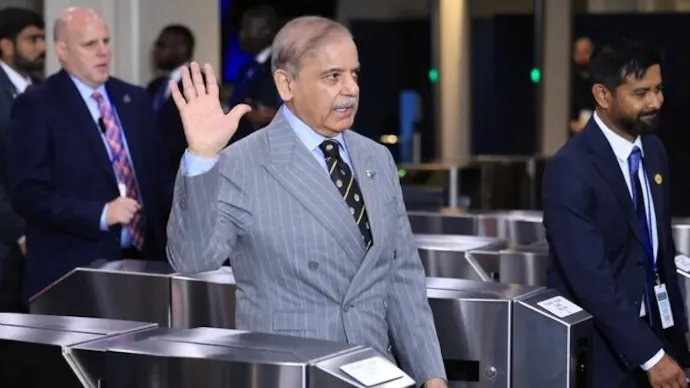
Pakistan, which continues to rely on financial assistance from the International Monetary Fund (IMF), has been named the incoming chair of the Boards of Governors of the IMF and the World Bank Group for 2027. The appointment marks the country’s first return to the position since 1953, even as it awaits approval for approximately $1.2 billion in additional funding from the IMF.
Pakistan’s Ministry of Economic Affairs announced the decision on Friday during the 2026 World Bank-IMF Annual Meetings in Bangkok, Thailand. Federal Minister for Economic Affairs Ahad Khan Cheema, who also serves as Pakistan’s governor to the World Bank, was formally announced as the incoming chair.
The government described the appointment as a historic milestone, saying it would give Islamabad an opportunity to contribute to international economic and development discussions and encourage dialogue among member countries. However, the diplomatic recognition comes as Pakistan continues to face economic challenges and dependence on external financing.
What Pakistan’s IMF and World Bank Chairmanship Means
As chair of the Boards of Governors, Pakistan will preside over proceedings involving finance ministers and central bank governors from member countries. The role provides a prominent platform for international economic discussions and development policy coordination.
However, the chairmanship does not give Pakistan control over IMF or World Bank lending decisions. Those decisions remain subject to the institutions’ established governance structures and approval processes.
Pakistan’s Ministry of Economic Affairs said the country intended to use the position to strengthen the voice of developing nations, promote predictable development financing, improve coordination among multilateral institutions and mobilise private investment for sustainable and inclusive growth.
The appointment also gives Islamabad an opportunity to engage with international policymakers at a time when developing economies are dealing with debt pressures, financing constraints and uncertainty in global markets.
Pakistan Awaits $1.2 Billion in IMF Funding
Despite securing the chairmanship, Pakistan remains dependent on financial support from the IMF. The country is currently covered by two programmes: a $7 billion Extended Fund Facility (EFF) designed to address external financing needs and support economic reforms, and a $1.4 billion Resilience and Sustainability Facility (RSF) intended to help tackle climate-related risks.
A recent staff-level agreement following reviews of both programmes could unlock approximately $1 billion under the EFF and another $210 million under the RSF. The proposed disbursements still require approval from the IMF Executive Board.
If approved, total disbursements under the two arrangements would reach around $5.7 billion, providing additional financial support as Pakistan works to stabilise its economy and meet external obligations.
The agreement covers the fourth review of the 37-month EFF programme and the third review of the 28-month RSF arrangement. The discussions were led by IMF mission chief Iva Petrova.
Economic Reforms Remain a Major Challenge
Pakistan’s repeated reliance on IMF assistance reflects long-standing difficulties in securing sufficient foreign currency to meet external payments while maintaining economic stability. Periods of weak foreign exchange reserves, inflation and financing pressures have repeatedly forced the country to seek support from international lenders.
The World Bank has also raised concerns about Pakistan’s economic model, pointing to high public consumption, low productivity and heavy borrowing as weaknesses that undermine long-term sustainability.
Although international assistance can help ease immediate financial pressures, the broader challenge is to translate that support into stronger productivity, sustainable growth and improved public finances. Without lasting economic improvements, Pakistan could remain vulnerable to future financing crises.
Pakistan’s Economic Stability Shows Signs of Improvement
The IMF’s latest assessment points to some progress in stabilising Pakistan’s economy. The lender said the country had maintained macroeconomic stability despite the impact of the conflict in West Asia, supported by policy measures and its ongoing loan programmes.
Pakistan’s real gross domestic product grew by 4% during the first three quarters of fiscal year 2026. However, higher energy prices and supply disruptions subsequently weakened economic momentum, leaving full-year growth estimated at 3.6%.
Inflation also eased to approximately 10.3% in September after reaching a peak in May. Strong remittance inflows helped keep the current account broadly balanced during fiscal year 2026, while gross foreign exchange reserves increased to around $21 billion by the end of September.
These developments suggest that Pakistan has made progress in addressing some of its immediate economic vulnerabilities. Nevertheless, inflation remains a concern, while the country continues to face risks from volatile energy prices, geopolitical tensions and changing global financing conditions.
International Confidence Improves, but Risks Remain
IMF mission chief Iva Petrova highlighted sovereign credit rating upgrades and renewed access to international markets as signs that Pakistan’s economic policies were gaining credibility.
However, she also identified external risks that could undermine the recovery. Geopolitical tensions, disruptions to trade, fluctuating energy prices and tighter global financing conditions could place renewed pressure on the country’s economy and external accounts.
For Pakistan, maintaining stability will depend on continuing economic reforms, strengthening foreign exchange reserves and managing its financing requirements. Sustained improvements in productivity and investment will also be important in reducing the country’s dependence on emergency financial assistance.
Can Pakistan Reduce Its Dependence on International Loans?
Pakistan’s appointment to chair the IMF and World Bank Boards of Governors in 2027 represents a diplomatic achievement and offers a platform to participate more prominently in global economic discussions. The position could help Islamabad promote the financing priorities of developing countries and encourage closer cooperation among international institutions.
However, the chairmanship does not resolve the economic challenges facing the country. Pakistan still needs IMF funding, while structural weaknesses continue to limit its ability to generate sustainable growth and reduce borrowing pressures.
The coming months will be important as the IMF reviews proceed and Pakistan works to preserve the gains made in stabilising inflation, reserves and economic growth. The longer-term test will be whether the country can turn improved international standing into stronger economic resilience.
Pakistan has secured a place at the head of the table for 2027. Reducing its reliance on the financial institutions it will help lead remains a much larger challenge.
For breaking news and live news updates, like us on Facebook or follow us on Twitter and Instagram. Read more on Latest Business on thefoxdaily.com.





COMMENTS 0