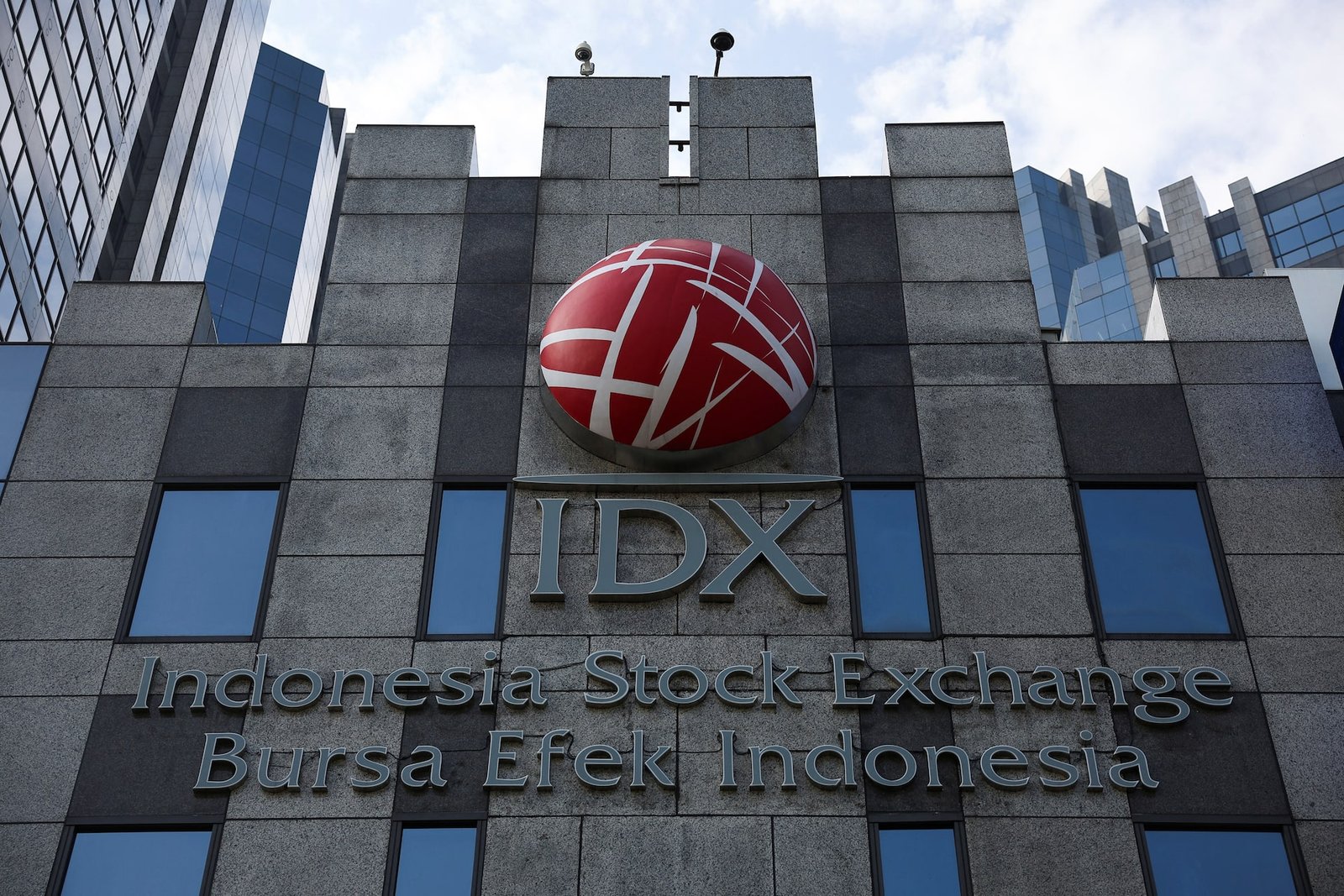
Indonesia’s financial markets are facing mounting uncertainty after a warning from global index provider MSCI triggered the country’s sharpest one-day Stock Market decline in nearly three decades. Investors are now assessing the potential consequences of a downgrade that could reduce Indonesia’s access to international capital and deepen an already fragile market environment.
Jakarta’s benchmark stock index plunged 11.6% on Friday, October 16, bringing its losses since the beginning of 2026 to approximately 40%. The decline made Indonesian equities the worst-performing stock market globally over the period, according to the reported figures.
The sell-off followed MSCI’s announcement that it was considering moving Indonesia from its current emerging-market classification to standalone-market status next year. The prospect of losing its position in MSCI’s emerging-market indexes has intensified concerns about Foreign Investment, market transparency and the government’s ability to restore investor confidence.
The warning has also placed renewed attention on longstanding concerns about share ownership transparency and trading practices in Indonesia’s capital markets. Authorities are now under pressure to demonstrate that proposed reforms can improve market functioning and meet international investors’ expectations.
MSCI Warning Triggers Sharp Indonesian Stock Market Sell-Off
MSCI’s potential reclassification represents a significant risk for Indonesia because international investment funds use its indexes to guide decisions about where to allocate capital. A change in classification could affect the country’s visibility among global investors and reduce the amount of money allocated to Indonesian equities.
Indonesia is Southeast Asia’s largest economy, but its stock market has struggled with investor concerns over transparency, ownership structures and trading behaviour. MSCI had previously threatened to downgrade the country to frontier-market status in January because of these issues.
However, the latest warning went further. MSCI said the lack of sufficient progress in addressing its concerns meant that even a downgrade to frontier-market status might not adequately reflect the seriousness of the problems.
A move to standalone status could place Indonesia outside the mainstream international equity benchmarks used by many institutional investors. The classification could group its market with countries such as Lebanon and Zimbabwe, potentially making Indonesian equities less accessible to some global investment strategies.
The prospect of such a change has increased uncertainty about the country’s ability to attract new foreign capital at a time when investor confidence is already weak.
Indonesia Stock Exchange Introduces Temporary Trading Measure
In response to the market turmoil, the Indonesia Stock Exchange announced on Monday that it had reduced its lower auto-rejection limit to 7% from 15%. The measure is intended to give investors more time to assess new information and make decisions based on Indonesia’s economic fundamentals.
The exchange said the change would provide market participants with an opportunity to evaluate and digest available information following the recent volatility.
The decision followed a weekend meeting between the financial regulator and capital-market participants, including analysts and economists. The discussions came as authorities sought to address concerns raised by MSCI and limit the risk of further disorderly trading.
Trading limits are designed to restrict how far certain stock prices can move during a trading session. Adjusting the lower threshold can change the pace at which prices fall, although it does not directly resolve the underlying concerns affecting investor sentiment.
Indonesian regulators have also taken action against suspected market misconduct. On Friday, a regulator announced sanctions against individuals linked to alleged trading manipulation involving shares of three companies.
The measures indicate that authorities are attempting to respond to concerns about trading practices and market integrity. However, restoring confidence may require sustained reforms rather than short-term interventions alone.
MSCI Reclassification Could Trigger Billions in Investment Outflows
The potential consequences of MSCI’s warning extend beyond the immediate decline in share prices. According to Goldman Sachs, a complete removal of Indonesian equities from MSCI’s relevant indexes could trigger approximately $5.6 billion in passive investment outflows.
Passive funds generally seek to replicate the performance of a benchmark index. If Indonesia were removed from an index they track, these funds could be required to reduce or eliminate their exposure to Indonesian stocks, depending on their investment mandates.
Goldman Sachs also estimated that active funds benchmarked to the indexes hold more than $8 billion in Indonesian equities. However, any selling by these funds would be discretionary rather than automatically required by index changes.
The distinction matters because passive funds typically adjust holdings to reflect benchmark changes, while active managers retain greater flexibility to make investment decisions based on their assessments of market conditions and individual companies.
Nevertheless, the prospect of large-scale outflows has increased concerns that Indonesia could face a prolonged period of reduced foreign participation. Lower international investment could affect liquidity, stock valuations and the ability of companies to attract new capital.
Goldman Sachs Says Indonesia Must Prove Reforms Are Working
Goldman Sachs strategists said Indonesian authorities would need to demonstrate measurable progress in addressing MSCI’s concerns if the country hopes to avoid reclassification.
“The burden of proof has shifted: avoiding reclassification will require clear evidence that the announced reforms have been consistently implemented and materially improved market functioning,” Goldman Sachs strategists said in a note.
The assessment suggests that announcing reforms may not be enough to reassure international investors. Authorities may need to show that changes have improved transparency, strengthened market oversight and reduced concerns about trading behaviour.
Ownership transparency is particularly important because investors need reliable information about who controls shares and how much stock is genuinely available for public trading. Uncertainty over ownership and trading patterns can make it harder to assess market liquidity and the reliability of prices.
MSCI’s warning has therefore raised the stakes for Indonesia’s financial authorities. The response could influence not only the country’s future index classification but also how international investors assess the credibility of its capital-market reforms.
Foreign Investors Continue to Withdraw Money From Indonesian Stocks
Foreign investors have already reduced their exposure to Indonesian equities significantly in 2026. They have recorded net sales of approximately $4.88 billion worth of Indonesian stocks so far this year, putting the market on track for its largest annual foreign outflow in at least 16 years.
The latest MSCI warning could reinforce that trend by increasing uncertainty about future market access and the potential for forced selling by index-tracking funds.
Aninda Mitra, head of Asia macro and investment strategy at BNY Investments, said foreign investors’ exposure to Indonesia had fallen so far that the scope for additional downside selling might be limited.
“There may not be much more downside from here,” Mitra said.
However, he warned that attracting substantial amounts of new capital could remain difficult even for companies with sound underlying businesses.
“But at the same time, even if there are some interesting and fundamentally sound companies and banks, attracting sufficiently large amounts of capital will be tougher in this environment,” he added.
His comments highlight a challenge facing Indonesian companies: strong individual businesses may struggle to attract investment if international investors become concerned about the broader market structure and regulatory environment.
Rupiah Weakness Raises Concerns Beyond the Stock Market
The market turmoil has also increased concern about Indonesia’s currency and government bond market. The Indonesian rupiah weakened to around 18,000 per US dollar, approaching the record low of 18,190 reached in June.
Further pressure on the currency could increase financial uncertainty and complicate conditions for businesses with foreign-currency obligations. A weaker currency can also raise the local-currency cost of imports, potentially adding to inflationary pressures.
Investors are also monitoring government bond yields because sustained selling pressure could push borrowing costs higher. Higher yields can increase the cost of financing for governments and businesses and may tighten financial conditions across the economy.
Gary Tan, a portfolio manager at Allspring Global Investments in Singapore, said the broader economic consequences were more concerning than index-related selling alone.
“Our bigger concern is not index-related selling itself, but the potential near-term spillover into the rupiah and domestic bond yields, where market dislocation could translate into tighter financial conditions and a more meaningful impact on the real economy,” Tan said.
His warning reflects concerns that financial-market stress could spread beyond equities into currency and bond markets. If these pressures persist, companies and households could face more difficult financing conditions, potentially affecting investment and economic activity.
Indonesia’s Government Faces Growing Investor Pressure
The MSCI warning has created an additional challenge for President Prabowo Subianto’s government, which has already faced setbacks in 2026. Credit-rating agencies Moody’s and Fitch lowered Indonesia’s sovereign rating outlooks to negative earlier in the year, adding to concerns about the country’s financial outlook.
Credit-rating outlooks provide an indication of the direction in which an agency may move a country’s rating if its assessment of economic or financial risks changes. A negative outlook does not automatically mean an immediate downgrade, but it signals that the agency sees risks that could weaken the credit profile.
The combination of stock-market losses, foreign capital outflows, currency weakness and negative rating outlooks has increased scrutiny of Indonesia’s economic management and financial-market policies.
Authorities now face the task of addressing MSCI’s concerns while maintaining confidence in the wider economy. Clearer ownership disclosures, stronger oversight of trading practices and consistent implementation of reforms could be important in demonstrating progress to international investors.
What Happens Next for Indonesian Markets?
Indonesia’s near-term market outlook will depend partly on how regulators respond to MSCI’s concerns and whether investors see evidence that proposed reforms are improving market transparency and functioning.
The Indonesia Stock Exchange’s decision to lower the auto-rejection limit may help investors process information during periods of sharp price movements, but the measure does not directly address the issues behind MSCI’s warning.
The potential for billions of dollars in passive outflows remains a significant concern, while discretionary investment decisions by active funds could add further uncertainty. Continued foreign selling could also increase pressure on the rupiah and domestic bond yields, widening the effects of the stock-market downturn.
At the same time, some investors believe that the substantial decline in foreign exposure may limit the scope for additional selling. However, that does not guarantee a recovery, particularly if concerns about transparency and access to international capital remain unresolved.
Indonesia’s challenge is to demonstrate that its financial-market reforms can produce lasting improvements rather than temporary relief. The country’s response to MSCI’s warning could prove important for investor confidence, future capital flows and the stability of its financial markets.
For breaking news and live news updates, like us on Facebook or follow us on Twitter and Instagram. Read more on Latest World on thefoxdaily.com.





COMMENTS 0