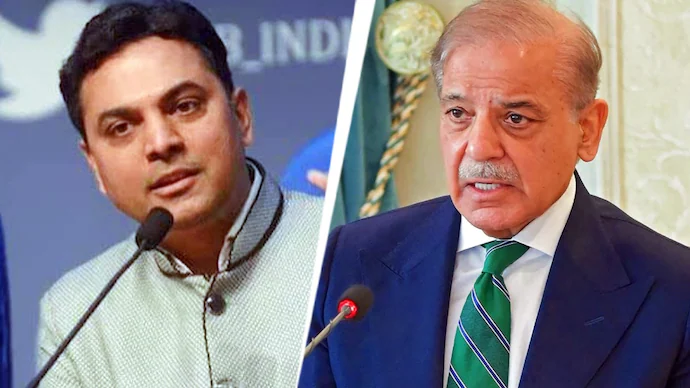
Pakistan’s appointment to chair the International Monetary Fund (IMF) and World Bank Boards of Governors in 2027 has been described by Islamabad as a “historic milestone”. However, former Indian IMF executive director Krishnamurthy Subramanian has challenged that characterisation, arguing that the role is largely ceremonial and should not be mistaken for substantive financial authority.
Pakistan’s Economic Affairs Minister Ahad Khan Cheema was named the incoming chair during the annual meetings in Bangkok on Friday. Pakistan last held the position in 1953, making the appointment a notable diplomatic development for the country.
Subramanian said the chairmanship follows an established annual rotation among member countries and does not give the holder control over international lending decisions or the wider global financial system.
“Pakistan will chair the IMF-World Bank Annual Plenary in 2027. This chair is purely ceremonial & rotates annually: Paraguay this year, Cabo Verde in 2025. It’s protocol, not power,” Subramanian wrote on X.
His comments have drawn attention to the distinction between presiding over an international meeting and exercising decision-making authority within major financial institutions.
What Does Pakistan’s IMF-World Bank Chairmanship Mean?
The chairmanship involves presiding over the IMF-World Bank Annual Plenary, a gathering attended by finance ministers, central bank governors and other senior officials from member countries. The meetings provide a platform for discussing global economic conditions, development priorities, financial stability and cooperation between governments.
Pakistan’s government has presented the appointment as an opportunity to participate in international economic discussions and facilitate dialogue among member countries. The position could offer Islamabad greater diplomatic visibility during the annual meetings and allow its representatives to engage with policymakers from across the world.
However, the chairmanship does not give Pakistan unilateral authority over IMF or World Bank lending decisions. Those decisions follow the institutions’ established governance structures and procedures, rather than being determined by the country presiding over the annual plenary.
The distinction is important because the IMF and World Bank play major roles in International Finance and development. The IMF provides financial assistance to countries facing balance-of-payments difficulties and supports economic stabilisation programmes, while the World Bank finances development initiatives and poverty-reduction efforts.
Although the chairmanship places Pakistan in a prominent position during the annual meetings, it does not change the underlying distribution of decision-making authority within either institution.
Former IMF Director Rejects Comparisons With India’s G20 and BRICS Presidencies
Subramanian also criticised comparisons between Pakistan’s rotating IMF-World Bank chairmanship and India’s presidencies of the Group of Twenty (G20) and the BRICS grouping of major emerging economies.
“Equating India’s G20 and BRICS presidencies with Pakistan’s rotating IMF-World Bank Annual Plenary chairmanship is a false equivalence,” Subramanian said.
He argued that India’s G20 presidency provided an opportunity to help shape the agenda of a major international forum focused on global economic cooperation. The G20 brings together major advanced and emerging economies to discuss issues such as economic growth, financial stability, trade and sustainable development.
India’s BRICS presidency, meanwhile, involved leadership of a platform focused on cooperation among emerging economies. The grouping provides a forum for discussions on economic development, trade, finance and other shared priorities among its members.
Subramanian contrasted these responsibilities with Pakistan’s role, which he described as presiding over an annual meeting rather than leading a broader international policy agenda.
“Pakistan’s role is to preside over an annual meeting,” he added.
The comparison highlights differences between rotating meeting chairmanships and presidencies that can involve setting priorities, coordinating initiatives and guiding discussions across a wider programme of work.
Pakistan’s Appointment Comes Amid Continued Reliance on IMF Financing
The announcement comes as Pakistan awaits approval from the IMF Executive Board for approximately $1.2 billion in financing under two existing programmes. The funding follows a staff-level agreement on the latest reviews of the programmes, but disbursement remains subject to the required approval process.
Pakistan is participating in a $7 billion Extended Fund Facility (EFF), which is intended to help address external financing needs and support economic reforms. The programme is part of the country’s efforts to stabilise its economy and manage financial pressures.
The country is also covered by a $1.4 billion Resilience and Sustainability Facility (RSF), which is designed to help address longer-term challenges, including climate-related economic risks.
The two programmes serve different purposes but reflect Pakistan’s continued engagement with the IMF as it seeks financing and support for economic reforms. The latest expected disbursement is linked to the programmes’ review process and is not a consequence of the country’s appointment to chair the annual plenary.
Diplomatic Recognition Does Not Change IMF Lending Authority
Pakistan’s upcoming chairmanship gives the country an opportunity to host or preside over important discussions involving international financial leaders. Such events can provide diplomatic exposure and create opportunities for engagement with governments, multilateral institutions and development partners.
However, the role should be distinguished from the authority to approve loans, determine programme conditions or direct the policies of the IMF and World Bank. Those responsibilities remain governed by each institution’s formal decision-making arrangements.
Subramanian’s comments challenge the suggestion that the appointment represents a shift in global financial influence. His argument is that the rotating chairmanship is primarily procedural, even though it places Pakistan at the centre of the annual meetings for the duration of its tenure.
For Islamabad, the appointment remains a diplomatic opportunity to contribute to discussions on global economic and development issues. At the same time, the country continues to rely on IMF programmes to support its financial needs and reform agenda.
What the 2027 Chairmanship Means for Pakistan
Pakistan’s selection as the incoming chair of the IMF-World Bank Annual Plenary marks its return to the position after more than seven decades. The government has described the development as an important milestone and an opportunity to facilitate international economic dialogue.
Nevertheless, the appointment does not provide Pakistan with special control over the IMF’s lending decisions or the World Bank’s development financing. Its significance lies primarily in diplomatic visibility and the opportunity to preside over discussions involving member countries.
As Pakistan awaits further IMF financing approvals, the distinction between diplomatic recognition and economic authority remains central to assessing the announcement. The 2027 chairmanship may give Islamabad a prominent international platform, but the country’s broader economic outlook will continue to depend on its financing arrangements, reform efforts and engagement with international lenders.
For breaking news and live news updates, like us on Facebook or follow us on Twitter and Instagram. Read more on Latest Business on thefoxdaily.com.






COMMENTS 0