The International Monetary Fund (IMF) has raised India’s Economic Growth forecast for FY2026-27 to 7% from 6.4%, reflecting stronger-than-expected economic activity. However, the improved outlook faces several risks, including the prolonged Middle East conflict, rising energy prices, pressure on the rupee, tighter global financial conditions, uncertainty surrounding artificial intelligence (AI) and the possibility of adverse weather linked to El Niño.
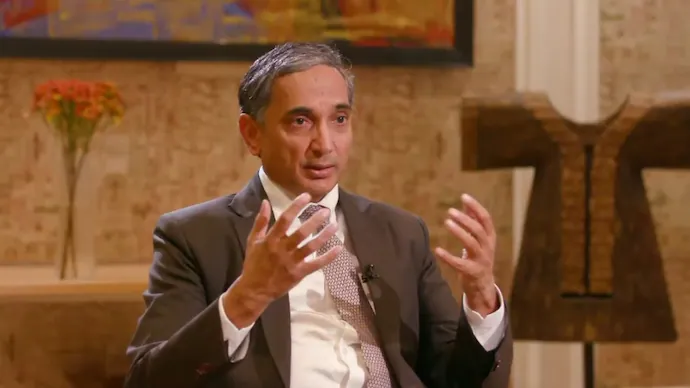
Krishna Srinivasan, director of the IMF’s Asia and Pacific Department, has warned that these risks could significantly affect India’s growth prospects if they occur simultaneously. While the revised forecast signals confidence in the economy’s momentum, sustaining that growth will depend on how policymakers respond to mounting domestic and international challenges.
In an exclusive interview with India Today, Srinivasan said the biggest concern was the possibility of multiple risks converging at the same time, creating a more serious challenge for India and the wider Asian region.
“The biggest worry is if all of these come together, the confluence of risks come together, that can have a significant bearing on prospects for India and for the region,” Srinivasan said.
The IMF’s revised projection follows better-than-expected economic performance. The Fund has also projected India’s medium-term growth at around 6.9%, although Srinivasan cautioned that maintaining this momentum would depend on how the country navigates global uncertainty and the effects of a prolonged energy shock.
Middle East Conflict and Energy Prices Pose Major Risks
One of the most immediate threats to India’s growth outlook is the disruption to energy supplies associated with the Middle East conflict and uncertainty surrounding the Strait of Hormuz. The critical shipping route plays an important role in global energy trade, and prolonged disruption can increase oil and gas prices while creating uncertainty for importing countries.
India relies heavily on imported energy, making its economy vulnerable to sustained increases in international fuel prices. More expensive oil and gas can raise transportation costs, increase production expenses for businesses and reduce the purchasing power of households.
Higher energy prices can also put pressure on Inflation, the current account and the wider external balance. If businesses pass higher costs on to consumers, household spending may come under pressure. At the same time, companies facing more expensive inputs may delay investment or reduce other expenditure, potentially slowing economic activity.
Srinivasan warned that the energy shock could intensify before conditions improve.
“The energy shock is likely to get worse before it gets better,” he said.
A prolonged disruption could therefore create a difficult policy environment. Authorities would need to manage the effects of higher prices without allowing inflation to become entrenched or taking measures that place excessive pressure on public finances.
Inflation Control Remains a Priority for Policymakers
Rising energy costs could complicate India’s efforts to maintain price stability while supporting economic growth. Higher fuel prices can feed into the cost of goods and services throughout the economy, particularly through transportation, logistics and industrial production.
Srinivasan said central banks should remain alert to the risk of rising inflation and respond proactively when necessary. He emphasised that price stability must remain the central objective of monetary policy.
“The overarching objective of central banks should be on price stability,” he said, adding that policymakers needed to remain agile as inflationary pressures developed.
For India, the challenge is to prevent a temporary external shock from turning into persistent domestic inflation. If inflation remains elevated for an extended period, it can weaken household purchasing power, increase uncertainty for businesses and undermine longer-term growth.
Monetary policy decisions will therefore depend on how energy prices affect domestic inflation and whether the initial increase in costs spreads to other parts of the economy.
Asia’s Dependence on Imported Energy Adds to Vulnerability
The IMF has highlighted the broader exposure of Asian economies to energy market disruptions. According to Srinivasan, energy consumption accounts for around 4% of Asia’s gross domestic product, approximately twice the share in the European Union.
This dependence means that higher international oil and gas prices can have a significant economic impact across the region. Countries that import large amounts of energy may face higher import bills, pressure on their external balances and increased inflationary risks.
India has already diversified its energy import sources, Srinivasan noted. However, diversification alone cannot completely shield the economy from a sustained rise in global prices.
He also warned that governments have limited room to absorb repeated economic shocks through fiscal support. Public finances across Asia have come under pressure following successive disruptions, making it more difficult to shield consumers and businesses indefinitely from higher energy costs.
“Fiscal buffers are thinning, not just in India, but across the region, because of the shocks we’ve had back to back,” he said.
Energy Diversification and Efficiency Could Strengthen Resilience
Srinivasan argued that India’s response should extend beyond short-term measures designed to manage the immediate energy crisis. Countries need to diversify their sources of energy imports, reduce dependence on fossil fuels and improve energy efficiency to limit their exposure to future disruptions.
Broadening the range of energy suppliers can reduce reliance on particular routes or sources, while improved efficiency can lower the amount of energy required to produce goods and services.
“This shock has clearly underscored the need for diversification of your, you know, where you import from, and also to reduce your energy intensity,” Srinivasan said.
Such measures could help India improve its ability to withstand future price shocks. Greater energy efficiency could also reduce costs for businesses and households over time, while diversification could strengthen the reliability of energy supplies.
Weakening Rupee Faces Pressure From Energy Shock and Capital Outflows
The rupee is another potential source of concern for India’s economic outlook. Srinivasan attributed the currency’s pressure to a combination of the energy shock, a stronger US dollar and capital outflows.
A weaker rupee makes imported goods, including oil and gas, more expensive when priced in domestic currency. This can intensify inflationary pressure and increase the cost of India’s energy imports, particularly if the depreciation occurs alongside rising international fuel prices.
Srinivasan said the rupee should be allowed to adjust to changing economic conditions rather than being defended at all costs. He described the exchange rate as the first line of defence against external shocks, while recognising that monetary policy may need to respond if depreciation feeds into inflation.
“The rupee should be the first line of defence, allowing it to move to reflect the shock is important,” he said.
He added that if depreciation contributes to higher inflation, monetary policy should respond accordingly.
“If the rupee depreciates, and it has passed through inflation, then monetary policy should respond accordingly,” Srinivasan said.
The approach reflects a distinction between allowing the currency to absorb part of an external shock and intervening when market movements threaten price stability or financial stability. Srinivasan stressed that protecting people and the wider economy should take priority over defending a particular exchange-rate level.
India’s Trade Deals Could Support Growth and Investment
Despite the external risks, India’s recent trade agreements with the European Union and the United Kingdom could create opportunities to expand trade and attract investment. Srinivasan welcomed these agreements against a backdrop of increasing global trade restrictions.
According to the figures cited in the interview, global trade restrictions tripled between 2019 and 2025. Against this backdrop, agreements that improve market access and strengthen economic links could help India diversify its trading relationships.
“I think it’s a very important step. I think it’s a much needed step,” Srinivasan said.
He also pointed to the potential benefits of deeper regional integration across Asia. The IMF estimates that stronger trade integration within the region could increase its GDP by around 2%, highlighting the possible gains from reducing barriers and strengthening economic connections.
For India, trade agreements could open new avenues for exports, investment and participation in international supply chains. However, the benefits will depend on the country’s ability to attract capital and improve the conditions in which businesses operate.
Labour and Land Reforms Needed to Attract Foreign Investment
Srinivasan said India would need additional structural reforms to translate trade opportunities into sustained investment and medium- to long-term economic growth.
He highlighted the importance of labour and land reforms, a more business-friendly environment and measures to reverse the decline in net foreign direct investment (FDI).
Net FDI is an important indicator of how much foreign investment remains in an economy after accounting for investment flowing out. A decline can limit the contribution of foreign capital to business expansion, technology transfer and employment creation.
Improving the business environment and addressing structural barriers could help India attract investment and strengthen its productive capacity. Trade agreements can create opportunities, but businesses also consider regulatory conditions, operating costs and the ease of establishing or expanding operations when making investment decisions.
“A lot of reforms are needed, not just in the near term, but which will actually attract investment and so that it can boost growth over the medium term or medium to long term,” Srinivasan said.
AI Boom Brings Opportunities and Employment Uncertainty
Artificial intelligence represents another source of uncertainty for India’s economic outlook. While AI can improve productivity and create demand for new skills, it may also change hiring patterns and reduce demand for some types of work.
Srinivasan referred to an IMF analysis covering 19 Asian economies, which found that labour demand in sectors exposed to AI had fallen by around 10% relative to other sectors after the launch of ChatGPT. He said the decline had since stabilised, while demand for workers with AI-related skills continued to increase.
The findings highlight the uneven effects that AI adoption can have across industries. Roles involving routine or easily automated tasks may face greater pressure, while jobs requiring specialised technical knowledge, problem-solving and the ability to work with AI tools may see stronger demand.
India’s services industry could experience both effects. Srinivasan noted that employment had increased in areas such as global capability centres (GCCs), which provide multinational companies with services including technology development, research, analytics and business operations.
“In India, if you look at the services sector, the GCC and so on, there’s actually been a rise in jobs,” he said.
However, he stressed that workers would need appropriate training to adapt to changing job requirements.
“The point is that, you know, skills, it’s very important that, you know, the workers are well retooled. They are skilled to adapt to this change,” Srinivasan said.
For India, the broader economic impact of AI will depend partly on whether businesses can use the technology to improve productivity while workers gain the skills needed for emerging roles. Failure to manage the transition could create employment pressures in some sectors even as new opportunities develop elsewhere.
El Niño Could Add to Inflation and Agricultural Risks
Potential El Niño conditions are another factor that could affect India’s growth outlook. The weather phenomenon can influence rainfall patterns and temperatures across Asia, with effects varying by location and season.
For India, adverse weather could pose risks to agriculture, a sector that remains important to economic activity and rural livelihoods. If conditions significantly affect agricultural production, the resulting supply pressures could push up food prices and add to inflation.
Higher food prices can reduce the purchasing power of households, particularly those with limited budgets, while weaker agricultural output can affect rural incomes and demand for goods and services.
Srinivasan said El Niño could bring drought, excessive rainfall or higher temperatures in different parts of Asia, making its economic effects difficult to predict in advance.
“If El Nino significantly affects agriculture, it could weigh on growth, given India’s continued dependence on the sector,” he said, adding that a severe impact on agriculture could also increase inflationary pressures.
The extent of the risk will depend on the weather pattern’s intensity, its timing and the areas affected. Any significant disruption to agricultural production could create an additional challenge for policymakers already dealing with energy-related inflation risks.
Why the Convergence of Risks Matters for India’s 7% Growth Forecast
India’s revised 7% growth forecast reflects stronger-than-expected economic activity, but the outlook remains vulnerable to a combination of external and domestic pressures. Higher energy prices could increase inflation and weaken the external balance, while rupee depreciation could make imports more expensive. Tighter global financial conditions and capital outflows could add further pressure, and adverse weather could affect agricultural production and food prices.
At the same time, uncertainty surrounding AI could alter employment patterns, while attracting more foreign investment will require continued structural reforms. These challenges are connected: a prolonged energy shock could limit household spending and business investment just as policymakers face pressure to maintain price stability and support growth.
Srinivasan’s central warning is that the simultaneous occurrence of these risks could have a more significant impact than any one challenge on its own. India’s ability to sustain its growth momentum will depend on managing inflation, allowing appropriate economic adjustments, strengthening energy resilience and pursuing reforms that support investment and productivity.
The IMF’s 7% growth projection provides a positive starting point, but it is not a guarantee. The trajectory of energy prices, currency movements, global financial conditions, AI-driven changes in employment and weather-related developments will help determine whether India can maintain its strong economic performance through FY2026-27 and beyond.
For breaking news and live news updates, like us on Facebook or follow us on Twitter and Instagram. Read more on Latest Business on thefoxdaily.com.






COMMENTS 0