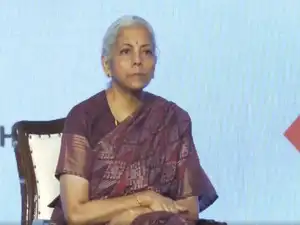
Union Finance Minister Nirmala Sitharaman has reiterated the government’s commitment to maintaining public spending to support India’s Economic Growth. She highlighted the importance of capital expenditure, fiscal discipline and effective implementation of development programmes, indicating that government investment will remain an important part of the country’s growth strategy.
Her remarks underline the government’s approach of balancing economic expansion with responsible management of public finances. Public investment is expected to support infrastructure development, improve access to essential services and strengthen welfare programmes.
Capital Expenditure Remains a Key Growth Priority
Sitharaman emphasised the importance of increasing capital expenditure to promote economic activity. Capital expenditure refers to government spending on long-term assets such as roads, railways, infrastructure and public facilities that can improve the economy’s productive capacity.
Government investment in infrastructure can support economic growth through several channels. Construction projects create demand for materials, equipment and labour, while improved transport and public infrastructure can reduce logistical costs and make business operations more efficient.
Continued public investment can also encourage private-sector participation. Infrastructure development often creates opportunities for businesses to expand operations, invest in new facilities and generate employment.
Fiscal Prudence Alongside Higher Government Spending
While emphasising the need to sustain public investment, the Finance Minister also highlighted fiscal prudence. This involves managing government expenditure and borrowing responsibly while ensuring that important development priorities receive adequate funding.
Maintaining this balance is important because higher government spending can support economic activity, but excessive borrowing and inefficient expenditure can create pressure on public finances.
The government’s challenge is therefore to direct resources towards projects and programmes that generate long-term economic and social benefits. Effective implementation and careful monitoring of expenditure are essential to achieving these objectives.
Public Investment to Strengthen Welfare and Essential Services
Sitharaman also highlighted the role of public investment in improving welfare programmes and access to essential services. Government spending is not limited to physical infrastructure; it also supports initiatives intended to improve people’s access to important services and financial protection.
Investment in public services can contribute to broader economic development by improving living conditions and expanding opportunities. Better access to essential facilities can also help communities participate more effectively in economic activity.
The emphasis on welfare alongside capital expenditure reflects an approach that combines investment in economic infrastructure with measures aimed at improving social outcomes.
Government Targets Comprehensive Insurance Coverage by 2047
Another important aspect highlighted by the Finance Minister was the government’s ambition to provide comprehensive insurance coverage by 2047. The objective is linked to expanding financial inclusion and ensuring that more people have access to financial protection.
Insurance coverage can help households manage unexpected financial shocks arising from health emergencies, accidents and other unforeseen events. Wider access to insurance products can reduce the risk of families facing severe financial difficulties when such situations occur.
Achieving comprehensive coverage will require broader awareness, accessible insurance products and effective delivery systems. The 2047 target places financial protection among the longer-term priorities associated with India’s development ambitions.
Why Continued Government Spending Matters for India’s Economy
Government expenditure can play an important role in supporting economic activity, particularly when investment is directed towards infrastructure and essential public services. Large projects can create demand across several industries, while improved infrastructure can support productivity over time.
However, the impact of spending depends on how efficiently funds are allocated and implemented. Delays, cost overruns and poorly targeted programmes can reduce the benefits of public investment. This makes project execution and fiscal management important parts of the government’s growth strategy.
Sitharaman’s remarks indicate that the government intends to continue using public investment as a tool to sustain growth while maintaining fiscal discipline. The effectiveness of this approach will depend on the quality of spending, progress in development projects and the ability to extend essential services and financial protection to more people.
With the goal of comprehensive insurance coverage by 2047 also in focus, the government’s stated priorities extend beyond short-term economic activity to include long-term development and financial inclusion.
For breaking news and live news updates, like us on Facebook or follow us on Twitter and Instagram. Read more on Latest Business on thefoxdaily.com.






COMMENTS 0