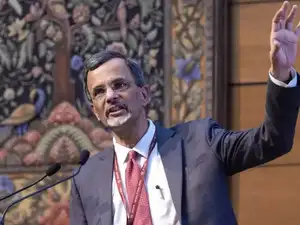
India’s Capital Markets need to evolve to provide more long-term financing for businesses and sectors that require sustained investment, Chief Economic Advisor (CEA) V Anantha Nageswaran has said. He highlighted the importance of patient capital in supporting areas such as cold-chain infrastructure and food processing, where projects often require substantial investment and longer periods to generate returns.
Nageswaran’s remarks underline a broader challenge facing India’s financial system: ensuring that businesses, particularly small manufacturers and entrepreneurs, can access funding suited to their long-term requirements. While financial markets play an important role in mobilising savings and directing capital towards productive activities, the availability of suitable long-term finance remains a concern for businesses seeking to expand their operations.
Why India Needs More Long-Term Financing
Long-term financing is essential for businesses that need to invest in infrastructure, machinery, technology and production capacity. Unlike short-term working capital, which helps companies manage routine expenses, long-term funding supports projects that may take several years to become commercially viable.
Sectors such as cold chains and food processing illustrate this requirement. Cold-chain facilities involve investments in storage infrastructure, refrigeration systems, transportation and related logistics. Food-processing businesses may also need to spend on equipment, facilities, technology and distribution networks before generating steady returns.
Such investments cannot always be supported through short-term borrowing. Businesses need financing arrangements that match the duration of their projects and allow sufficient time for operations to stabilise.
Nageswaran’s comments point to the need for capital markets to play a larger role in meeting these requirements. A financial system that can mobilise long-term savings and channel them towards productive investments can help businesses undertake projects that contribute to wider economic activity.
Small Manufacturers Face Challenges in Accessing Patient Capital
Access to long-term funding remains particularly challenging for small manufacturers and entrepreneurs. These businesses may have viable expansion plans but struggle to secure financing with repayment periods and conditions suited to their operational needs.
Patient capital refers to investment that allows businesses to develop over an extended period without requiring immediate returns. It can be important for manufacturers that need time to build production capacity, establish customer relationships, improve technology and reach economies of scale.
Smaller businesses may face additional difficulties when seeking such funding. Their financing needs can extend beyond routine working capital to include factory expansion, equipment purchases, product development and improvements in supply-chain capabilities.
When long-term funding is difficult to obtain, entrepreneurs may have to delay expansion plans or depend more heavily on financing that does not match the duration of their investments. This can make it harder for smaller manufacturers to compete, modernise and increase production.
Developing financing channels that better serve these businesses could help address the gap between their investment requirements and the funding available to them.
Capital Markets Must Support the Real Economy
Nageswaran stressed that market participants must work together to ensure finance serves the real economy. This means that the development of financial markets should be assessed not only through market activity but also through their ability to support businesses, investment and productive capacity.
Capital markets connect investors with businesses and institutions seeking funds. They can help companies access financing beyond traditional bank lending, while offering investors opportunities to participate in Economic Growth.
However, the availability of capital alone does not guarantee that businesses receive financing appropriate to their needs. The structure, duration and cost of funding also matter. Companies investing in long-gestation projects require capital that can remain available over a suitable period.
Greater coordination among financial institutions, investors, market intermediaries and businesses could help strengthen the flow of funds towards productive sectors. The challenge is to ensure that financial products and investment structures respond to the requirements of enterprises rather than focusing exclusively on short-term financial activity.
Cold Chains and Food Processing Need Sustained Investment
Cold-chain infrastructure and food processing are among the areas highlighted by Nageswaran as requiring long-term investment. Both sectors depend on physical infrastructure and operational capabilities that take time and capital to establish.
Cold chains help maintain temperature-sensitive products during storage and transportation. Developing such networks requires investment in refrigerated warehouses, specialised transport and supporting infrastructure. These facilities must operate as part of an integrated supply chain to serve businesses effectively.
Food processing also involves investments in manufacturing facilities, machinery, storage and distribution. Businesses may need time to establish reliable sourcing arrangements, develop markets and build consistent production capacity.
Long-term financing can help businesses in these sectors plan investments with greater certainty. It can also support projects whose economic benefits emerge over several years rather than immediately.
Improving access to patient capital for these activities could support business development and strengthen the infrastructure needed to connect production with markets. However, the availability of financing must be accompanied by commercially viable projects and effective implementation.
Financial Market Development and India’s Economic Growth
The need for long-term financing is closely connected to India’s broader economic development. Businesses require capital to expand production, improve efficiency, adopt new technologies and create additional economic activity.
A financial system capable of supporting investments over longer periods can help bridge the funding requirements of businesses and the savings available across the economy. This is particularly relevant for sectors where infrastructure development and capacity creation involve significant upfront expenditure.
Nageswaran’s remarks also highlight the importance of aligning financial-market development with the needs of entrepreneurs and manufacturers. If businesses cannot access suitable long-term funding, investment opportunities may remain unrealised even when demand and growth potential exist.
For India, strengthening these financing channels will require cooperation among market participants and a focus on how capital reaches productive enterprises. The objective is to build financial markets that can support both immediate business requirements and investments essential for long-term economic expansion.
Long-Term Capital Is Important for Economic Stability
Long-term investment can contribute to economic stability by supporting productive assets and business capabilities that generate value over time. Financing arrangements that match the duration of investments can also reduce pressure on businesses to meet repayment obligations before their projects become commercially sustainable.
For small manufacturers, access to patient capital may provide the flexibility needed to expand operations and improve competitiveness. For infrastructure-intensive sectors, it can help make projects requiring extended development periods more financially manageable.
Nageswaran’s message is that India’s financial markets must continue evolving so that finance supports the real economy. Improving access to long-term funding, particularly for entrepreneurs and small manufacturers, will be an important part of ensuring that capital markets contribute to the country’s future growth and stability.
What the Financing Challenge Means for Businesses
The availability of suitable long-term capital can influence whether businesses move ahead with expansion plans, invest in modern equipment or enter new markets. For smaller enterprises, financing conditions can shape decisions about production capacity, technology adoption and hiring.
Developing capital markets that can serve these requirements would help broaden the sources of finance available to businesses. It would also strengthen the connection between investors seeking long-term opportunities and enterprises requiring sustained funding.
The broader challenge is to ensure that India’s financial system can support investments across different stages of business development. As Nageswaran indicated, the future growth and stability of the economy depend partly on whether financial markets can provide capital that meets the needs of the real economy.
For breaking news and live news updates, like us on Facebook or follow us on Twitter and Instagram. Read more on Latest Business on thefoxdaily.com.






COMMENTS 0