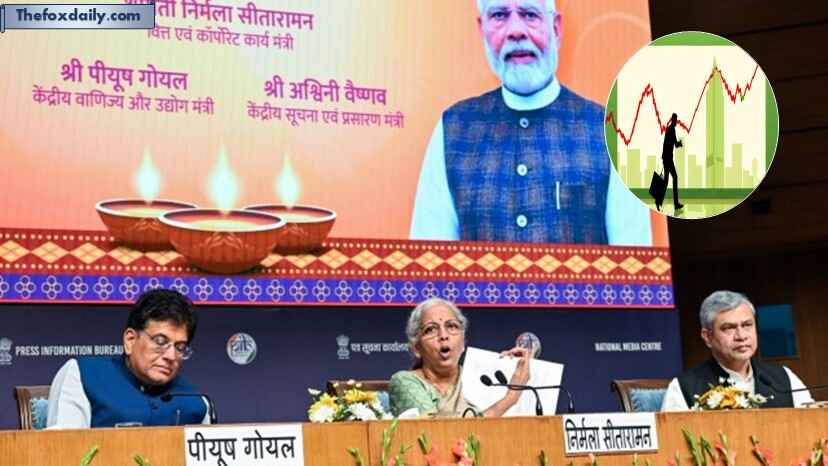
Finance Minister Nirmala Sitharaman has begun a six-day visit to the United States focused on two closely connected priorities: representing India‘s economic interests at the G20 and encouraging greater investment into the country’s economy.
Sitharaman arrived in Chicago on Thursday after completing a three-day visit to Canada. Her broader North America tour, covering Canada and the United States, is scheduled to conclude on September 2.
During the US leg of the visit, the finance minister is scheduled to meet investors, business leaders and financial-sector executives while also leading India’s delegation at the G20 Finance Ministers and Central Bank Governors meetings in Asheville, North Carolina.
The combination of investor outreach and multilateral economic Diplomacy is significant. While the G20 meetings give India a platform to discuss global financial and economic challenges, the meetings in Chicago and New York are aimed at presenting India as an investment destination and strengthening commercial ties with American businesses.
The visit also puts technology, innovation, Entrepreneurship and financial markets on the agenda, reflecting the increasingly important relationship between India’s economic ambitions and its technology-driven sectors.
Why Nirmala Sitharaman’s US visit matters
Sitharaman’s trip comes at a time when India’s economic engagement with major global economies has become an important part of its broader development strategy.
For India, attracting investment is not simply about bringing foreign capital into the country. International investors can also provide technology, management expertise, global market connections and access to international supply chains.
The finance minister’s schedule reflects that broader objective. Rather than focusing exclusively on government-to-government discussions, she will meet private-sector leaders and institutional investors to discuss India’s economic outlook and opportunities across different sectors.
At the same time, her participation in the G20 Finance Track allows India to engage in discussions affecting the international economic system, including global growth, financial stability and cooperation between advanced and emerging economies.
That makes the visit both an investment roadshow and a diplomatic economic mission.
Chicago meetings will target investors and CEOs
Sitharaman’s first major engagements in the United States will take place in Chicago.
She is scheduled to participate in a roundtable with prominent investors and meet CEOs, presidents and senior representatives of private-sector companies.
The discussions will focus on India’s investment opportunities, the country’s economic outlook and ways to strengthen business and investment partnerships between India and the United States.
Such meetings provide the government with an opportunity to communicate directly with investors about India’s economic Environment and areas where foreign capital could participate.
For investors, direct discussions with senior policymakers can provide a clearer understanding of India’s economic priorities and the sectors where the government wants greater participation.
The meetings are also useful for identifying practical barriers that can affect investment decisions. Large institutional investors typically look beyond headline economic growth and consider issues such as regulatory predictability, market access, infrastructure, financing conditions and long-term policy stability.
While the source material does not specify particular investment commitments arising from the Chicago meetings, the focus is clearly on expanding the pipeline of business and financial cooperation.
Finance minister to engage with University of Chicago innovation ecosystem
Sitharaman is also scheduled to visit the Polsky Centre for Entrepreneurship and Innovation at the University of Chicago.
The engagement will focus on entrepreneurship, innovation, technology commercialisation and connections between American institutions and India’s expanding start-up and innovation ecosystem.
This part of the itinerary broadens the economic discussion beyond conventional investment.
Technology commercialisation is particularly relevant because turning research and innovation into commercially viable products often requires cooperation between universities, entrepreneurs, investors and industry.
India’s start-up ecosystem has expanded significantly, and stronger international connections can help companies access capital, technology, research partnerships and overseas markets.
For India, the interaction also offers an opportunity to discuss how academic institutions and innovation centres can collaborate with Indian companies and start-ups.
Indian community engagement in Chicago
Sitharaman is also scheduled to interact with members of the Indian community in Chicago.
Such engagements form another component of India’s economic diplomacy in North America. The Indian diaspora includes professionals, entrepreneurs, investors and business leaders who can contribute to economic links between India and the United States.
Beyond cultural connections, diaspora networks can facilitate investment, entrepreneurship and professional exchanges between the two countries.
The Chicago programme therefore combines government engagement, private-sector outreach, innovation discussions and community interaction.
G20 Finance Ministers and Central Bank Governors meeting in focus
From Chicago, Sitharaman will travel to Asheville, North Carolina, where she will lead the Indian delegation at the G20 Finance Ministers and Central Bank Governors meetings scheduled for August 31 and September 1.
The meetings are being held under the United States’ G20 presidency and bring together finance ministers, central bank governors and senior economic officials from member economies.
The G20 Finance Track is one of the key channels through which major economies discuss international economic and financial issues.
For India, participation provides an opportunity to put forward its perspectives on global economic growth, financial stability and international economic cooperation.
The forum is particularly relevant for India because the country is both a major emerging economy and an increasingly important participant in global trade and investment flows.
India’s position in such discussions can differ from that of advanced economies. Emerging markets often have different priorities concerning development financing, global capital flows, financial stability and the effects of international economic policies.
The G20 provides a setting in which those differences can be discussed alongside areas of shared interest.
The G20 Finance Track begins before the ministerial meeting
The ministerial meeting follows the G20 Finance and Central Bank Deputies Meeting scheduled for August 29 and 30.
These preparatory discussions are important because they allow senior officials to work through technical and policy issues before ministers and central bank governors meet.
India’s participation in the process gives its economic officials an opportunity to contribute to discussions throughout the Finance Track rather than limiting engagement to the final ministerial meeting.
The issues discussed through this channel can have consequences beyond individual countries because G20 members account for a substantial share of global economic activity and financial markets.
New York will bring the investment push to Wall Street
After the G20 meetings, Sitharaman will travel to New York for another round of investor engagement.
She is scheduled to participate in an Investor Roundtable involving CEOs and senior representatives of leading New York-based companies. She will also hold individual meetings with senior executives and CEOs from the financial sector.
The conversations will focus on India’s economic and financial landscape, investment opportunities and ways to deepen financial and institutional links between India and the United States.
New York is particularly important for this part of the visit because it is one of the world’s major financial centres.
Engagement with financial-sector leaders can help India communicate its investment priorities directly to institutions that allocate capital across countries and asset classes.
For Indian policymakers, such discussions also offer a channel for understanding how international investors view India’s markets, risks and opportunities.
NASDAQ ceremony adds a technology-finance dimension
During her New York visit, Sitharaman is scheduled to take part in a bell-ringing ceremony hosted by NASDAQ.
The engagement will also provide an opportunity to gain insights into developments in technology-driven financial markets and the increasingly close relationship between technology and capital markets.
The connection is relevant to India’s own economic transformation. Digital technology has become deeply integrated into financial services, payments, investment platforms and capital-market operations.
For India, learning from developments in major global financial markets can complement its efforts to expand technology and innovation while maintaining links with international investors.
The NASDAQ engagement also reinforces one of the themes running through the US leg of Sitharaman’s trip: India’s economic story is increasingly tied to both financial markets and technology.
Canada visit set the stage for the US trip
The US visit follows Sitharaman’s three-day trip to Canada, which began on August 25.
In Toronto, she participated in the inaugural India-Canada Economic and Financial Dialogue and held meetings with investors and businesses.
The discussions covered sectors including energy, Artificial Intelligence and Critical Minerals.
Those areas are strategically important because they combine investment with longer-term economic and technological priorities. Energy remains fundamental to industrial development, while artificial intelligence is becoming increasingly important across sectors. Critical minerals are also essential to many modern technologies and industrial supply chains.
The Canada engagement therefore complemented the objectives of the subsequent US visit, with both legs focused on strengthening economic relationships and attracting investment.
India’s investment pitch goes beyond traditional sectors
The range of engagements planned during Sitharaman’s North America tour shows how India’s investment pitch is evolving.
Traditional sectors such as energy and finance remain important, but the agenda also includes artificial intelligence, critical minerals, digital connectivity, entrepreneurship, technology commercialisation and start-ups.
This broader approach reflects the changing nature of international investment.
Companies increasingly make investment decisions based not only on labour and market size but also on access to technology, skilled talent, supply chains, infrastructure and innovation ecosystems.
India can potentially benefit from these trends if it is able to attract investment into sectors that generate both capital formation and technological capability.
Why US investors are important to India’s economic ambitions
The United States is an important source of capital, technology and business partnerships for India.
American companies operate across a wide range of industries in India, while Indian companies have developed significant business relationships with US markets.
Investor engagement at senior government level can help strengthen those connections, but investment decisions ultimately depend on commercial considerations.
That means India’s economic pitch must compete on factors such as market opportunities, policy conditions, infrastructure, talent and expected returns.
Sitharaman’s meetings provide a forum to make that case directly to decision-makers.
They also allow the government to hear concerns from investors and business leaders, potentially informing future economic policy.
G20 diplomacy and investment diplomacy serve different purposes
One of the most useful ways to understand Sitharaman’s schedule is to separate its two main objectives.
The G20 meetings are primarily about international economic coordination. India will be engaging with governments and central banks on issues that affect the global financial system and economic stability.
The investor meetings, by contrast, are commercially focused. Their purpose is to explain India’s economic opportunities and encourage companies and financial institutions to deepen their engagement with the country.
Yet the two objectives reinforce one another.
A country seeking more international investment also benefits from having a voice in discussions about global financial rules and economic stability. At the same time, a strong domestic economy and investment environment can increase a country’s influence in multilateral economic forums.
What investors will be watching
While government presentations can highlight India’s growth opportunities, international investors typically assess a broader set of factors before committing capital.
Among the practical considerations are the regulatory environment, ease of doing business, infrastructure, access to skilled workers, market demand and the predictability of economic policy.
Financial investors may also focus on market valuations, currency conditions, capital flows and the broader global economic environment.
That makes Sitharaman’s meetings more than promotional events. They can serve as a feedback mechanism through which policymakers hear directly from international capital providers.
The effectiveness of the outreach will ultimately be measured not by the number of meetings but by whether discussions translate into investment decisions, business partnerships and deeper financial links.
Innovation is becoming a central part of India’s economic pitch
The visit to the University of Chicago’s Polsky Centre and the NASDAQ engagement demonstrate the importance of innovation in India’s broader economic narrative.
India’s start-up ecosystem is increasingly connected with global investors and technology companies. Building stronger relationships with international research and investment centres can potentially help Indian entrepreneurs access capital and international expertise.
Technology commercialisation is particularly important because research has greater economic value when it can be transformed into products, services and businesses.
The interaction in Chicago therefore complements the investor meetings in New York, connecting the early stages of innovation with the later stages of financing and capital-market participation.
What comes next after Sitharaman’s visit?
The immediate outcome of the trip will be the discussions and positions India advances through the G20 Finance Track, alongside the business conversations held in Chicago and New York.
The longer-term impact will depend on whether those engagements produce concrete investment, stronger institutional partnerships and new avenues for economic cooperation.
For the G20, India’s influence will depend on its ability to build common ground with other member economies while advancing its priorities on global economic and financial issues.
For the investment component, the test will be more direct: whether American and other international investors identify sufficient opportunities in India to commit capital and expand their operations.
A combined message to global investors
Sitharaman’s six-day US visit sends a message on two levels.
At the international level, India is presenting itself as an active participant in discussions about global economic growth, financial stability and international cooperation.
At the commercial level, the finance minister is taking India’s investment pitch directly to investors, CEOs and financial institutions in two major US business centres.
The inclusion of entrepreneurship, technology commercialisation and digital finance adds another dimension, showing that India’s economic engagement is not limited to traditional sectors.
The trip also follows a Canada visit centred on economic and financial cooperation, creating a wider North American outreach focused on investment and business partnerships.
Ultimately, the success of the visit will depend on what follows the meetings. Diplomatic engagement can open doors, but investment requires companies and financial institutions to see viable opportunities and acceptable risks.
For India, the opportunity is to turn high-level economic diplomacy into deeper commercial relationships, more investment and stronger international financial partnerships. Sitharaman’s G20 participation and investor meetings are therefore two parts of the same broader effort: strengthening India’s voice in the global economy while making a direct case for greater international participation in its domestic growth story.
For breaking news and live news updates, like us on Facebook or follow us on Twitter and Instagram. Read more on Latest India on thefoxdaily.com.






COMMENTS 0