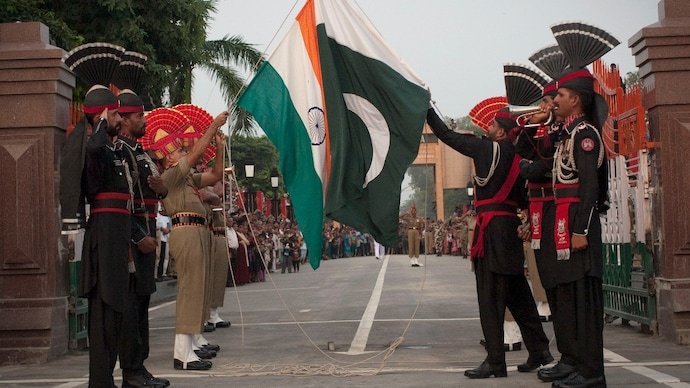
India and Pakistan have experienced one of the world’s longest-running and most complex rivalries, marked by wars, military standoffs, terrorist attacks, diplomatic breakdowns and recurring ceasefire violations. Yet, even during periods when official government-to-government engagement has completely collapsed, communication has rarely disappeared altogether. Instead, it has often shifted into a quieter, unofficial format known as Track 2 Diplomacy.
Recent reports of Track 2 meetings in Colombo and Bangkok, held after India’s Operation Sindoor, have once again drawn attention to this little-understood diplomatic mechanism. While India’s government has reiterated that it has no official involvement in such meetings and continues to maintain that formal dialogue cannot resume until Pakistan takes credible action against terrorism, the existence of private discussions demonstrates an important reality of International Relations: communication and negotiation are not always the same thing.
Track 2 diplomacy does not create treaties, sign agreements or represent government policy. Instead, it serves as a confidential forum where retired diplomats, former military officers, academics, strategic experts and policy specialists exchange views, explore possible solutions and reduce misunderstandings that could otherwise escalate into crises.
Understanding how Track 2 diplomacy functions and why it continues despite repeated setbacks offers valuable insight into the broader dynamics of India-Pakistan relations.
What Is Track 2 Diplomacy?
Track 2 diplomacy refers to unofficial, non-government discussions between influential individuals from countries involved in conflict or strained relations. Participants generally do not negotiate on behalf of their governments. Instead, they exchange ideas, identify areas of common understanding and explore potential pathways that may eventually inform official diplomacy.
The concept gained prominence during the Cold War when American diplomat Joseph Montville argued that informal dialogue could complement traditional diplomacy by enabling frank discussions outside political constraints.
Unlike official negotiations, Track 2 conversations usually remain confidential. This confidentiality encourages participants to test ideas that governments may be unwilling to discuss publicly because of domestic political pressures.
| Track 1 Diplomacy | Track 2 Diplomacy |
|---|---|
| Official government negotiations | Unofficial private dialogue |
| Conducted by serving officials | Former diplomats, retired military officers, academics and experts |
| Produces formal agreements | Explores ideas and confidence-building measures |
| Publicly acknowledged | Usually confidential |
| Represents official policy | Participants express personal or institutional views |
Why Track 2 Matters Between India and Pakistan
Few bilateral Relationships require crisis management as frequently as India and Pakistan.
Since 1947, the two neighbours have fought multiple wars, experienced prolonged military confrontations, and endured repeated terrorist attacks that have severely damaged diplomatic relations. Both countries are nuclear-armed states, making communication during periods of tension particularly important.
Whenever official diplomatic channels narrow or close, Track 2 discussions can help prevent complete communication breakdowns.
These dialogues generally focus on understanding strategic thinking rather than negotiating policy. Participants discuss regional security, border stability, confidence-building measures, trade, humanitarian issues and conflict management without binding either government.
Recent Reports of Track 2 Meetings
Reports indicate that several rounds of Track 2 discussions have reportedly taken place following Operation Sindoor, including meetings in Colombo and Bangkok.
India’s Foreign Secretary Vikram Misri clarified that such gatherings are private initiatives organized by non-government entities and that individuals attending them do not represent the Government of India.
The government’s position remains unchanged: official dialogue with Pakistan cannot resume while cross-border terrorism continues.
This distinction is significant because Track 2 diplomacy functions independently of formal state negotiations. Governments may neither organize nor officially endorse these meetings, yet experienced former officials often continue engaging through academic institutions, think tanks or independent dialogue platforms.
Timeline of India-Pakistan Track 2 Diplomacy
| Year | Major Development |
|---|---|
| 1980s | Joseph Montville popularizes the concept of Track 2 diplomacy. |
| 1991 | Neemrana Dialogue begins between India and Pakistan. |
| 1999 | Kargil conflict highlights the importance of backchannel communication. |
| 2001 | Track 2 discussions precede the Agra Summit. |
| 2004 | Composite Dialogue resumes after years of diplomatic freeze. |
| 2007 | Backchannel discussions reportedly bring both sides closer on aspects of Kashmir. |
| 2008 | 26/11 Mumbai terror attacks halt diplomatic momentum. |
| 2018 | Neemrana Dialogue resumes through meetings in Islamabad and Dubai. |
| 2021 | Backchannel engagement contributes to renewed Line of Control ceasefire. |
| 2026 | Reports emerge of fresh Track 2 meetings after Operation Sindoor. |
The Neemrana Dialogue: Foundation of Modern Track 2 Engagement
The most recognized Track 2 initiative between India and Pakistan is the Neemrana Dialogue, launched in 1991.
Named after Rajasthan’s historic Neemrana Fort, where its inaugural meeting took place, the dialogue brought together retired ambassadors, former military leaders, strategic scholars and experienced policymakers from both countries.
Topics frequently discussed included:
- Kashmir.
- Cross-border terrorism.
- Sir Creek maritime boundary.
- Siachen Glacier.
- Military confidence-building measures.
- Nuclear risk reduction.
- Trade and economic cooperation.
- People-to-people exchanges.
Although these discussions rarely produced immediate breakthroughs, they created channels through which ideas could gradually influence official policymaking.
How Track 2 Supports Official Diplomacy
Track 2 diplomacy should not be confused with secret negotiations or parallel Foreign Policy.
Instead, it often performs three important functions:
1. Reducing Misunderstanding
Periods without communication increase the risk of miscalculation. Informal dialogue allows experienced participants to better understand strategic thinking on both sides.
2. Testing New Ideas
Participants can discuss proposals without committing governments. If an idea proves promising, policymakers may later consider it through formal diplomatic channels.
3. Maintaining Communication During Crises
Even when official relations deteriorate, maintaining some level of communication can help reduce escalation risks between nuclear neighbours.
India’s Position: Talks and Terror Cannot Go Together
India has consistently maintained that meaningful official dialogue cannot proceed while Pakistan continues to support cross-border terrorism.
This principle has been articulated by successive governments, including those led by Prime Ministers Manmohan Singh and Narendra Modi.
Major terrorist attacks including the 2001 Parliament attack, the 2008 Mumbai attacks, the 2016 Uri attack and the 2019 Pulwama attack have repeatedly disrupted bilateral engagement and reinforced India’s emphasis on security before comprehensive dialogue.
Consequently, Track 2 discussions exist alongside not instead of India’s broader strategic position.
Major Events That Shaped Bilateral Dialogue
| Event | Impact on Relations |
|---|---|
| Kargil War (1999) | Military conflict interrupted diplomatic progress. |
| Agra Summit (2001) | Attempted political reset following earlier tensions. |
| Parliament Attack (2001) | Relations deteriorated sharply. |
| Composite Dialogue (2004) | Official engagement resumed. |
| Mumbai Attacks (2008) | Dialogue process suffered a major setback. |
| LoC Ceasefire Renewal (2021) | Reduced cross-border firing after backchannel engagement. |
| Operation Sindoor | Official relations remained strained while reports of Track 2 meetings surfaced. |
Successes and Limitations of Track 2 Diplomacy
Track 2 diplomacy has contributed to confidence-building at several points in the bilateral relationship.
Observers often credit informal engagement with creating an atmosphere that later supported official initiatives such as the Composite Dialogue and aspects of ceasefire discussions.
However, its limitations are equally significant.
- Participants cannot make binding commitments.
- Governments are free to ignore recommendations.
- Major security incidents frequently derail progress.
- Domestic politics often limits implementation of proposed solutions.
Ultimately, Track 2 can facilitate understanding but cannot substitute for political decisions made by elected governments.
Why Neutral Countries Often Host These Meetings
Track 2 dialogues are commonly organized in third countries such as Sri Lanka, Thailand, the United Arab Emirates or the United Kingdom.
Neutral venues provide participants with greater privacy, logistical convenience and reduced political symbolism compared to meetings held in either India or Pakistan.
Academic institutions, international organizations and independent policy forums frequently organize these conferences.
The Nuclear Dimension
One of the strongest arguments supporting continued communication is the strategic reality that both India and Pakistan possess nuclear weapons.
In relationships involving nuclear deterrence, misunderstandings can carry extraordinary consequences.
Even when official negotiations remain suspended, maintaining channels through retired officials and strategic experts may help reduce risks by encouraging informed discussion on crisis management, military doctrines and regional security developments.
This does not eliminate conflict, but it can contribute to greater predictability during periods of heightened tension.
Can Track 2 Deliver Lasting Peace?
History suggests that Track 2 diplomacy works best when political conditions are already moving toward engagement.
It can generate ideas, improve mutual understanding and preserve communication. It cannot independently resolve disputes involving terrorism, territorial claims or national security.
Meaningful progress ultimately depends on political leadership, sustained trust, implementation mechanisms and a security environment conducive to negotiations.
For India, concerns regarding cross-border terrorism remain central to any discussion about restoring comprehensive bilateral dialogue.
Future Outlook
Reports of fresh Track 2 meetings demonstrate that informal communication continues despite one of the lowest points in India-Pakistan relations. While these discussions are unlikely to produce immediate diplomatic breakthroughs, they may help preserve institutional memory, maintain professional contacts and reduce the risk of complete strategic isolation between the two countries.
Looking ahead, the effectiveness of Track 2 diplomacy will largely depend on broader political and security developments. If conditions improve, ideas explored through unofficial channels could eventually inform formal negotiations. Conversely, continued terrorist incidents or military escalation would likely limit the practical impact of these dialogues regardless of how frequently they occur.
Conclusion
Track 2 diplomacy remains one of the least visible yet most enduring elements of India-Pakistan engagement. Operating outside official government structures, it provides a confidential space where experienced former officials, scholars and strategic experts can exchange perspectives even when formal diplomacy has stalled.
Its greatest value lies not in producing immediate agreements but in keeping communication alive during periods of deep mistrust. Nevertheless, Track 2 is not a substitute for official negotiations, nor can it resolve the fundamental issues that continue to divide the two countries. As long as terrorism, security concerns and political distrust remain unresolved, unofficial dialogue will continue to serve as a bridge but not the destination in the long and uncertain journey toward stable India-Pakistan relations.
For breaking news and live news updates, like us on Facebook or follow us on Twitter and Instagram. Read more on Latest India on thefoxdaily.com.





COMMENTS 0