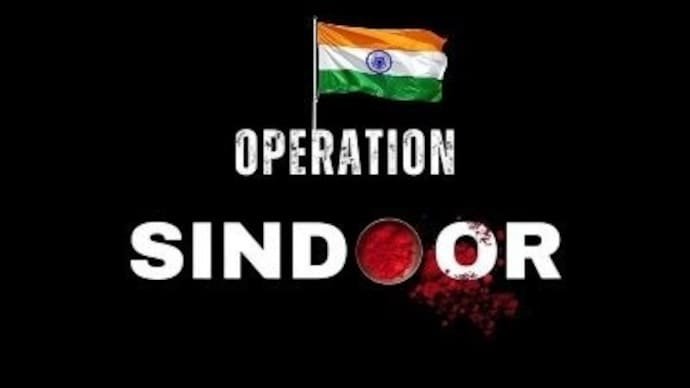
- PM Modi Says Operation Reflected India’s Zero-Tolerance Policy on Terror
- What Triggered Operation Sindoor?
- How Operation Sindoor Was Carried Out
- Why Operation Sindoor Matters Beyond Symbolism
- The Rise of Technology-Driven Warfare After Operation Sindoor
- Comparison With Earlier Indian Military Operations
- Pakistan’s Reaction and Regional Tensions
- The Domestic Political Impact of Operation Sindoor
- India’s Defence Self-Reliance Push Gains Momentum
- Counterterrorism Is No Longer Just a Military Issue
- The Global Context Behind India’s Security Strategy
- What Happens Next?
- Conclusion
One year after India carried out Operation Sindoor one of its most significant cross-border Military actions in recent years Prime Minister Narendra Modi said the country remains unwavering in its resolve to eliminate Terrorism and dismantle the networks supporting it.
The anniversary of the operation has reignited national discussion around India’s evolving counterterrorism doctrine, military preparedness, and the broader geopolitical impact of the strikes that followed the deadly Pahalgam terror attack in April 2025.
Operation Sindoor was launched in the early hours of May 7, 2025, after terrorists attacked civilians in Jammu and Kashmir’s Pahalgam area, killing 26 people. The assault triggered widespread outrage across India and intensified calls for decisive action against terror groups operating from across the border.
In response, Indian armed forces conducted precision air and missile strikes targeting terror infrastructure located in Pakistan and Pakistan-occupied Kashmir (PoK). According to official statements released at the time, the operation focused on camps associated with banned terrorist organisations including Jaish-e-Mohammed and Lashkar-e-Taiba.
PM Modi Says Operation Reflected India’s Zero-Tolerance Policy on Terror
Marking the anniversary, Prime Minister Modi posted a message on social media praising the armed forces for their “unparalleled courage, precision and resolve.” He described Operation Sindoor as a defining example of India’s determination to respond firmly to attacks on civilians.
The Prime Minister said the operation demonstrated not only military capability but also growing coordination among the Army, Air Force, and other defence agencies. He further highlighted the role of indigenous defence technology and India’s increasing focus on self-reliance in military production.
Government leaders from the NDA alliance also marked the occasion by changing their social media profile pictures to the official Operation Sindoor emblem, signalling the political significance the operation continues to hold a year later.
What Triggered Operation Sindoor?
The operation was launched after the Pahalgam terror attack on April 22, 2025, in which heavily armed militants targeted civilians, including tourists and local residents.
The attack quickly became one of the deadliest civilian-targeted terror incidents in Jammu and Kashmir in recent years. Security agencies linked the assault to Pakistan-based terror groups, leading to heightened diplomatic tensions between New Delhi and Islamabad.
Public anger intensified across the country, with calls for a response similar to previous cross-border operations such as the 2016 surgical strikes and the 2019 Balakot airstrike.
Unlike earlier operations that were more limited in duration and scope, Operation Sindoor involved multiple coordinated strikes across several locations simultaneously, indicating a more advanced level of operational planning and intelligence coordination.
How Operation Sindoor Was Carried Out
Military officials stated that Indian forces targeted nine terror-related facilities spread across Pakistan and PoK. These included alleged training camps, logistical hubs, and launch pads used to infiltrate militants into Indian territory.
The strikes reportedly involved precision-guided missiles, long-range targeting systems, and advanced surveillance support.
According to government sources at the time, the operation aimed to avoid civilian casualties while inflicting maximum damage on terror infrastructure.
Indian officials claimed that over 100 terrorists were killed during the strikes, though independent verification of casualty figures remained difficult due to restricted access in the targeted regions.
Why Operation Sindoor Matters Beyond Symbolism
The significance of Operation Sindoor goes beyond its military dimension. Security analysts believe the operation represented a shift in India’s strategic messaging.
For years, India’s responses to cross-border terror attacks often involved diplomatic pressure, intelligence operations, or limited military engagement. However, recent operations indicate a growing willingness to respond with visible and publicly acknowledged military action.
Operation Sindoor reinforced three major signals:
- India is prepared to respond rapidly to terror attacks
- Cross-border terror infrastructure will be directly targeted
- Military escalation can remain controlled without leading to full-scale war
This approach reflects a broader change in India’s security posture, where deterrence is increasingly linked to swift retaliation.
The Rise of Technology-Driven Warfare After Operation Sindoor
One of the most important developments after the operation has been India’s accelerated investment in next-generation warfare technologies.
Following Operation Sindoor, defence planners increased focus on:
- Drone surveillance and combat drones
- Artificial Intelligence-driven battlefield systems
- Advanced missile interception networks
- Satellite-based intelligence gathering
- Electronic warfare capabilities
- Integrated command systems between military branches
Military experts say modern conflicts are no longer fought only with tanks and fighter jets. Precision intelligence, cyber capabilities, and autonomous systems are becoming equally critical.
Operation Sindoor reportedly highlighted the effectiveness of coordinated targeting systems and real-time intelligence fusion, areas India has been strengthening aggressively over the past decade.
Comparison With Earlier Indian Military Operations
| Operation | Year | Trigger | Nature of Response | Strategic Impact |
|---|---|---|---|---|
| Surgical Strikes | 2016 | Uri terror attack | Cross-LoC ground raids | First publicly acknowledged raid across LoC |
| Balakot Airstrike | 2019 | Pulwama attack | Airstrike inside Pakistan | Shift toward aerial retaliation |
| Operation Sindoor | 2025 | Pahalgam terror attack | Precision missile and air strikes | Integrated multi-target response with advanced coordination |
The comparison shows how India’s counterterror strategy has gradually evolved from limited tactical responses to broader strategic signalling.
Pakistan’s Reaction and Regional Tensions
Operation Sindoor significantly escalated tensions between India and Pakistan in May 2025.
Pakistan condemned the strikes and accused India of violating its sovereignty. Diplomatic exchanges between the two countries became increasingly hostile during the days following the operation.
However, despite fears of escalation, both sides eventually stepped back after military-level communications and international diplomatic engagement.
Hostilities officially de-escalated on May 10 after backchannel talks and military coordination mechanisms helped prevent further escalation.
Analysts believe the episode demonstrated the fragile balance that exists in South Asia, where both countries possess nuclear capabilities yet continue to engage in limited conventional confrontations.
The Domestic Political Impact of Operation Sindoor
Domestically, Operation Sindoor had a major political impact.
The operation strengthened the government’s National Security narrative and intensified discussions around border security, intelligence coordination, and defence spending.
Supporters viewed the strikes as proof of a decisive security policy, while critics raised concerns about long-term regional stability and the risks associated with repeated military escalation.
Nevertheless, public sentiment after the operation largely reflected strong support for the armed forces.
The anniversary has once again brought national security to the forefront of political discourse, particularly as regional instability and global geopolitical tensions continue to rise.
India’s Defence Self-Reliance Push Gains Momentum
A major theme linked to Operation Sindoor has been India’s push for defence self-reliance under the “Atmanirbhar Bharat” initiative.
Government officials repeatedly highlighted the growing use of indigenous systems during the operation, including surveillance platforms, missile systems, and communication technologies.
The defence sector has since witnessed increased investment in:
- Domestic drone manufacturing
- Missile development programs
- Electronic warfare systems
- AI-based defence software
- Border monitoring technologies
Experts believe reducing dependence on foreign defence imports has become a strategic necessity, especially as modern warfare increasingly depends on rapid technological adaptation.
Counterterrorism Is No Longer Just a Military Issue
Another major lesson from Operation Sindoor is that counterterrorism today extends far beyond military operations.
Modern security challenges involve:
- Cyber warfare
- Online radicalisation
- Drone infiltration
- Financial terror networks
- Cross-border intelligence operations
- Information warfare and propaganda
As a result, India’s security establishment has increasingly focused on integrating intelligence agencies, cyber units, border forces, and military operations into a more unified security framework.
Experts say future conflicts may involve a combination of physical attacks, cyber disruption, and information manipulation rather than traditional battlefield engagements alone.
The Global Context Behind India’s Security Strategy
Operation Sindoor also unfolded during a period of growing global instability.
Conflicts in Europe, tensions in the Indo-Pacific, and rising concerns over terrorism worldwide have pushed many countries to modernise defence systems and reassess security preparedness.
India’s approach reflects a broader international trend where governments are increasingly prioritising rapid-response military capabilities and strategic deterrence.
For India specifically, the challenge remains particularly complex because of its geographical proximity to conflict-prone border regions and long-standing cross-border terror concerns.
What Happens Next?
One year after Operation Sindoor, India’s security doctrine appears more assertive, technologically driven, and integrated than before.
Defence analysts believe future military operations, if required, are likely to rely even more heavily on artificial intelligence, autonomous surveillance, and precision-guided systems.
At the same time, the anniversary serves as a reminder that military action alone cannot permanently eliminate terrorism. Long-term solutions also require intelligence cooperation, diplomatic engagement, border management, and efforts to disrupt recruitment and financing networks.
Operation Sindoor may ultimately be remembered not only as a military operation but as a turning point in how India approaches national security in an increasingly unpredictable world.
Conclusion
As India marks the first anniversary of Operation Sindoor, the operation continues to hold deep strategic, political, and emotional significance.
Prime Minister Narendra Modi’s message reaffirming India’s determination against terrorism reflects a broader national security doctrine that has evolved considerably over the past decade.
From precision strikes and technological warfare to defence self-reliance and integrated security planning, Operation Sindoor symbolises a new phase in India’s counterterrorism approach.
While debates over regional stability and escalation risks continue, one reality remains clear: India’s security landscape has changed dramatically, and Operation Sindoor has become a defining chapter in that transformation.
For breaking news and live news updates, like us on Facebook or follow us on Twitter and Instagram. Read more on Latest India on thefoxdaily.com.





COMMENTS 0