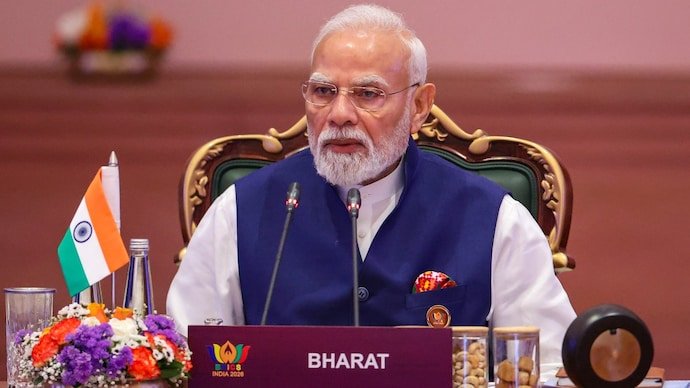
Prime Minister Narendra Modi turned India’s hosting of the 18th BRICS Summit into an unusually intensive diplomatic exercise, holding 15 formal bilateral meetings in three days with presidents, prime ministers and other senior leaders, alongside a series of informal pull-aside conversations.
The schedule began before the main summit sessions and continued through its conclusion in New Delhi on September 13. While the formal BRICS agenda focused on cooperation among emerging economies, Modi’s bilateral programme addressed issues that were often far more specific to India’s individual relationships with Russia, China, Iran, Southeast Asia, Africa and the Gulf.
That distinction matters. A multilateral summit produces declarations and common positions, but bilateral meetings are where governments can discuss sensitive subjects such as defence supplies, border stability, market access, energy security, investment, connectivity and trade imbalances without having to negotiate every sentence with a larger group.
For India, the three-day diplomatic sprint therefore served two purposes at once: advancing the country’s BRICS 2026 agenda and using the presence of major world leaders in New Delhi to pursue India’s own strategic priorities.
Why 15 bilateral meetings mattered
The sheer number of meetings was significant, but the geographical spread of the engagement was arguably more important.
Modi’s discussions covered major powers such as Russia and China, a strategically important West Asian partner in Iran, Gulf partners, Southeast Asian economies, Central Asia and several African countries. He also met the UN secretary-general and engaged with institutions and business representatives linked to the wider BRICS framework.
This broad outreach reflects the way India increasingly approaches international diplomacy: rather than placing its foreign policy around a single strategic camp, New Delhi has sought to maintain working relationships across competing geopolitical blocs.
Russia remains central to India’s defence and energy calculations. China remains critical because of the two countries’ economic relationship and unresolved border issues. Iran matters for connectivity through the Chabahar port and for India’s wider interests in West Asia. Meanwhile, Southeast Asia, Africa, Central Asia and the Gulf are increasingly important to India’s trade, investment, energy and connectivity strategies.
The BRICS summit effectively brought many of these relationships into the same city at the same time.
Putin talks put defence, energy and trade in focus
Modi’s engagement with Russian President Vladimir Putin was among the most strategically important meetings of the summit schedule.
The two leaders met in New Delhi after having spoken at the Shanghai Cooperation Organisation summit in Bishkek on August 31. Their latest meeting focused on the broad India-Russia relationship, including defence, energy, space, economic cooperation and the movement of skilled workers.
The relationship has remained important despite the profound changes in the global security environment following Russia’s invasion of Ukraine. India has continued to maintain a close relationship with Moscow while simultaneously expanding its partnerships with the United States, Europe, Japan, Australia and other countries.
That balancing act makes defence cooperation particularly sensitive. India has historically relied heavily on Russian-origin military equipment, while both countries have also developed joint production and technology partnerships. At the same time, New Delhi has been diversifying its defence procurement to reduce excessive dependence on any single supplier.
Trade was another important part of the Modi-Putin discussion. The two countries have set a goal of taking bilateral trade to $100 billion by 2030. Reaching that target will require more than energy purchases. Expanding industrial cooperation, fertiliser supplies, steel, railway-related supply chains, investment and greater movement of professionals could help create a more balanced economic relationship.
The emphasis on trade diversification is particularly important because the sharp increase in India-Russia commerce in recent years has been heavily influenced by energy flows. A sustainable long-term trade relationship would need a broader base of goods, services and investment.
Iran talks brought West Asian security into the BRICS agenda
Modi also held talks with Iranian President Masoud Pezeshkian during the summit. Pezeshkian’s visit was particularly significant because India’s relationship with Iran extends beyond traditional diplomacy.
The two countries have a direct strategic interest in regional connectivity, particularly through Chabahar port in Iran. The facility provides India with an important route toward Afghanistan and Central Asia that does not depend entirely on routes through Pakistan.
The wider security environment made the discussion more urgent. Continuing conflict and instability in West Asia have raised concerns about shipping, energy supplies and commercial routes, particularly around the Persian Gulf and the Strait of Hormuz.
For India, developments in the region are not distant geopolitical events. The country is one of the world’s largest energy importers, and disruption to maritime routes can affect freight costs, insurance premiums, delivery schedules and ultimately domestic prices.
India’s consistent public position has been to favour dialogue and diplomacy over prolonged escalation. The Modi-Pezeshkian meeting therefore combined bilateral priorities such as connectivity with the broader question of how India can protect its interests during a period of heightened regional instability.
Modi-Xi meeting was the diplomatic centrepiece
If the Putin meeting highlighted India’s longstanding strategic relationship with Russia, the meeting with Chinese President Xi Jinping represented the most closely watched test of India’s diplomatic balancing act.
Xi’s visit to India was his first in nearly seven years. His previous visit was in October 2019, when he met Modi for an informal summit in Mamallapuram.
The relationship has changed dramatically since then. The 2020 border crisis between Indian and Chinese forces created a prolonged period of political and military tension, while the broader relationship suffered setbacks in trade, investment, travel and people-to-people exchanges.
Recent diplomatic contacts, however, have pointed toward a cautious attempt to stabilise relations.
Modi and Xi discussed the improvement in bilateral ties and the need for the two countries to pursue cooperation rather than permanent confrontation. But India also made its position clear: peace and tranquillity along the border remain fundamental to the broader relationship.
That condition is central to understanding India’s China policy. New Delhi has an interest in maintaining trade and economic engagement with Beijing, but it does not want commercial cooperation to be separated completely from security concerns along the Line of Actual Control.
The two leaders also discussed trade, market access, supply chains and mobility. These are areas where the economic relationship remains complicated.
India imports a large volume of goods and industrial inputs from China, making Chinese supply chains important for sectors ranging from electronics and machinery to chemicals and pharmaceuticals. At the same time, India’s large trade deficit with China has repeatedly raised concerns about the sustainability of the relationship.
For New Delhi, improving ties therefore does not simply mean increasing trade. It also means seeking greater market access for Indian businesses, encouraging more balanced economic flows and ensuring that strategic vulnerabilities are not created by excessive dependence on a single external source.
The Global South dimension stretched beyond BRICS
Modi’s meetings with African and Asian leaders demonstrated another major objective of India’s BRICS chairship: strengthening ties with the wider Global South.
He held discussions with Ethiopian Prime Minister Abiy Ahmed Ali, Malaysian Prime Minister Anwar Ibrahim, Abu Dhabi Crown Prince Sheikh Khaled bin Mohamed bin Zayed and Vietnamese Prime Minister Pham Minh Chinh. Further meetings involved leaders and senior representatives from Kazakhstan, the Philippines, Egypt, South Africa, Burundi, Nigeria and Uganda.
These engagements covered very different national interests, but several themes connected them: trade, investment, technology, Infrastructure, energy, connectivity and institutional reform.
India has increasingly presented itself as a bridge between established powers and developing countries rather than simply as another major power competing for influence. Its relationships with African and Southeast Asian countries are therefore not merely diplomatic additions to a long list of partnerships.
They are part of a broader effort to create diversified economic and political relationships at a time when global supply chains are being reshaped by geopolitical tensions.
For African countries, India can offer cooperation in areas such as digital public infrastructure, pharmaceuticals, development finance, agriculture and capacity building. For Southeast Asian partners, India’s growing economic and strategic engagement also fits into the wider Indo-Pacific framework.
UN engagement added another layer to Modi’s outreach
Modi’s meeting with UN Secretary-General António Guterres broadened the diplomatic agenda beyond bilateral relationships.
Global conflicts, reform of international institutions and the concerns of developing countries remain central issues for India at the United Nations and other multilateral forums.
India has long argued that international institutions created in an earlier geopolitical era do not adequately reflect the distribution of economic and political power in the 21st century. Its campaign for reforms to institutions such as the UN Security Council is therefore closely connected to its broader Global South diplomacy.
The BRICS platform gives India another avenue to make that argument, particularly because the grouping brings together major emerging economies with different political systems and regional interests.
From summit diplomacy to economic diplomacy
The diplomatic sprint was not limited to meetings between political leaders.
Modi also interacted with officials connected to the New Development Bank and participants in the BRICS Business Forum. That matters because India’s BRICS strategy is not only about geopolitical positioning. New Delhi has also pushed for practical economic cooperation.
Resilient supply chains, expanded trade, local-currency transactions, financial connectivity, technology cooperation and stronger representation for developing countries have all become increasingly important themes in the BRICS conversation.
The emphasis on supply chains is especially relevant after the disruptions of recent years. The pandemic, the war in Ukraine, shipping disruptions and conflicts in West Asia have demonstrated how quickly a geopolitical event in one region can affect factories, ports and consumers elsewhere.
India’s interest is therefore not simply in replacing one global dependency with another. The larger objective is to create more diversified and resilient networks in which Indian companies can participate more deeply.
Why the diplomatic sprint fits India’s strategic autonomy
The sequence of meetings with Putin, Pezeshkian, Xi, Gulf leaders, Southeast Asian partners, African governments and international institutions offers a useful picture of India’s foreign-policy approach.
It is often described as strategic autonomy: maintaining the freedom to cooperate with different powers according to India’s interests rather than allowing one relationship to determine every other foreign-policy decision.
That approach can be difficult to manage because India’s partners do not necessarily agree with one another.
Russia has deep strategic ties with China. India has its own unresolved security concerns with Beijing. Iran is at the centre of tensions involving the United States and other regional powers. Gulf countries maintain relationships with both Western powers and emerging Asian economies. African and Southeast Asian governments have their own priorities and often avoid being drawn into great-power rivalries.
India’s challenge is to maintain enough trust with all of them to keep diplomatic and economic channels open.
BRICS provided the platform, but bilateral diplomacy delivered the substance
The 18th BRICS Summit was officially centred on the theme of “Building Resilience, Innovation, Cooperation and Sustainability”. Yet the most immediate outcomes for India were often found outside the main conference room.
Fifteen bilateral meetings gave Modi opportunities to address specific problems that cannot easily be resolved through a collective declaration. Border stability requires direct India-China engagement. Defence cooperation requires detailed India-Russia discussions. Chabahar and regional connectivity require sustained India-Iran coordination. Trade and investment opportunities with Africa, Southeast Asia and the Gulf require country-specific negotiations.
That is why the number 15 is more than a measure of a busy schedule. It illustrates how India used its BRICS presidency as a diplomatic multiplier.
Instead of treating the summit as a single two-day multilateral event, New Delhi effectively turned it into a three-day diplomatic hub. Leaders came to India for BRICS, but their presence also created opportunities for conversations on issues extending far beyond BRICS itself.
What Modi’s three-day outreach says about India’s priorities
The pattern of the meetings reveals several priorities running through India’s foreign policy at the same time.
- Strategic security: Maintaining defence cooperation with Russia while managing security challenges involving China and the wider Indo-Pacific.
- Energy security: Protecting India’s access to energy amid instability involving Russia, Iran and the Gulf.
- Economic diversification: Expanding trade and investment relationships across Asia, Africa, Europe-linked markets and the Middle East.
- Connectivity: Strengthening routes such as Chabahar and improving India’s links with Central Asia, Southeast Asia and Africa.
- Global South leadership: Giving developing countries a stronger voice in international institutions and global economic decision-making.
- Strategic autonomy: Keeping diplomatic channels open with competing major powers rather than choosing a single geopolitical camp.
The challenge now is converting a packed diplomatic calendar into measurable outcomes.
Meetings can create political momentum, but trade targets require investment and market access, defence agreements require deliveries and industrial capacity, border stability requires sustained military and diplomatic engagement, and connectivity projects depend on infrastructure and regional security.
That makes the next stage of India’s BRICS diplomacy less about the number of handshakes and more about implementation.
For three days, New Delhi became a meeting point for some of the world’s most consequential relationships. Modi’s 15 formal bilateral meetings, combined with his wider pull-aside interactions, showed how India is trying to use multilateral platforms to advance a distinctly national agenda while simultaneously positioning itself as an influential voice for the Global South.
The diplomatic sprint was therefore not simply a display of an unusually crowded schedule. It was a snapshot of India’s current foreign-policy strategy: maintain ties with competing powers, expand relationships across emerging markets, protect economic and security interests, and use every major international gathering to turn diplomacy into practical national leverage.
For breaking news and live news updates, like us on Facebook or follow us on Twitter and Instagram. Read more on Latest India on thefoxdaily.com.





COMMENTS 0