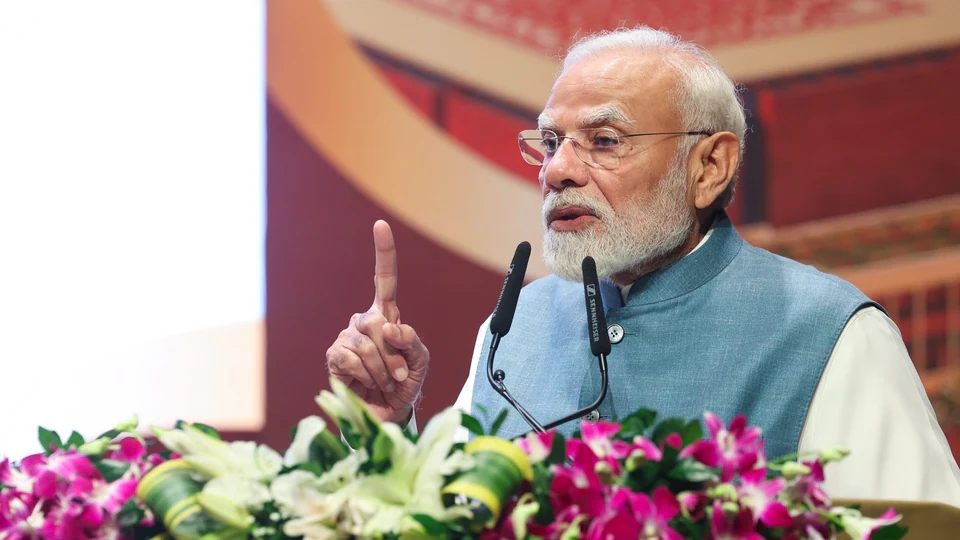
Prime Minister Narendra Modi has warned that modern wars are no longer fought with weapons alone, saying attacks on a country’s economy can also weaken it. He stressed the need to protect India’s banking system from cybercriminals and cyberterrorists while inaugurating the Reserve Bank of India’s (RBI) data centre and Cybersecurity Training Institute in Bhubaneswar, Odisha.
The two facilities, inaugurated on Sunday, represent an investment of ₹169 crore and are intended to strengthen the security and resilience of India’s banking infrastructure. Modi said the changing nature of cyber threats requires modern infrastructure, stronger computing capabilities and a skilled workforce capable of responding to emerging risks.
The Prime Minister also connected the projects to India’s broader digital transformation, arguing that the country must move beyond expanding access to banking and focus on making financial services more secure, efficient and reliable. He highlighted digital banking, Jan Dhan accounts and direct benefit transfers as key developments in expanding financial inclusion.
PM Modi warns of economic risks from cyberattacks
Addressing the inauguration, Modi said warfare had evolved beyond conventional military confrontations. He warned that a country could be weakened by attacks on its economy, making the protection of critical financial infrastructure an important national priority.
“As India grows stronger economically, protecting our banking system from cybercriminals and cyberterrorists becomes equally essential,” the Prime Minister said.
He argued that India could not respond effectively to emerging cybersecurity challenges using outdated systems, training methods and tools. According to Modi, the development of advanced infrastructure and specialised training capabilities was necessary to keep pace with the changing threat landscape.
Banking systems are central to the movement of money, the delivery of government benefits and the everyday financial activities of individuals and businesses. Disruptions or security breaches can therefore affect more than individual customers, potentially undermining confidence in financial services and interrupting essential transactions.
Modi’s remarks placed cybersecurity within the wider context of India’s economic growth. As more financial activities move to digital platforms, protecting banking infrastructure becomes increasingly important to maintaining the reliability of services and safeguarding the financial system.
RBI’s ₹169-crore data centre and cybersecurity institute inaugurated
The RBI’s new data centre and Cybersecurity Training Institute in Bhubaneswar were inaugurated to support the security and resilience of India’s banking infrastructure. The combined investment in the two facilities is ₹169 crore.
Modi said the projects would play an important role in strengthening the banking system’s ability to address emerging cybersecurity challenges. Their inauguration also reflects the growing importance of specialised infrastructure and trained personnel as financial services become increasingly technology-driven.
A data centre provides computing and data-handling infrastructure, while a cybersecurity training institute can support the development of professionals equipped to identify and respond to digital threats. Together, such facilities can contribute to the technological capabilities needed to protect financial operations.
However, the supplied announcement does not detail the data centre’s technical specifications, storage capacity, operational arrangements or the institute’s training programmes. It also does not identify specific cyber threats the facilities will address. Their precise operational capabilities and expected outcomes cannot therefore be assessed from the available information alone.
The inauguration nevertheless highlights cybersecurity as a key part of the infrastructure supporting India’s financial system. Modi said the country needed to match its economic ambitions with stronger systems and a workforce prepared for new challenges.
India’s next banking priority is efficiency and reliability
Modi said India’s banking priorities would evolve over the coming decade. He described the previous decade as a period focused on bringing people who had been excluded from formal banking into the financial system. The next phase, he said, would concentrate on making banking more efficient and reliable.
This shift reflects the changing requirements of a financial system that serves a growing number of customers through digital channels. Expanding access is only one part of the challenge; maintaining dependable services and protecting transactions are also essential as more people rely on banks for everyday financial needs.
Modi’s comments linked the RBI facilities to this broader transition. As banking becomes more accessible and technology-driven, the systems supporting it must be capable of managing security risks while maintaining the reliability customers expect.
The Prime Minister did not outline specific national cybersecurity targets or a timeline for implementing additional measures during the address, according to the supplied account. His remarks instead emphasised the need for modern infrastructure, better training and updated tools to respond to emerging threats.
Modi highlights Jan Dhan accounts and digital banking
Alongside cybersecurity, Modi highlighted the expansion of digital banking and financial inclusion under the BJP-led government at the Centre. He said that nearly 59–60 crore Jan Dhan accounts had helped ensure that government assistance reached beneficiaries directly.
The Pradhan Mantri Jan Dhan Yojana was designed to expand access to formal banking, particularly among people who had previously lacked bank accounts. Modi presented the growth of these accounts as part of a wider change in how financial services and government assistance reach households.
He contrasted the current system with an earlier period in which, he said, more than half of India’s population remained outside the banking ecosystem until 2014. He argued that the nationalisation of banks in the 1960s and 1970s had not, by itself, ensured universal access to banking.
Modi also criticised what he described as “phone banking” during Congress-led governments. He alleged that loans worth thousands of crores of rupees had been extended over the telephone to a select group of people who were close to certain Congress leaders or had access to them.
These remarks were political allegations made by the Prime Minister. The supplied account does not provide specific loan cases, supporting figures or responses from the Congress to independently assess the claims.
PM Modi cites direct benefit transfers as a governance change
Modi said digital banking had expanded access to financial services and improved the delivery of government assistance. He used an example associated with a former prime minister’s criticism of public fund distribution to contrast earlier systems with the current approach.
Recalling the statement that only 15 paise of every rupee sent from Delhi reached the intended people, Modi said the situation had changed. He claimed that when ₹1 now left Delhi, the full amount reached the bank account of the intended beneficiary.
The example was used to underline the government’s emphasis on direct benefit transfers, in which eligible recipients receive payments directly into their bank accounts. Such transfers rely on financial infrastructure capable of processing transactions and providing access to accounts across the country.
Modi presented these developments as part of a broader change in governance, with digital connectivity and financial services extending beyond major urban centres. He argued that the benefits of public programmes should reach the last person rather than remain concentrated among those with easier access to institutions.
His comments also connected financial inclusion with the need for secure banking systems. As government assistance and other transactions increasingly rely on digital channels, the reliability and protection of those channels become important to maintaining public confidence.
Technology and infrastructure to reach smaller towns and villages
The Prime Minister said India’s development approach had historically seen major cities gain large hospitals, airports and other institutions while smaller towns and remote areas continued to face gaps in basic facilities and connectivity.
He said the government had sought to change this approach through what he described as a pro-people and proactive model of good governance. He pointed to the expansion of expressways, medical colleges, healthcare facilities and digital connectivity in smaller towns and villages.
The Bhubaneswar facilities were presented within this wider development agenda. Modi said the inauguration reflected an effort to ensure that the benefits of national development reached beyond major metropolitan areas.
Locating advanced technology infrastructure in Odisha also places the state within India’s expanding digital economy. The Prime Minister argued that the state’s future growth would increasingly depend on technology alongside its established mineral resources.
Odisha’s growth ambitions: From mines to microchips
Modi described eastern India as a major potential growth engine for a developed India and said Odisha’s economy was drawing strength from technology in addition to its traditional mining sector.
“Odisha is poised to write a new chapter in its future, moving from mines to microchips,” he said.
The statement reflects an ambition to broaden Odisha’s economic base beyond mineral resources and create opportunities connected to advanced computing and digital infrastructure. Modi said investments in data centres and advanced computing could open new avenues for the state’s youth.
The development of technology-related infrastructure can support a state’s ambitions to attract investment and build specialised skills. However, the supplied announcement does not specify the number of jobs expected from the new facilities, identify additional planned investments or provide a timeline for wider technology-sector growth in Odisha.
The inauguration nevertheless gives the state a role in the government’s broader emphasis on digital infrastructure and cybersecurity. It also links regional economic development with the national objective of maintaining secure and reliable financial services.
Why banking cybersecurity matters as India digitises
India’s expanding use of digital banking makes the protection of financial infrastructure an increasingly important issue. Customers depend on electronic systems to access accounts, transfer money and receive payments, while government programmes use banking channels to deliver financial assistance.
Cybercriminals may seek to exploit weaknesses in digital systems, while cyberterrorism concerns the potential use of cyberattacks to cause disruption or advance broader hostile objectives. Modi’s warning focused on the possibility that attacks targeting economic systems could weaken a country without relying solely on conventional weapons.
Responding to these risks requires more than investment in physical infrastructure. Skilled personnel, updated tools, effective security practices and the ability to respond to emerging threats are also important components of cybersecurity preparedness. Modi specifically emphasised modern infrastructure, stronger computing systems and workforce training during the inauguration.
The RBI’s new facilities are intended to contribute to this effort, although the available information does not establish their precise security functions or quantify how much they will improve the resilience of the banking system.
What the inauguration means for India’s financial system
The inauguration of the RBI’s ₹169-crore data centre and Cybersecurity Training Institute brings together three priorities highlighted by Modi: strengthening financial security, improving the reliability of banking and expanding technology-led development beyond major cities.
His remarks indicate that the government sees cybersecurity as an essential part of economic resilience as India’s financial system becomes more digital. They also reflect a shift in emphasis from bringing previously excluded citizens into formal banking towards ensuring that the system remains efficient, dependable and secure.
For Odisha, the projects form part of a wider ambition to expand the state’s role in technology and advanced computing. Whether they lead to broader employment opportunities and further investment will depend on developments beyond the inauguration itself.
Modi’s central message was that economic growth must be supported by systems capable of protecting the financial infrastructure on which people, businesses and government programmes increasingly depend. As digital banking expands, cybersecurity will remain an important part of India’s efforts to build a more resilient economy.
For breaking news and live news updates, like us on Facebook or follow us on Twitter and Instagram. Read more on Latest India on thefoxdaily.com.






COMMENTS 0