
India’s BRICS presidency has triggered an unusual debate within the Congress party, with senior leader P Chidambaram questioning what tangible benefits recent BRICS summits have delivered for the country while party colleague Shashi Tharoor has defended the grouping’s broader diplomatic value.
The contrasting assessments have emerged just ahead of the 18th BRICS Summit in New Delhi on September 12 and 13, 2026. India, which assumed the BRICS chairship on January 1, is using the summit to bring together leaders from the expanded grouping and other invited countries at a time of growing geopolitical tensions and uncertainty in global trade.
Chidambaram has focused on the measurable returns India receives from participating in BRICS and other international groupings. Tharoor, while acknowledging that concrete outcomes have been limited in recent years, has argued that diplomacy also generates value through access, influence, prestige and the ability to bring major countries to the same table.
The disagreement offers a useful window into a larger question facing India: should the success of a multilateral grouping be judged primarily by immediate economic outcomes, or can diplomatic influence itself be considered a strategic asset?
Chidambaram asks what India is actually gaining
Former finance minister and senior Congress leader P Chidambaram questioned the practical benefits India has obtained from BRICS in recent years.
Speaking ahead of the New Delhi summit, Chidambaram said he did not believe the last two or three BRICS meetings had produced meaningful tangible benefits for India. He extended the question beyond BRICS, pointing to India’s participation in the Shanghai Cooperation Organisation, G20 and Quad as examples of the many multilateral platforms in which New Delhi participates.
His criticism was not that India should withdraw from these organisations, but that the government should be able to demonstrate what the country gains from them.
That is a familiar criticism of large diplomatic summits. Leaders can produce declarations and establish working groups, but those outcomes may take years to produce measurable changes in trade, investment, financing or technology cooperation.
For policymakers focused on economic performance, the distinction between diplomatic visibility and concrete outcomes can be significant.
Tharoor agrees on limited results but sees diplomatic gains
Tharoor offered a more nuanced response. He agreed with Chidambaram that tangible BRICS outcomes have been limited in recent years but rejected the idea that this makes the grouping unimportant.
He identified the New Development Bank as the clearest concrete achievement associated with an earlier phase of BRICS cooperation. Established by the BRICS countries in 2015, the bank provides financing for infrastructure and sustainable-development projects in member and other eligible countries.
Tharoor argued that the institution has delivered practical benefits and that India has an influential position within it.
But he also made a broader point: diplomacy cannot always be measured like a corporate balance sheet.
His argument is that an international forum can create strategic value simply by allowing India to engage with countries that might otherwise interact less frequently, coordinate positions and demonstrate its ability to convene major powers.
Why Tharoor calls BRICS a Global South platform
One of Tharoor’s strongest arguments in favour of BRICS is its representation of the Global South.
BRICS has expanded significantly from its original five members. The current grouping consists of Brazil, Russia, India, China, South Africa, Egypt, Ethiopia, Iran, the United Arab Emirates, Indonesia and Saudi Arabia.
According to figures cited by Tharoor, the 11 members collectively represent about 41 per cent of global GDP and a majority of the world’s population. The precise share can vary depending on the economic measure and year used, but the broad point is clear: the expanded grouping has substantial demographic and economic weight.
India’s official BRICS material similarly describes the grouping as an increasingly important platform for emerging economies and the wider Global South.
That scale means decisions and discussions within BRICS are watched by countries that are not members but want greater representation in global institutions.
For India, hosting such a gathering is therefore an opportunity to present itself not only as a participant but as a convenor of emerging economies.
India’s diplomatic convening power is part of the payoff
Tharoor placed particular emphasis on India’s ability to bring senior leaders from different political and strategic camps together.
With presidents and prime ministers attending the New Delhi summit, India gains an opportunity for high-level bilateral meetings alongside the formal BRICS discussions. Those interactions can cover issues that extend well beyond the official summit agenda.
This is what Tharoor described as “diplomatic convening power”.
Such power can be difficult to quantify, but it can have practical consequences. A summit can create opportunities to resolve misunderstandings, open new negotiations, discuss trade barriers, advance investment proposals and establish direct communication during periods of geopolitical tension.
The value may therefore appear months or years after the event rather than in a single summit declaration.
BRICS gives India access to countries that do not share its worldview
Another reason BRICS matters to India is that the grouping brings together countries with very different foreign-policy priorities.
China and India remain strategic competitors despite efforts to stabilise bilateral relations. Russia is under extensive Western pressure because of the Ukraine war. Iran has become deeply involved in the latest Middle East crisis. Gulf members have their own security relationships with the United States and Europe.
India’s presence in this Environment gives New Delhi another channel through which to maintain communication across geopolitical divides.
That fits India’s wider strategy of strategic autonomy and multi-alignment. New Delhi does not want its foreign policy to depend exclusively on one bloc.
BRICS can therefore serve a different purpose from platforms such as the Quad. The Quad brings India together with the United States, Japan and Australia around a different set of strategic objectives, while BRICS includes major emerging powers with much less alignment with Washington.
For India, participating in both is not necessarily contradictory. It is part of maintaining flexibility.
The New Development Bank remains BRICS’ most tangible achievement
Tharoor’s reference to the New Development Bank points to one of the clearest examples of BRICS moving beyond political declarations.
The bank was designed to finance infrastructure and sustainable-development projects and represents an attempt by BRICS countries to create an additional source of development finance alongside established institutions such as the World Bank and regional development banks.
Its significance goes beyond the value of individual loans. It demonstrates that BRICS can create a permanent institution with its own capital structure and operational framework.
But the bank also illustrates why Chidambaram’s criticism remains relevant. A multilateral institution may be strategically useful while still producing fewer immediate or visible benefits than governments and taxpayers might expect from high-profile summits.
The question is therefore not whether BRICS has achieved anything at all. It is whether its achievements match the scale of expectations surrounding the grouping.
Why tangible outcomes are harder to produce in BRICS
BRICS is much more diverse than a conventional trade or defence alliance.
Its members differ substantially in economic structure, political systems, foreign-policy priorities and relationships with the West. That diversity makes common declarations easier than binding agreements.
India may want stronger market access in one country while that same country is protecting its domestic industry. China may push for positions that India does not support. Gulf states may prioritise energy and investment, while Brazil and South Africa focus on development and commodity markets.
Reaching consensus across such a broad membership inevitably takes time.
This explains why BRICS often produces lengthy statements on broad principles but fewer agreements with immediate, measurable effects on India’s economy.
The debate over BRICS is really a debate over what counts as success
Chidambaram and Tharoor are effectively using two different definitions of success.
Chidambaram’s approach is transactional. It asks what India gets in return: more exports, investment, financing, market access, technology or strategic commitments.
Tharoor’s approach is broader. It includes influence, access, relationships, prestige, communication channels and India’s ability to shape international conversations.
Neither measure is necessarily sufficient on its own.
Diplomatic influence matters because it can eventually produce concrete agreements. But diplomacy that never translates into practical outcomes can become difficult to justify indefinitely.
The challenge for India is therefore to convert the diplomatic access created by BRICS into measurable results.
India’s BRICS summit comes amid US pressure over Russia trade
The debate is taking place at a particularly sensitive moment in India’s relations with the United States.
The US Senate has passed legislation that could authorise tariffs of up to 100 per cent on countries buying Russian Oil and gas, although the measure still requires action in the House of Representatives before it can become law.
India is closely monitoring the proposed legislation because Russian crude remains an important part of its energy mix.
Tharoor argued that the possibility of severe US trade measures makes diversification of export markets and communication channels more important.
His point is not necessarily that BRICS can replace the American market. India’s trade relationship with the United States is too significant for that. Rather, BRICS can provide additional relationships that reduce India’s vulnerability to excessive dependence on any one major market.
BRICS cannot simply replace Western markets
That distinction is important because it would be unrealistic to treat BRICS as a substitute for India’s economic relationship with the United States or Europe.
India’s largest trading relationships extend across multiple regions, and Western markets remain important for Indian goods and services.
The practical value of BRICS may therefore lie in diversification rather than replacement.
New Delhi can seek greater market access among BRICS members while continuing to pursue trade agreements and investment partnerships with Western economies.
This approach is consistent with India’s broader foreign-policy strategy: maintain as many economic and diplomatic options as possible rather than making the country dependent on a single geopolitical camp.
Why the 2026 summit is different from previous BRICS meetings
India’s 2026 BRICS presidency comes at a time when the grouping is larger and more geopolitically significant than it was a decade ago.
India assumed the chairmanship on January 1, marking its fourth BRICS presidency after previous terms in 2012, 2016 and 2021. The year also marks two decades since the group’s establishment.
The summit is taking place against a backdrop of the war in Ukraine, the conflict involving Iran and Israel and the resulting disruption to energy and Shipping markets.
Those developments have exposed divisions within BRICS. The grouping’s members do not always share the same interests on major security questions, especially when regional conflicts directly affect different members.
India’s ability to keep the summit focused on common ground will therefore be an important test of its chairmanship.
New Delhi is trying to keep BRICS focused on practical cooperation
India’s official agenda for the 2026 presidency emphasises resilience, innovation, cooperation and sustainability.
The government has sought to focus BRICS discussions on areas including economic cooperation, development, entrepreneurship, technology, climate action and supply-chain resilience.
This approach could help answer the criticism that BRICS is long on rhetoric and short on results.
Potential initiatives under discussion include cooperation around startups, logistics and supply chains. The Indian chairmanship has also involved hundreds of meetings and engagements across the country before the leaders’ summit.
The test will be whether these discussions eventually produce programmes that can be measured through investment, trade, financing or other practical outcomes.
The summit also gives India opportunities outside the formal BRICS agenda
One of the strongest arguments for hosting an international summit is the opportunity for bilateral diplomacy on the sidelines.
Indian officials can use the presence of multiple leaders to hold separate discussions that have little to do with BRICS itself.
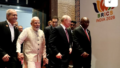
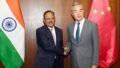
The 2026 summit is especially important in this regard because Chinese President Xi Jinping and Russian President Vladimir Putin are among the leaders attending. Prime Minister Narendra Modi is expected to hold bilateral discussions with major visiting leaders alongside the summit.
These meetings can address trade, energy, border issues, investment, technology, regional conflicts and other subjects that are not necessarily resolved through multilateral declarations.
This is another form of diplomatic value that does not appear in a BRICS communique but can still be strategically important.
BJP turns the Congress disagreement into a political attack
Chidambaram’s criticism quickly became a political issue, with the BJP accusing Congress of undermining India’s international standing.
BJP leaders highlighted Tharoor’s more favourable assessment of the summit and argued that his comments undermined criticism coming from within his own party.
BJP national president Nitin Nabin said the Congress was unable to appreciate India’s growing role in international affairs and criticised Chidambaram’s remarks ahead of the summit.
BJP leader Vishnu Vardhan Reddy similarly shared Tharoor’s comments on social media and claimed that the Congress leader’s position exposed what the BJP described as the opposition party’s negative narrative about India’s diplomatic rise.
The political framing simplifies what is actually a more complicated disagreement. Tharoor himself accepted Chidambaram’s central criticism that recent BRICS meetings have generated relatively few tangible results.
The difference is that Tharoor does not believe tangible gains are the only way to measure diplomatic success.
BRICS’ expansion is both its strength and weakness
The expansion of BRICS has dramatically increased its global weight, but it has also made consensus harder.
A larger grouping can represent more of the Global South, creating greater legitimacy in debates over global governance. But every additional member brings different national interests and regional conflicts into the room.
That creates an unavoidable trade-off.
A smaller BRICS could potentially move faster on economic initiatives. A larger BRICS has greater geopolitical relevance but needs more diplomatic effort to reach agreement.
India’s presidency must manage that trade-off while preventing the grouping from becoming paralysed by differences among members.
India’s real opportunity is to convert access into outcomes
The strongest argument combining the positions of Chidambaram and Tharoor is that India needs both diplomatic influence and measurable results.
Diplomatic prestige has value, but it becomes more convincing when it generates concrete outcomes. A successful BRICS presidency could therefore produce both immediate and longer-term gains.
Immediate gains might include investment commitments, trade facilitation, development-financing arrangements or agreements on technology and supply chains.
Longer-term gains could involve stronger political relationships, better communication during crises and greater support for India’s priorities in institutions such as the United Nations, World Bank and International Monetary Fund.
That combination would make it easier to answer the recurring question of what India gets from BRICS.
Why the Congress split matters for India’s BRICS debate
The contrasting statements from Chidambaram and Tharoor reveal something broader about India’s foreign-policy debate.
There is growing pressure on every major international engagement to demonstrate direct national benefits. At the same time, India’s rise means diplomacy itself is becoming an increasingly important instrument of economic and strategic power.
Tharoor’s position recognises that influence cannot always be converted immediately into a number on a balance sheet. Chidambaram’s criticism reminds policymakers that prestige cannot be the only justification for expensive and time-consuming international engagements.
The ideal policy lies somewhere between the two.
India can host major summits, build relationships across competing blocs and strengthen its Global South credentials while simultaneously demanding concrete deliverables from every diplomatic platform.
What success at the 2026 BRICS Summit would look like
For India, the strongest outcome would be a summit that demonstrates its convening power while also producing practical initiatives that survive beyond the headlines.
That could mean progress on trade and investment, new development and infrastructure financing, greater supply-chain cooperation, support for startups and innovation, stronger climate collaboration or new mechanisms for economic resilience.
Such outcomes would directly address Chidambaram’s concern while validating Tharoor’s argument that diplomacy creates opportunities that cannot always be measured immediately.
The challenge is especially important because BRICS is now too large and influential to be treated simply as another annual summit. Its decisions and debates increasingly affect discussions about global economic governance and the role of emerging economies.
BRICS debate exposes a larger question about India’s foreign policy
The disagreement between P Chidambaram and Shashi Tharoor is not really about whether BRICS matters. It is about how India should measure the value of diplomacy.
Chidambaram wants evidence of concrete returns from international groupings. Tharoor argues that access, influence and the ability to convene major powers are themselves valuable assets, while acknowledging that BRICS needs more measurable results.
India’s 2026 presidency gives New Delhi an opportunity to bridge those two ideas.
If the summit produces only another broad declaration, critics will have stronger grounds to question its practical value. If India can turn its convening power into new investment, trade, development and strategic cooperation, the diplomatic case for BRICS will become considerably stronger.
For now, the contrasting Congress positions have highlighted the central challenge facing the grouping: BRICS has already acquired substantial geopolitical weight, but India must show that greater diplomatic visibility can be converted into outcomes that matter to its economy and national interests.
For breaking news and live news updates, like us on Facebook or follow us on Twitter and Instagram. Read more on Latest India on thefoxdaily.com.




COMMENTS 0