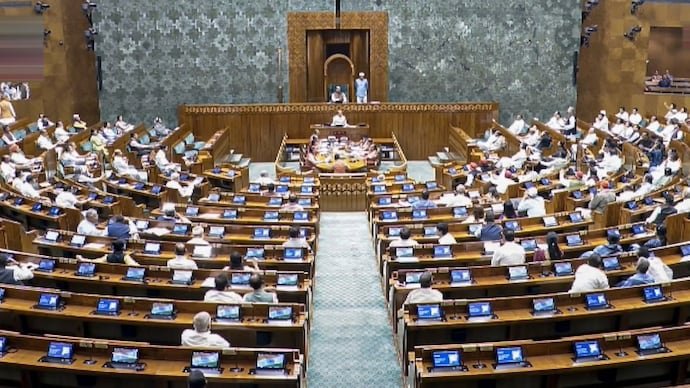
The debate over criminal accountability of elected leaders has once again taken centre stage in India with the Joint Parliamentary Committee (JPC) finalising its report on the proposed Constitution (130th Amendment) Bill. While the original draft sought the permanent removal of top executive office-bearers after 30 days in judicial custody for serious criminal offences, the committee has recommended a more balanced constitutional framework that prioritises both accountability and the presumption of innocence.
Instead of permanently removing a Prime Minister, Chief Minister, or minister from office, the JPC has proposed a system of temporary removal, coupled with the possibility of reinstatement if the individual is released, acquitted, discharged, or if prosecution does not proceed within the prescribed legal framework.
The proposal, if eventually enacted, would represent one of the most significant constitutional reforms affecting executive accountability since the adoption of the Constitution. At the same time, it carefully distinguishes between holding executive office and retaining an electoral mandate, ensuring that MPs and MLAs continue to represent their constituencies unless separately disqualified under existing election laws.
What Is the Constitution (130th Amendment) Bill?
The Constitution (130th Amendment) Bill is a proposed constitutional amendment intended to establish a legal mechanism under which the Prime Minister, Chief Ministers, and ministers would vacate their executive offices if they remain in custody for 30 consecutive days in connection with serious criminal offences.
Importantly, the proposal does not create new criminal offences or alter existing criminal law. Instead, it focuses exclusively on constitutional eligibility to continue exercising executive authority while criminal proceedings are ongoing.
The objective is to strengthen public confidence in governance while maintaining constitutional safeguards for individuals facing criminal prosecution.
Why Did the Parliamentary Panel Recommend Temporary Suspension Instead of Permanent Removal?
The most significant recommendation of the JPC is replacing permanent removal with temporary removal from executive office.
The committee recognised that criminal investigations and trials can take considerable time, and individuals accused of offences continue to enjoy the constitutional presumption of innocence until proven guilty by a competent court.
A permanent removal immediately after prolonged custody could unfairly prejudice individuals WHO are later acquitted or discharged. Temporary removal, therefore, attempts to strike a balance between maintaining public trust in government and protecting Constitutional Rights.
Under the recommendation, a leader who is subsequently cleared by the courts would remain eligible to be reappointed to the same executive office.
How Would the Proposed System Work?
The proposed constitutional framework establishes a clearly defined process.
- The mechanism applies only to specified serious criminal offences.
- If a minister remains in custody for 30 days, action is triggered on the 31st day.
- The Prime Minister or Chief Minister must inform the President, Governor, or Lieutenant Governor regarding the minister’s removal.
- If no recommendation is made, the minister is deemed to have automatically vacated the executive office.
- If the Prime Minister or Chief Minister themselves remain in custody for 30 days, they would be expected to resign on the 31st day.
- If they fail to resign, they would automatically cease to hold executive office under the proposed amendment.
This automatic mechanism is intended to prevent prolonged constitutional uncertainty during criminal proceedings.
Which Criminal Cases Would Be Covered?
The committee has clarified that the proposed amendment would apply only to serious criminal offences carrying a maximum punishment of five years or more.
This limitation seeks to ensure that the constitutional mechanism is not triggered by minor offences, technical violations, or politically insignificant cases.
The proposal is designed to focus only on allegations that are considered sufficiently grave under Indian criminal law.
Will MPs and MLAs Lose Their Membership?
One of the most important clarifications made by the JPC is that the proposal affects only executive office.
Even if a Prime Minister, Chief Minister, or minister vacates executive office under the proposed amendment, they would continue as:
- Member of Parliament (MP)
- Member of the Legislative Assembly (MLA)
- Member of the Legislative Council (where applicable)
Their elected status would remain intact unless they become disqualified under the Representation of the People Act or other constitutional provisions governing legislative membership.
This distinction preserves the democratic mandate granted by voters while ensuring executive accountability.
How Does Reinstatement Work?
The committee has proposed that temporary removal should not permanently end a political leader’s eligibility to hold executive office.
Reappointment would be possible if:
- The individual is acquitted.
- The court discharges the accused.
- The prosecution does not proceed within the legally prescribed period.
- The individual is lawfully released from custody under circumstances consistent with the proposed constitutional provisions.
Reinstatement would require a fresh constitutional appointment rather than an automatic restoration of office.
Which Constitutional Provisions Would Be Amended?
The proposed amendment recommends changes to several constitutional provisions governing executive appointments.
| Constitutional Provision | Purpose |
|---|---|
| Article 75 | Appointment and tenure of Union Council of Ministers |
| Article 164 | Appointment and tenure of State Council of Ministers |
| Article 239AA | Constitutional framework for the National Capital Territory of Delhi |
The committee has also recommended extending similar provisions to the Jammu and Kashmir Reorganisation Act, 2019, and the Union Territories Act, 1963, covering Puducherry.
What Happens to the Presumption of Innocence?
A central concern surrounding the proposed amendment is whether it undermines the constitutional principle that an accused person is presumed innocent until proven guilty.
The committee has specifically stated that the proposal does not alter criminal law or the presumption of innocence.
The recommendation concerns constitutional eligibility to hold executive office during prolonged custody rather than determining criminal guilt.
This distinction seeks to separate criminal liability from the responsibility of exercising executive authority.
Why Fast-Track Courts Are a Key Recommendation
The JPC has also recommended the establishment of fast-track courts for cases covered by the amendment.
The objective is to ensure that prolonged legal proceedings do not result in indefinite political uncertainty.
Speedier trials would benefit:
- The accused
- Government administration
- The judiciary
- Citizens awaiting political stability
Quick judicial resolution would also reduce concerns about politically motivated delays.
How Does the Proposal Differ from Existing Disqualification Rules?
India already has constitutional and statutory provisions governing the disqualification of elected representatives.
| Existing Framework | Proposed Amendment |
|---|---|
| Focuses on legislative membership | Focuses only on executive office |
| Triggered under election and constitutional laws | Triggered after 30 days of custody in serious cases |
| May affect MP/MLA status | Does not affect MP/MLA membership |
| Primarily linked to conviction or statutory disqualification | Linked to prolonged custody during specified criminal proceedings |
The committee has made clear that Articles 102 and 191, which govern the disqualification of MPs and MLAs, remain unchanged.
Why the Proposal Is Politically Significant
The proposal has implications beyond Constitutional Law.
It raises broader questions about:
- Political Accountability
- Ethics in public office
- Public confidence in government
- Balance between governance and due process
- Judicial oversight
Supporters argue that executive leaders should not continue exercising governmental authority while remaining in prolonged custody for serious criminal allegations. Critics, however, caution that criminal proceedings can sometimes become politically contentious, making procedural safeguards essential.
Opposition Parties Have Raised Concerns
Several Opposition parties have expressed reservations regarding the proposed constitutional amendment and reportedly did not nominate members to the Joint Parliamentary Committee.
The concerns largely centre on constitutional safeguards, potential misuse of criminal investigations, and maintaining the balance between accountability and democratic representation.
As the proposal moves forward, these constitutional questions are expected to receive extensive parliamentary scrutiny.
Legislative Process: What Happens Next?
The committee is expected to formally approve its report before forwarding it to the Union Cabinet.
If approved by the Cabinet, the Constitution (130th Amendment) Bill may be introduced during the Monsoon Session of Parliament.
Since it is a constitutional amendment, the bill would require:
- A two-thirds majority of members present and voting in both Houses of Parliament.
- A majority of the total membership of each House.
- Where constitutionally required, ratification by at least half of the State Legislatures.
Only after completing these constitutional requirements can the amendment become law.
Expert Analysis: A New Standard for Executive Accountability?
The committee’s recommendations attempt to address a longstanding constitutional gap between criminal proceedings and executive responsibility. By limiting the proposal to serious offences, preserving legislative membership, providing for reinstatement, and recommending fast-track judicial proceedings, the framework seeks to balance accountability with due process.
If enacted, it could establish a new constitutional standard for holding executive office in India while reinforcing the principle that democratic governance should remain both accountable and legally fair.
Future Outlook
The Constitution (130th Amendment) Bill is expected to generate significant constitutional debate inside and outside Parliament. Legal experts, political parties, constitutional scholars, and civil society are likely to closely examine whether the proposed mechanism appropriately balances public accountability with individual rights.
Its eventual fate will depend not only on parliamentary support but also on broader political consensus, given the stringent requirements applicable to constitutional amendments.
Conclusion
The Joint Parliamentary Committee’s recommendation marks a notable shift from permanent removal to temporary suspension of the Prime Minister, Chief Ministers, and ministers after 30 days in custody for serious criminal offences. By allowing reinstatement after acquittal or discharge while preserving legislative membership, the proposal seeks to reconcile executive accountability with the constitutional presumption of innocence.
Whether the amendment ultimately becomes law remains uncertain, but it has already sparked an important national conversation about ethics in public office, constitutional governance, and the evolving standards of political accountability in India’s democracy.
For breaking news and live news updates, like us on Facebook or follow us on Twitter and Instagram. Read more on Latest India on thefoxdaily.com.






COMMENTS 0