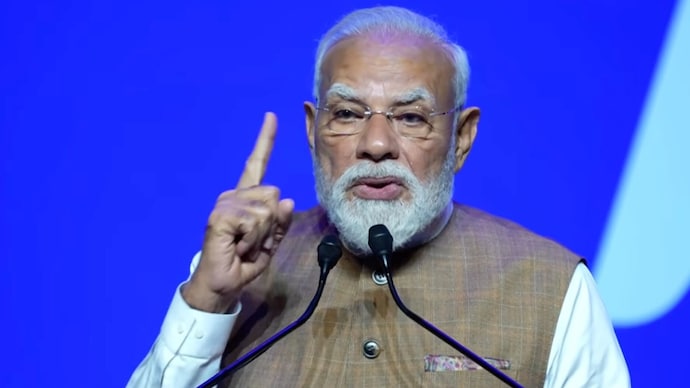
Nearly five decades after India witnessed one of the most controversial periods in its democratic journey, Prime Minister Narendra Modi on June 25 renewed the national conversation around the Emergency of 1975, calling it a direct assault on the Constitution and a stark reminder of why democratic institutions must remain strong and independent.
Observing the anniversary of the Emergency, the Prime Minister said the events between June 25, 1975, and March 21, 1977, represented a period when civil liberties were curtailed, freedom of expression was restricted, political opponents were jailed and constitutional safeguards faced unprecedented challenges.
The remarks come as the Centre continues to observe June 25 as ‘Samvidhan Hatya Diwas’, a designation introduced to commemorate what the government describes as an attack on constitutional Governance and democratic freedoms.
Why the Emergency of 1975 Remains One of India’s Most Debated Political Events
The Emergency occupies a unique place in India’s constitutional and political History. Declared on the night of June 25, 1975, under Article 352 of the Constitution, it granted extraordinary powers to the central government and fundamentally altered the functioning of democratic institutions for nearly 21 months.
Unlike many political controversies that fade with time, the Emergency continues to shape debates about executive authority, civil liberties, media freedom and institutional independence.
For supporters of democratic accountability, the period serves as a cautionary example of how constitutional mechanisms can be stretched during times of political crisis. For historians, it remains a defining test of India’s democratic resilience.
Prime Minister Modi’s remarks reflect this broader historical significance, framing the anniversary not merely as a political remembrance but as a constitutional lesson for future generations.
PM Modi’s Message: Democracy Must Never Be Taken for Granted
In his public statements, the Prime Minister highlighted several defining characteristics of the Emergency period, including restrictions on free speech, arrests of opposition leaders, curbs on public dissent and pressures on institutions that normally function as checks and balances within a democracy.
According to Modi, the anniversary should not only be viewed through the lens of history but also as an opportunity to strengthen collective commitment toward protecting constitutional values.
His message emphasized four foundational principles embedded in the Constitution:
- Justice
- Liberty
- Equality
- Fraternity
These values, often described as the moral foundation of the Indian Republic, have become central to contemporary discussions about governance, rights and institutional accountability.
The Historical Context Behind the Emergency
To understand why the Emergency remains politically significant, it is important to examine the circumstances that led to its declaration.
India in the mid-1970s was facing multiple challenges, including economic difficulties, political unrest, Inflation and growing opposition movements across several states.
A major turning point came when legal and political challenges intensified against the government, creating a period of uncertainty that culminated in the declaration of a national Emergency.
Once imposed, the Emergency dramatically altered the balance of power within the democratic system.
Fundamental rights were restricted, preventive detention laws were used extensively and media organisations operated under strict censorship requirements.
The period became one of the most closely studied episodes in India’s constitutional evolution because it tested the strength of democratic institutions under extraordinary pressure.
Timeline: Key Events of the Emergency Era
| Year/Date | Major Development |
|---|---|
| June 25, 1975 | National Emergency declared across India |
| 1975-76 | Restrictions imposed on civil liberties and press freedom |
| 1976 | Major constitutional amendments passed during the Emergency period |
| 1976-77 | Controversial population control and sterilisation campaigns intensify |
| January 1977 | General elections announced |
| March 21, 1977 | Emergency formally withdrawn |
| March 1977 | General election results reshape Indian politics |
How the Emergency Changed India’s Democratic Institutions
The legacy of the Emergency extends far beyond the political events of the 1970s.
Constitutional scholars often describe the period as a turning point that led India to re-evaluate the safeguards necessary to protect democratic governance.
Several institutional reforms and judicial interpretations that emerged in later decades were influenced by lessons learned during those 21 months.
Among the most important outcomes was a renewed focus on protecting fundamental rights and preventing excessive concentration of power.
The experience also reinforced the importance of an independent judiciary, a free press and robust parliamentary oversight.
Today, many constitutional experts view the Emergency as a critical case study demonstrating why democratic systems require strong institutional safeguards even during periods of political uncertainty.
Freedom of Expression and the Media During the Emergency
One of the most frequently discussed aspects of the Emergency was the restriction placed on freedom of expression.
Newspapers and media organisations faced extensive censorship, with publications often required to obtain approval before printing certain content.
This period remains particularly significant because it highlighted the role independent Journalism plays in democratic societies.
The experience continues to influence discussions around press freedom, transparency and the relationship between governments and the media.
Many journalists and historians regard the resistance shown by sections of the press during this period as an important chapter in India’s democratic evolution.
The Human Impact: Beyond Constitutional Debates
While constitutional discussions often focus on institutions and legal frameworks, the Emergency also had a profound impact on ordinary citizens.
Thousands of political workers, activists, journalists and social leaders faced detention.
Public gatherings and political activities were heavily regulated.
Perhaps the most controversial aspect was the implementation of aggressive sterilisation campaigns, which remain one of the most debated policies associated with the Emergency era.
For many families, the period was not merely a constitutional event but a deeply personal experience that affected livelihoods, freedoms and community life.
These human stories continue to shape how the Emergency is remembered across generations.
Why the Emergency Still Matters in Modern India
The continued relevance of the Emergency lies in the lessons it offers rather than the political divisions it created.
Modern democracies around the world regularly face questions about executive power, National Security, civil liberties and institutional independence.
India’s Emergency experience serves as an important reminder that democratic systems require constant vigilance, public participation and strong constitutional safeguards.
The anniversary therefore functions not only as a historical remembrance but also as an opportunity to reflect on the responsibilities that accompany democratic citizenship.
Political leaders, constitutional experts and civil society organisations frequently point to the period as evidence that democratic institutions must remain resilient regardless of changing political circumstances.
A Global Perspective: Democracies and Constitutional Safeguards
India is not the only democracy that has experienced periods of institutional stress. Around the world, constitutional systems have faced challenges ranging from political crises and wars to economic instability and social unrest.
What often determines the long-term health of a democracy is not the absence of challenges but the strength of institutions that can withstand them.
India’s ability to return to regular democratic processes after the Emergency is frequently cited by political observers as an example of institutional resilience.
The eventual restoration of Elections, parliamentary accountability and constitutional normalcy demonstrated the durability of democratic traditions despite significant pressure.
The Broader Constitutional Lesson
The central lesson of the Emergency extends beyond Politics.
It underscores the importance of maintaining a balance between authority and accountability, governance and liberty, power and constitutional restraint.
Democracies thrive when institutions remain independent, citizens remain informed and governments remain accountable to constitutional principles.
That is why discussions surrounding the Emergency continue to resonate decades after the event itself.
Conclusion
As India marks another anniversary of the Emergency, Prime Minister Narendra Modi’s remarks have once again brought national attention to a defining chapter in the country’s democratic history. The period between 1975 and 1977 remains a powerful reminder of how fragile constitutional freedoms can become when institutional checks weaken and civil liberties are curtailed.
Nearly fifty years later, the Emergency continues to serve as both a historical milestone and a constitutional warning. Its legacy is not only about political conflict but also about the enduring importance of democracy, freedom of expression, judicial independence and citizens’ rights.
As India moves forward, the lessons of that era remain relevant: democratic institutions must be protected, constitutional values must be upheld and the freedoms guaranteed by the Constitution must never be taken for granted.
For breaking news and live news updates, like us on Facebook or follow us on Twitter and Instagram. Read more on Latest India on thefoxdaily.com.






COMMENTS 0