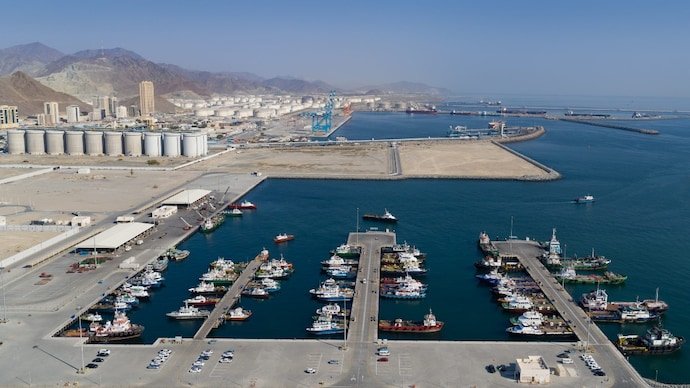
The United Arab Emirates (UAE) is preparing for one of its most significant infrastructure and logistics projects in recent years. DP World, one of the world’s largest port operators, is reportedly planning to develop a new multipurpose port and container terminal in Fujairah, a move that could reshape regional Shipping routes and reduce the country’s reliance on the strategically sensitive Strait of Hormuz.
The proposal comes at a time when geopolitical tensions in the Middle East continue to create uncertainty for Global Trade. Repeated disruptions to maritime traffic, concerns over shipping security, and volatility in energy markets have highlighted the risks of concentrating trade through a single maritime chokepoint. By expanding its presence on the Gulf of Oman, the UAE aims to build a more resilient logistics network capable of maintaining cargo flows even during regional crises.
While Jebel Ali Port will remain the country’s primary maritime gateway, the Fujairah project represents a strategic insurance Policy—one that could strengthen not only the UAE’s economy but also international supply chains that depend on uninterrupted maritime trade.
Why the Strait of Hormuz Is So Important
The Strait of Hormuz is one of the world’s most strategically significant shipping lanes. Connecting the Persian Gulf with the Gulf of Oman and the Arabian Sea, it serves as the primary maritime route for crude oil, liquefied natural gas (LNG), and commercial cargo exported from Gulf nations.
Every disruption in this narrow waterway immediately attracts global attention because it affects energy markets, shipping costs, insurance premiums, and international trade.
Major exporters including the UAE, Saudi Arabia, Kuwait, Iraq, Qatar, and Bahrain rely heavily on this maritime corridor for international commerce.
Why the UAE Wants an Alternative Trade Route
Recent geopolitical developments have demonstrated the risks of relying too heavily on a single maritime passage.
Repeated security incidents, military tensions, attacks on commercial vessels, and uncertainty surrounding shipping access have encouraged governments and logistics companies to strengthen alternative supply routes.
The proposed Fujairah project reflects a broader strategy of reducing operational risks while ensuring that trade continues even if access through the Strait of Hormuz becomes restricted.
Diversification has become a key principle of modern logistics planning.
What DP World Is Planning
According to reports, DP World is exploring two complementary infrastructure projects:
- A new multipurpose commercial port in Fujairah.
- A modern container terminal connected to the existing harbour.
The facilities would be located on the Gulf of Oman, allowing ships to access UAE ports without transiting the Strait of Hormuz.
Containers arriving at Fujairah could then be transported efficiently by road or future multimodal logistics corridors to Dubai, Abu Dhabi, and other commercial centres across the UAE.
Why Fujairah Is the Ideal Location
Fujairah occupies a unique geographic position on the UAE’s eastern coastline.
Unlike ports located inside the Persian Gulf, Fujairah opens directly onto the Gulf of Oman and the Arabian Sea.
This offers several strategic advantages:
- Direct access to international shipping routes.
- Avoidance of the Strait of Hormuz.
- Reduced geopolitical exposure.
- Faster rerouting during maritime disruptions.
- Enhanced flexibility for global shipping companies.
Fujairah already serves as an important energy export hub through pipelines that transport crude oil from Abu Dhabi to the east coast, reducing reliance on Hormuz for energy exports.
How the New Port Could Transform UAE Logistics
The proposed expansion is expected to strengthen the country’s logistics ecosystem rather than replace existing infrastructure.
Jebel Ali Port will continue serving as the UAE’s primary international container hub, while Fujairah would function as an alternative gateway during periods of disruption.
This dual-port strategy could provide:
- Greater supply chain resilience.
- Improved cargo flexibility.
- Reduced shipping delays.
- Enhanced emergency response capacity.
- Stronger Business continuity planning.
Why Jebel Ali Will Remain Critical
Jebel Ali Port has played a central role in transforming Dubai into one of the world’s leading logistics and trade centres.
The port is integrated with:
- Free trade zones.
- Industrial parks.
- Manufacturing facilities.
- Warehousing networks.
- Global shipping services.
- Air cargo connections.
Because of this extensive ecosystem, industry experts do not expect Fujairah to replace Jebel Ali. Instead, both facilities are likely to operate as complementary logistics hubs serving different strategic purposes.
Why Supply Chain Diversification Has Become a Global Priority
The COVID-19 pandemic, geopolitical conflicts, shipping disruptions, and rising trade tensions have fundamentally changed how governments and businesses approach logistics.
Today’s supply chains increasingly prioritize resilience alongside efficiency.
Companies now seek:
- Multiple transportation routes.
- Diverse supplier networks.
- Alternative ports.
- Flexible inventory systems.
- Regional distribution hubs.
The UAE’s latest infrastructure initiative reflects this broader global trend.
Economic Benefits for the UAE
If completed successfully, the Fujairah expansion could generate several long-term advantages.
- Higher cargo handling capacity.
- Increased foreign investment.
- New employment opportunities.
- Greater logistics competitiveness.
- Enhanced trade resilience.
- Support for long-term economic diversification.
Modern ports often become catalysts for industrial development, manufacturing, warehousing, and international investment.
Competition Is Increasing on the UAE’s East Coast
The UAE’s eastern coastline is becoming increasingly important for regional logistics.
Alongside Fujairah, nearby ports continue expanding their capabilities to accommodate growing trade volumes.
This growing competition encourages investment in:
- Container terminals.
- Digital logistics platforms.
- Storage facilities.
- Multimodal transportation.
- Maritime services.
Greater competition may ultimately improve operational efficiency while strengthening the UAE’s position as a global logistics hub.
Comparison: Jebel Ali vs Fujairah
| Feature | Jebel Ali Port | Fujairah Port (Planned Expansion) |
|---|---|---|
| Location | Persian Gulf | Gulf of Oman |
| Hormuz Dependence | Yes | No |
| Primary Role | Major global container hub | Alternative strategic gateway |
| Geopolitical Exposure | Higher | Lower |
| Strategic Purpose | Trade and logistics center | Supply chain resilience |
What This Means for Global Shipping
Shipping companies continually assess route reliability when planning international cargo movements.
A second major UAE gateway outside the Strait of Hormuz could:
- Reduce operational uncertainty.
- Improve schedule reliability.
- Lower disruption risks.
- Support emergency cargo rerouting.
- Strengthen regional maritime resilience.
Although shipping through Hormuz is expected to remain important, additional infrastructure provides valuable operational flexibility during periods of instability.
Potential Impact on India and Asian Trade
India, one of the UAE’s largest trading partners, could also benefit from stronger logistics connectivity.
Enhanced port capacity on the Gulf of Oman may improve cargo movement between South Asia, the Middle East, Europe, and Africa while reducing risks associated with geopolitical disruptions.
Given the growing economic relationship between India and the UAE, improved logistics infrastructure could support trade in manufactured goods, Food products, energy, and industrial equipment.
Challenges the Project Could Face
Large-scale port developments require significant planning and investment.
Key challenges may include:
- Project financing.
- Environmental approvals.
- Infrastructure connectivity.
- Construction timelines.
- Future cargo demand.
- Integration with existing logistics networks.
Successful implementation will depend on efficient coordination between government agencies, investors, and logistics operators.
Expert Insight: Ports Are Becoming Strategic National Assets
Modern ports are no longer viewed solely as cargo-handling facilities. They have evolved into strategic economic assets that support national resilience, international trade, industrial development, and geopolitical influence.
The UAE’s decision to strengthen logistics capacity outside the Strait of Hormuz illustrates how governments are increasingly investing in infrastructure that prioritizes flexibility and risk management alongside commercial efficiency. As global supply chains become more complex, countries with diversified maritime gateways are likely to enjoy greater economic stability during periods of international uncertainty.
Future Outlook
If negotiations progress as expected, the proposed Fujairah facilities could become operational within the coming years, adding a significant new dimension to the UAE’s logistics network. Continued investment in ports, free zones, transportation infrastructure, and digital trade systems is expected to reinforce the country’s ambition of remaining one of the world’s leading trade and logistics hubs.
The success of the project may also encourage other countries to diversify their own shipping infrastructure, particularly those heavily dependent on strategically sensitive maritime routes.
Conclusion
DP World’s reported plan to develop a new port and container terminal in Fujairah represents a forward-looking strategy to strengthen the UAE’s resilience against geopolitical disruptions affecting the Strait of Hormuz. Rather than replacing Jebel Ali, the new facilities would complement the country’s existing logistics network by providing an alternative maritime gateway with direct access to the Gulf of Oman.
As international trade increasingly prioritizes flexibility, resilience, and diversified supply chains, the Fujairah expansion has the potential to become one of the UAE’s most strategically important infrastructure projects. Beyond enhancing national economic security, it could also contribute to greater stability in regional and global trade flows during periods of geopolitical uncertainty.
For breaking news and live news updates, like us on Facebook or follow us on Twitter and Instagram. Read more on Latest World on thefoxdaily.com.






COMMENTS 0