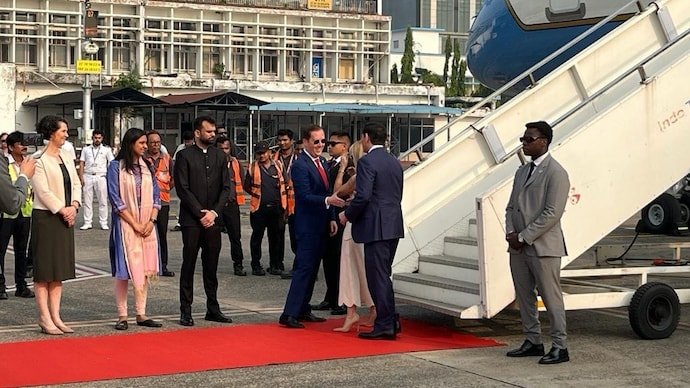
US Secretary of State Marco Rubio arrived in Kolkata on Saturday, marking the beginning of his first official visit to India since assuming office. The four-day diplomatic tour comes at a strategically important moment for both Washington and New Delhi as the two countries seek to strengthen cooperation across trade, defence, energy security, emerging technologies and Indo-Pacific strategy.
Rubio’s arrival is being closely watched not only because of his scheduled talks with Prime Minister Narendra Modi in New Delhi, but also because the visit comes just ahead of an important Quad ministerial meeting on May 26. The timing signals that the United States views India as central to its long-term strategic planning in Asia.
Beyond the ceremonial optics and diplomatic meetings, Rubio’s India trip reflects a much larger geopolitical reality: the US-India partnership is rapidly evolving from a transactional relationship into a deeper strategic alignment shaped by china’s rise, supply chain shifts, Global energy competition and emerging technology battles.
While official statements have focused on cooperation and partnership, the real significance of this visit lies in how both nations are quietly redefining the balance of power in the Indo-Pacific.
Why Marco Rubio’s India Visit Is Strategically Important
Rubio’s visit comes during a period of unusually fast-moving geopolitical changes.
The United States is actively trying to strengthen alliances and partnerships across Asia as competition with China intensifies economically, militarily and technologically. India, meanwhile, is seeking to expand its global influence while maintaining strategic autonomy.
That combination has created a relationship where both countries increasingly need each other, even if differences remain on certain issues.
Several major priorities are expected to dominate discussions during Rubio’s meetings in Delhi:
- Defence cooperation and Military technology sharing
- Expansion of bilateral trade
- Energy exports and energy security
- Supply chain diversification away from China
- Artificial intelligence and semiconductor partnerships
- Indo-Pacific maritime security
- Quad strategic coordination
The visit is also significant because it signals continuity in US foreign policy toward India regardless of changes in administration. Over the past two decades, India has steadily become one of Washington’s most important strategic partners.
Why Rubio Chose Kolkata as His First Stop
Rubio’s arrival in Kolkata carries both symbolic and diplomatic significance.
This is the first visit by a US Secretary of State to Kolkata in more than a decade, following Hillary Clinton’s trip in 2012. Choosing Kolkata as the opening stop instead of directly arriving in Delhi suggests the US wants to broaden its diplomatic outreach beyond traditional political centers.
Kolkata remains culturally and historically important in India’s intellectual and diplomatic landscape. It also serves as a gateway to eastern and northeastern India, regions increasingly important in connectivity projects linking South Asia with Southeast Asia.
Rubio is expected to visit Mother House, the headquarters of the Missionaries of Charity founded by Mother Teresa. Such visits often carry soft-power messaging, emphasizing humanitarian ties and people-to-people relations alongside hard Geopolitics.
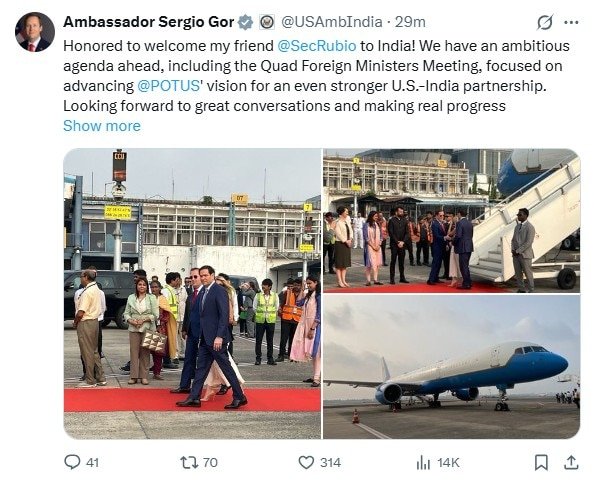
Diplomacy is rarely only about formal meetings. Symbolic gestures, location choices and cultural engagements often send subtle messages about priorities and long-term engagement.
The Bigger Story: The US-India Partnership Is Expanding Beyond Defence
For years, discussions around US-India relations focused heavily on defence deals and military exercises. While security cooperation remains central, the relationship is now expanding into multiple high-value sectors.
That evolution is one of the most important but underreported shifts in Global Geopolitics.
| Area of Cooperation | Why It Matters | Long-Term Impact |
|---|---|---|
| Defence | Counterbalance regional threats | Stronger Indo-Pacific deterrence |
| Technology | Reduce dependency on China | Supply chain resilience |
| Energy | Secure stable energy supplies | Economic stability |
| Semiconductors | Strategic tech manufacturing | Future industrial growth |
| AI Cooperation | Compete in next-gen technologies | Innovation leadership |
| Quad Partnership | Regional security coordination | Indo-Pacific influence |
Rubio’s comments before departing for India highlighted energy exports as a major area of focus. The United States has become one of the world’s largest energy producers, while India remains one of the fastest-growing energy consumers.
That creates a natural strategic fit.
Washington wants larger energy export markets. India wants diversified and reliable energy supplies that reduce vulnerability to geopolitical disruptions.
The Quad Meeting Could Shape Indo-Pacific Strategy
One of the most important events linked to Rubio’s visit is the upcoming Quad meeting on May 26.
The Quad — comprising India, the United States, Japan and Australia — has emerged as one of the most influential strategic groupings in the Indo-Pacific region.
Originally viewed as a loose diplomatic forum, the Quad has steadily evolved into a more coordinated platform focused on regional stability, maritime security, technology cooperation and supply chain resilience.
The upcoming discussions are expected to include:
- Freedom of navigation in the Indo-Pacific
- Maritime security cooperation
- Critical technology partnerships
- Cybersecurity coordination
- Infrastructure investment
- Disaster response mechanisms
- Regional connectivity projects
While the Quad officially avoids presenting itself as a military alliance, many analysts view it as a strategic balancing mechanism designed to counter growing Chinese influence in Asia.
That reality explains why every high-level Quad meeting receives close attention globally.
Why Energy Security Is Suddenly a Major Talking Point
Rubio’s emphasis on energy exports before arriving in India was not accidental.
Global energy markets remain highly sensitive due to geopolitical instability in the Middle East, shipping disruptions and concerns around supply chains.
India imports a large percentage of its energy needs, making stable partnerships extremely important for long-term economic growth.
The United States, meanwhile, has dramatically increased its energy production over the past decade and is actively expanding global exports.
This creates mutual economic incentives:
- India gains diversified energy access
- The US expands export markets
- Both reduce dependence on unstable supply routes
- Strategic ties become economically stronger
Rubio’s remarks regarding disruptions near the Strait of Hormuz also highlight growing concern about how geopolitical tensions can affect global energy prices.
Any instability in that region directly impacts countries like India that depend heavily on imported oil and gas.
Trade and Technology Are Becoming the Real Centerpiece
While defence cooperation gets headlines, technology and trade may ultimately become the defining pillars of the US-India relationship.
Global companies are increasingly looking to diversify manufacturing and supply chains away from overdependence on China.
India has positioned itself as a major alternative destination for:
- Electronics manufacturing
- Semiconductor assembly
- Artificial intelligence development
- Digital infrastructure
- Pharmaceutical production
- Advanced engineering services
Washington sees India as a democratic technology partner capable of playing a major role in future supply chains.
At the same time, India wants access to advanced American technology, investment and research collaboration.
This alignment explains why technology cooperation is now discussed alongside traditional defence issues during high-level visits.
What Makes This Visit Different From Earlier US Diplomatic Trips
Several factors make Rubio’s India visit more consequential than a routine diplomatic engagement.
The Global Order Is Changing
The world is moving toward a more competitive multipolar system where regional powers like India are becoming increasingly influential.
India’s Strategic Importance Has Grown
India is no longer viewed simply as a regional South Asian power. It is now seen as a critical global player in technology, economics and Indo-Pacific security.
The China Factor Is Stronger Than Ever
Although US and Indian officials rarely frame their partnership exclusively around China, Beijing’s growing influence remains a major strategic backdrop.
Economic Security Is Now National Security
Modern geopolitics increasingly revolves around semiconductors, AI, rare earth minerals, energy routes and supply chains rather than only military alliances.
How India Benefits From the Partnership
India’s growing engagement with the United States offers several long-term advantages.
- Access to advanced defence technologies
- Greater foreign investment opportunities
- Enhanced global diplomatic influence
- Stronger positioning in Indo-Pacific affairs
- Technology partnerships in emerging sectors
- Diversified energy sourcing
At the same time, India continues to maintain strategic independence in foreign policy.
Unlike formal treaty allies, India often balances relationships across multiple global powers, including the US, Russia, Europe and Gulf nations.
This balancing strategy gives New Delhi flexibility while expanding its international leverage.
The Hidden Diplomatic Message Behind Rubio’s Tour
One important angle many competitors are missing is that Rubio’s broader India itinerary — including Agra and Jaipur — also reflects a softer diplomatic strategy.
High-level visits increasingly combine strategic negotiations with cultural diplomacy.
Such tours help reinforce public goodwill, tourism links, educational engagement and broader societal connections beyond government meetings.
In modern diplomacy, perception matters almost as much as policy.
Countries are not only competing economically and militarily; they are also competing for influence, trust and long-term partnerships.
Potential Challenges in US-India Relations
Despite strong momentum, the relationship is not without friction.
Areas that occasionally create tension include:
- Trade disputes and tariffs
- Human rights concerns raised by US lawmakers
- India’s relationship with Russia
- Differences on certain global conflicts
- Market access issues
However, both sides increasingly appear willing to manage disagreements pragmatically rather than allowing them to derail the broader partnership.
That maturity marks a significant shift from earlier decades when bilateral relations were often inconsistent.
What to Watch Over the Next Few Days
Several developments during Rubio’s visit could offer clues about the future direction of US-India ties.
- Announcements on defence or technology cooperation
- Energy partnership agreements
- Statements related to Indo-Pacific security
- Quad coordination outcomes
- Investment and semiconductor discussions
- Joint initiatives on AI and emerging technologies
Observers will also closely monitor whether both countries signal deeper strategic coordination regarding regional security issues.
Conclusion: Rubio’s India Visit Reflects a Much Bigger Geopolitical Shift
Marco Rubio’s first official visit to India is about far more than diplomatic meetings or ceremonial engagements.
It reflects the rapid transformation of the US-India relationship into one of the most strategically important partnerships in the modern world.
Trade, defence, energy, semiconductors, AI and Indo-Pacific security are now interconnected parts of a broader geopolitical realignment taking shape across Asia.
As global power balances continue shifting, Washington increasingly sees India as an indispensable partner in shaping the future regional order.
For India, closer ties with the United States offer opportunities to expand economic growth, technological capabilities and global influence while preserving strategic autonomy.
The next few days of Rubio’s meetings in Delhi and the upcoming Quad discussions could provide important signals about how both nations plan to navigate an increasingly competitive and uncertain global landscape.
For breaking news and live news updates, like us on Facebook or follow us on Twitter and Instagram. Read more on Latest India on thefoxdaily.com.






COMMENTS 0