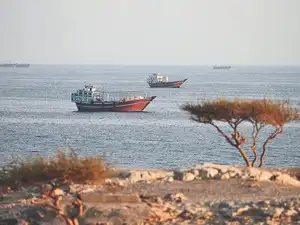
Iran has announced the lifting of transit restrictions for vessels from India, China, Iraq and Qatar passing through the strategically important Strait of Hormuz. The decision could ease concerns over energy supplies to India, particularly as the country depends on the route for a significant share of its oil and gas imports.
The move also carries wider implications for regional trade and diplomatic relations. Iranian officials have indicated that vessels from the four countries can pass without the restrictions previously imposed, while highlighting that American forces do not intercept these ships.
For India, the announcement is particularly important because uninterrupted access to the Strait of Hormuz is closely linked to Energy Security, shipping costs and the stability of supplies from the Gulf region. Previous discussions between New Delhi and Tehran had also focused on ensuring that energy shipments could move through the waterway without disruption.
Iranian Lawmaker Explains Why Four Countries Received Exemptions
The exemptions were announced by Amir Hayat-Moghaddam, deputy chairman of the Iranian Parliament’s National Security and Foreign Policy Committee, in an interview with the Iranian Students’ News Agency (ISNA).
According to Hayat-Moghaddam, Tehran’s decision reflects its political and economic interests with the four countries. He said Indian vessels were being allowed to pass to facilitate the import of medicines from India, while the exemption for Chinese ships was intended to strengthen Iran’s relationship with Beijing and secure its political support.
India has an established pharmaceutical industry and supplies medicines to international markets. Iran’s interest in maintaining access to Indian pharmaceutical products therefore provides an economic dimension to the shipping arrangement.
China’s exemption has a different strategic emphasis. Hayat-Moghaddam indicated that Tehran considers Beijing’s political support important, making unrestricted passage for Chinese vessels part of its broader relationship with the country.
The inclusion of Iraq and Qatar also reflects the importance of regional relationships in Iran’s approach to shipping through the waterway. However, the Iranian lawmaker did not provide a detailed explanation of the specific considerations behind the exemptions for those two countries.
Are Indian Ships Allowed to Pass Through Hormuz Without Paying Fees?
The exemption from transit restrictions does not necessarily mean that all vessels can cross the Strait of Hormuz without paying charges.
Hayat-Moghaddam said Indian and Chinese vessels were still required to pay transit fees to Iran despite being exempted from the restrictions. Qatari ships, meanwhile, were permitted to pass without charges. He did not clarify whether Iraqi vessels were also required to pay transit fees.
This distinction is important for understanding what the announcement means for Indian shipping companies. The exemption allows Indian vessels to navigate the waterway without the restrictions applied to other ships, but the continued fees mean that passage is not entirely cost-free.
For Indian energy importers, the arrangement could improve access to the route, but the financial and operational conditions surrounding individual shipments will continue to matter.
The announcement also does not establish that every Indian-bound oil or gas shipment will automatically receive unrestricted passage. The available information does not specify the number of vessels covered, the duration of the exemption or the precise procedures that ships must follow.
Why the Strait of Hormuz Is Crucial for India’s Oil and Gas Supply
The Strait of Hormuz is one of the most important energy transportation routes in the world. Located between Iran and Oman, the narrow waterway connects the Persian Gulf with the Gulf of Oman and provides a shipping passage for oil and gas exports from major Gulf producers.
India is particularly exposed to disruptions along this route because it relies heavily on imported energy. The country imports almost 90% of its crude oil requirements, while approximately 30% of its current crude oil imports pass through the Strait of Hormuz.
India’s dependence on the route for crude oil has declined from earlier levels as New Delhi diversified its suppliers. Purchases from Russia, the United States, West Africa and Fujairah in the United Arab Emirates have helped reduce the proportion of crude oil arriving through the strait.
However, India’s dependence remains particularly significant for liquefied petroleum gas (LPG) and liquefied natural gas (LNG).
Nearly 90% of India’s LPG imports pass through the Strait of Hormuz. More than half of its LNG imports from Qatar and the UAE also travel through the waterway.
This makes the Iranian exemption important beyond crude oil transportation. Any improvement in the movement of commercial vessels could help reduce uncertainty surrounding supplies of cooking gas and natural gas, both of which are important for Indian households, industries and businesses.
Could the Exemption Ease Pressure on India’s Energy Supplies?
The decision could provide some relief to India by creating a more favourable transit arrangement for vessels registered or associated with the country. If shipping operations become more predictable, Indian importers may find it easier to organise the movement of energy cargoes through the region.
For crude oil buyers, the availability of a reliable shipping route is an important part of supply planning. Delays, security risks and uncertainty over vessel access can complicate cargo scheduling and increase transportation costs.
The same concerns apply to LPG and LNG shipments. India depends heavily on supplies transported through the Strait of Hormuz, particularly from Gulf producers. Restrictions affecting vessels or disruptions to maritime traffic can therefore create difficulties for importers and downstream consumers.
Iran’s decision to exempt Indian vessels from transit restrictions could help reduce one part of that uncertainty. However, the announcement alone does not guarantee that energy shipments will return to normal or that prices will immediately decline.
Transit fees, shipping insurance, vessel availability and security conditions remain important factors. The reported exemptions also do not provide details about whether all categories of commercial cargo will receive identical treatment.
Consequently, the development should be viewed as a potential improvement in access rather than a complete resolution of India’s energy supply concerns.
India’s Energy Diversification Has Reduced Its Dependence on Hormuz
India has increasingly diversified its sources of crude oil to reduce dependence on any single supplier or transportation route.
Purchases from Russia, the United States and West African producers, alongside supplies routed through Fujairah in the UAE, have helped lower the share of Indian crude imports that must pass through the Strait of Hormuz.
This strategy has become particularly important amid instability in West Asia. A disruption affecting one route or supplier can create significant difficulties for countries that rely heavily on imported energy.
By expanding its sourcing options, India can maintain greater flexibility when international shipping conditions change. However, diversification does not eliminate the country’s exposure to the Strait of Hormuz, particularly for LPG and LNG imports.
The continued dependence on the route for these fuels means that stable maritime access remains a major energy security priority for New Delhi.
Iran’s exemption could therefore complement India’s wider diversification strategy. It may provide an additional channel for maintaining the movement of vessels, while alternative suppliers and routes continue to play an important role in reducing supply risks.
US Forces and Iran’s Shipping Exemptions
Hayat-Moghaddam also made a notable claim about the role of American forces in the passage of vessels from the four exempted countries.
He said ships from India, China, Iraq and Qatar could pass through the Strait of Hormuz without being intercepted by American forces. His statement suggests that Tehran views the exemptions as part of a specific arrangement involving the countries concerned.
However, the comment should be understood as the Iranian lawmaker’s account of the situation. The available announcement does not provide an independent operational assessment of how American forces are monitoring or handling every vessel moving through the waterway.
The issue is significant because shipping through the Strait of Hormuz has been affected by the wider confrontation involving Iran, the United States and Israel. Restrictions, military activity and concerns about attacks on commercial vessels have disrupted normal maritime operations.
For countries dependent on Gulf energy supplies, the ability of commercial ships to navigate safely is essential. Even when a vessel has permission to transit, concerns about military activity and the security of shipping lanes can influence whether companies are willing to send ships through the area.
Why the Strait of Hormuz Crisis Matters Beyond India
The Strait of Hormuz is not only important to India and the countries directly involved in the current exemptions. It is a critical route for international energy trade, connecting major oil and gas exporters in the Persian Gulf with global markets.
Disruptions can affect energy-importing economies by creating uncertainty over supply availability, transportation costs and international oil prices.
Countries that depend on imported crude oil and natural gas are particularly vulnerable when shipping through the waterway becomes restricted. Even nations that purchase energy from suppliers outside the Gulf can face indirect effects if disruptions influence international benchmark prices.
Shipping companies must also consider security risks, insurance costs and the possibility of delays when deciding whether to use the route. These factors can affect the economics of energy transportation even when physical supplies remain available.
The exemptions for India, China, Iraq and Qatar could therefore have significance beyond the individual countries. They demonstrate how access to a major international shipping route can become connected to diplomatic relationships and strategic considerations.
What the Decision Means for India-Iran Relations
The exemption highlights the continuing importance of India-Iran economic and diplomatic engagement despite the difficult regional security environment.
Iran’s explanation that Indian vessels are being facilitated to support medicine imports gives the arrangement a direct trade dimension. It indicates that Tehran sees continued commercial engagement with India as serving its own interests.
Earlier discussions between New Delhi and Tehran had also focused on allowing energy supplies to move freely through the Strait of Hormuz. The latest announcement is therefore relevant to India’s broader efforts to protect commercial shipping and maintain access to essential imports.
For India, the challenge is to preserve its economic and diplomatic relationships while navigating a region affected by competing security interests. New Delhi has a strong interest in maintaining uninterrupted energy supplies, protecting Indian seafarers and ensuring that commercial vessels can operate safely.
The exemption offers an opportunity for continued engagement with Tehran, but its practical value will depend on how consistently the arrangement is implemented and whether shipping conditions improve.
What Remains Unclear About Iran’s Hormuz Exemptions?
Although the announcement provides important information about the countries receiving exemptions, several operational details remain unclear.
- Duration of the exemption: The Iranian lawmaker did not specify how long the arrangements for India, China, Iraq and Qatar would remain in effect.
- Number of vessels covered: No figures were provided on how many ships from the four countries could benefit from the decision.
- Transit charges: Indian and Chinese vessels reportedly remain subject to fees, while Qatari ships are allowed free passage. The position for Iraqi vessels was not clarified.
- Energy cargo arrangements: The announcement did not provide specific details about how many oil, LPG or LNG shipments would be able to use the exemption.
- Security conditions: The statement did not establish whether the exemptions would remove wider risks associated with military activity and attacks on commercial shipping.
These unanswered questions will be important in determining how much practical relief the decision provides to Indian importers and shipping companies.
Conclusion
Iran has exempted vessels from India, China, Iraq and Qatar from transit restrictions in the Strait of Hormuz, according to senior Iranian lawmaker Amir Hayat-Moghaddam. The decision reflects Tehran’s economic and strategic interests, including its aim to facilitate medicine imports from India and strengthen political ties with China.
For India, the exemption could offer relief at a time when disruptions in the waterway have raised concerns about energy security. Around 30% of India’s crude oil imports, nearly 90% of its LPG imports and more than half of its LNG supplies from Qatar and the UAE pass through the strait.
However, the arrangement does not mean that all Indian ships can cross without charges. Iranian officials have indicated that Indian and Chinese vessels remain subject to transit fees, while Qatari ships receive free passage. The duration and operational scope of the exemptions have also not been specified.
The development offers a potential opening for more reliable shipping access, but India’s energy security will continue to depend on safe maritime operations, diversified suppliers and stable conditions across the Gulf region.
For breaking news and live news updates, like us on Facebook or follow us on Twitter and Instagram. Read more on Latest India on thefoxdaily.com.





COMMENTS 0