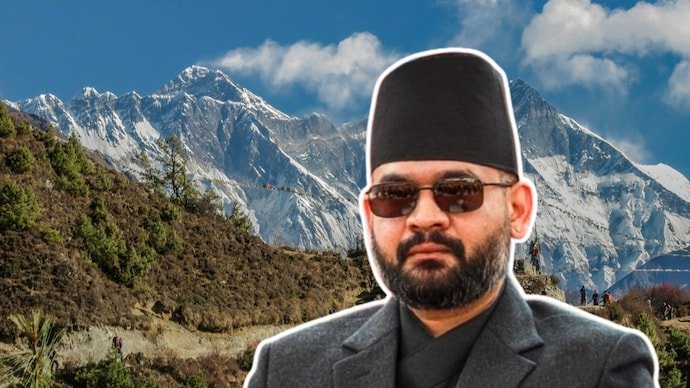
Indian Army chief General Dhiraj Seth met Nepal Prime Minister and Defence Minister Balendra Shah on Tuesday, with the two sides discussing bilateral military relations, issues of mutual interest and ways to strengthen defence cooperation between the neighbouring countries.
The meeting took place during General Seth’s official visit to Nepal from August 17 to 19, at a time when India-Nepal relations are navigating sensitive diplomatic and border-related issues.
The visit also included the continuation of a longstanding military tradition between the two countries. On Monday, Nepal President Ramchandra Paudel conferred on General Seth the honorary rank of General of the Nepali Army, reflecting the reciprocal practice followed by India and Nepal for decades.
Against this backdrop, Seth’s meetings with Nepal’s political and military leadership provide an important channel for maintaining defence-to-defence engagement even as broader bilateral relations face areas of disagreement.
General Seth meets Nepal’s prime minister
General Seth met Shah at the Office of the Prime Minister and Council of Ministers in Singha Durbar. Indian Ambassador to Nepal Naveen Srivastava was also present.
According to sources at the Prime Minister’s secretariat, discussions focused on matters of bilateral interest and ways to strengthen military relations between India and Nepal.
The meeting was significant because Shah has recently signalled an interest in deepening Nepal’s relationship with India. Earlier this month, he held his first one-on-one meeting with Ambassador Srivastava and stressed the importance of strengthening Nepal’s historic relationship with its southern neighbour.
Shah had previously followed a self-imposed practice of avoiding one-on-one meetings with foreign ambassadors and senior visiting officials. His recent engagement with the Indian ambassador represents a shift in that approach.
A long-established military relationship
India and Nepal have maintained unusually close military-to-military relations, supported by a tradition that dates back to 1950.
Under the reciprocal honorary rank arrangement, the army chiefs of the two countries are traditionally conferred the honorary rank of General by the other country’s military. The practice has become a visible symbol of the longstanding defence relationship.
General Seth’s conferment of the honorary rank in Nepal on Monday continued that tradition.
The relationship extends beyond ceremonial exchanges. Regular interaction between the two armies provides a channel for communication and cooperation even when political relations encounter disagreements.
The Indian Embassy in Kathmandu said General Seth’s visit reaffirmed the “unique and time-tested defence relations” between the two countries, describing the relationship as rooted in shared values, mutual trust and enduring military-to-military ties.
General Seth holds talks with Nepal Army chief
Seth’s engagement in Nepal was not limited to political leadership. He also held bilateral talks with his Nepali counterpart, General Ashok Raj Sigdel, at Army Headquarters on Monday.
The two military chiefs discussed matters of mutual interest as part of the broader effort to maintain and strengthen bilateral defence relations.
Such direct engagement is particularly relevant during periods of diplomatic uncertainty because military channels can provide continuity in the relationship. While the source material does not specify the detailed agenda or any new defence agreements reached during the talks, it confirms that strengthening bilateral military ties was a central theme of the visit.
Seth also offered prayers at Kathmandu’s Pashupatinath Temple on Tuesday, according to Nepal Army sources.
Why the visit comes at a sensitive time
General Seth’s visit takes place against the backdrop of unease in India-Nepal relations. The two countries maintain close political, economic, cultural and people-to-people links, but territorial questions have periodically generated tensions.
Nepal’s approach to its two large neighbours has also attracted attention since Shah took office. Unlike the traditional pattern in which Nepali prime ministers have often prioritised India for an early foreign visit, Shah has not yet visited either India or china.
Instead, Nepal’s Foreign Minister Shisir Khanal made back-to-back visits to New Delhi and Beijing in June.
Shah’s predecessor, K P Sharma Oli, visited China after taking office in 2024, departing from the earlier practice of Nepali prime ministers making India their first foreign destination.
These developments do not by themselves indicate a fundamental shift in Nepal’s foreign policy, but they provide context for why renewed direct engagement between Kathmandu and New Delhi is being closely watched.
Border dispute remains a sensitive issue
One of the most difficult issues in India-Nepal relations is the longstanding dispute involving Lipulekh, Limpiyadhura and Kalapani.
In his first appearance in Parliament on May 31, Shah said he had learnt about Nepal’s territory being “encroached” upon by India. He also said Kathmandu was discussing the border issue with India while maintaining contact with China and the United Kingdom.
New Delhi rejected any role for third parties in resolving the boundary dispute two days later.
India has consistently maintained that Lipulekh, Limpiyadhura and Kalapani are part of Uttarakhand. Nepal, meanwhile, has maintained its own territorial position on the disputed areas.
The disagreement illustrates why defence relations and broader Diplomacy cannot always be considered separately. The armies may maintain longstanding institutional ties, while political leaders continue to manage difficult questions over territory and sovereignty.
Military ties provide continuity amid political differences
The importance of General Seth’s visit lies partly in this separation between military engagement and political disagreements.
India and Nepal have multiple areas of cooperation and extensive people-to-people connections. At the same time, disputes over territory can create political friction. Continued contact between the two armed forces provides an established mechanism through which the defence relationship can remain active.
The honorary General tradition is particularly useful as a symbol of that continuity. Its existence since 1950 means that military ties have survived numerous changes in governments and shifts in the political environment.
The current visit reinforces that institutional continuity at a time when both sides have an interest in maintaining stable engagement.
Shah’s outreach to India is gaining attention
Shah’s recent meeting with Ambassador Srivastava and the Indian Army chief’s visit form part of a broader pattern of renewed engagement.
Earlier this month, Shah emphasised the importance of Nepal’s historic relationship with India during his meeting with the Indian ambassador. His government has also had to manage the country’s relationships with both India and China, its two major neighbours.
For Kathmandu, maintaining balanced relationships with both neighbours is a significant diplomatic consideration. For New Delhi, close engagement with Nepal remains important because of the depth of geographic, economic, cultural and security connections between the two countries.
The Army chief’s visit does not resolve outstanding political disputes, but it creates another opportunity for direct dialogue at a senior level.
Why the India-Nepal military relationship matters
The defence relationship between India and Nepal has a history that is deeper than the latest diplomatic disagreements.
The reciprocal honorary rank tradition established in 1950 reflects the institutional nature of the relationship. Regular meetings between military leaders help sustain communication and reinforce familiarity between the two forces.
For Nepal, military cooperation with India exists alongside its wider relationships with China and other countries. For India, the relationship with Nepal is part of a much broader bilateral partnership that includes economic and social connections.
Maintaining these channels can be particularly important when political relations become complicated. Military diplomacy cannot settle territorial disputes by itself, but it can preserve communication while political leaders work through more difficult questions.
India and Nepal are balancing cooperation and disagreement
The current situation illustrates the complexity of India-Nepal relations. The two countries can maintain close defence ties while disagreeing over a sensitive border question.
That is why General Seth’s meetings in Kathmandu should be viewed in the context of both cooperation and disagreement.
Confirmed fact: General Seth met Prime Minister and Defence Minister Balendra Shah and Nepal Army chief General Ashok Raj Sigdel during his official visit, with bilateral military relations among the issues discussed.
Reasoned analysis: Maintaining senior military-to-military contact can help preserve institutional stability in the relationship even when political disagreements remain unresolved.
Possible future development: Further engagement between Kathmandu and New Delhi could depend on whether the two sides can expand areas of cooperation while keeping the Border Dispute from overwhelming the wider bilateral relationship.
What comes next for India-Nepal ties
The immediate significance of Seth’s visit is the continuation of high-level engagement. The visit has brought together Nepal’s political leadership, military leadership and India’s senior military representative at a time when both countries face questions about the direction of their relationship.
The next major challenge will be translating continued dialogue into broader stability. Defence ties are one part of that process, but the border dispute remains an issue that requires political and diplomatic engagement.
Shah’s recent outreach to the Indian ambassador suggests Kathmandu is interested in maintaining direct communication with New Delhi. At the same time, Nepal’s engagement with China demonstrates that Kathmandu continues to pursue relationships with both major neighbours.
For India, the objective will be to preserve the longstanding partnership with Nepal while managing disagreements through established diplomatic channels. For Nepal, the challenge is to protect its interests and maintain strategic flexibility without allowing disputes with either neighbour to undermine its broader relationships.
A military relationship that remains resilient
General Dhiraj Seth’s visit to Nepal comes at a sensitive point in India-Nepal relations, but the military relationship between the two countries continues to provide a strong institutional link.
His meeting with Balendra Shah, talks with General Ashok Raj Sigdel and conferment of the honorary rank of General all highlight the depth of defence engagement built over decades.
At the same time, the unresolved dispute over Lipulekh, Limpiyadhura and Kalapani shows that longstanding military ties do not eliminate difficult political questions.
The immediate message from Seth’s visit is therefore one of continuity rather than a breakthrough. India and Nepal remain closely connected, and both sides continue to engage at senior levels. Whether that engagement can help create a steadier relationship will depend on their ability to strengthen cooperation while managing the territorial and diplomatic issues that continue to cause unease.
For breaking news and live news updates, like us on Facebook or follow us on Twitter and Instagram. Read more on Latest World on thefoxdaily.com.





COMMENTS 0