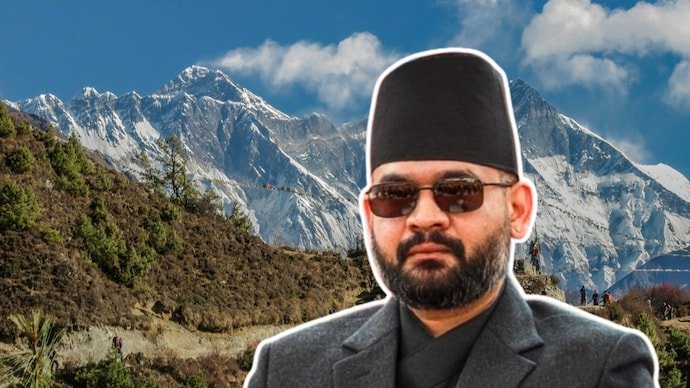
Nepal Prime Minister Balendra Shah is set to appear before the House of Representatives on August 26 to answer questions from lawmakers, Speaker Dol Prasad Aryal announced on Monday. The scheduled question-and-answer session comes after opposition lawmakers repeatedly demanded an explanation from Shah over remarks he made in Parliament in May concerning alleged encroachment into Indian territory.
The controversy dates back to Shah’s maiden appearance in the House on May 31, when he said he had learnt that Nepal had also been “encroaching” on territories in India. Opposition lawmakers subsequently demanded that the prime minister either provide evidence supporting the statement or withdraw it.
The upcoming session will allow lawmakers from different political parties to question Shah directly on the issue and other matters falling under his jurisdiction.
PM Shah to answer lawmakers on August 26
House Speaker Dol Prasad Aryal said the direct question-and-answer session with the prime minister has been scheduled for August 26 under Chapter 9 of the House of Representatives Rules, 2026.
According to Aryal, at least one lawmaker from each party represented in the House will have the opportunity to put a question to Shah. He also urged lawmakers to keep their questions brief so that the session can proceed efficiently.
The session is expected to give lawmakers an opportunity to seek clarification directly from the prime minister on his earlier comments as well as other issues related to areas under his jurisdiction.
Why are opposition parties questioning Shah?
The opposition has been pressing Shah to respond to his remarks made during the May 31 House meeting. During his first appearance in Parliament, Shah said he had learnt about Nepal “encroaching” on territories in India.
The statement prompted questions from opposition lawmakers, WHO sought clarification about what the prime minister meant and the basis for the assertion.
Opposition members have argued that if Nepal had encroached on Indian territory, the government should provide evidence supporting such a claim. They have also demanded that Shah withdraw the statement if it cannot be substantiated.
According to sources in the Parliament secretariat, the Speaker directed Shah to respond after repeated demands from opposition lawmakers for answers on important matters involving the prime minister and areas under his jurisdiction.
Speaker cites House rules
Aryal referred to Rule 56 of the House of Representatives Regulations 2083 BS while addressing the repeated demands for Shah’s response.
He said he had taken note of Protests from lawmakers who had been seeking a response from the prime minister on important matters within his jurisdiction.
The decision to schedule the direct question-and-answer session provides a formal parliamentary platform for Shah to explain the remarks that have been at the centre of the controversy since May.
Rather than being limited to one specific issue, the session will allow lawmakers to raise questions on matters falling within the prime minister’s responsibilities. However, Shah’s May remarks concerning the Nepal-India boundary are expected to remain an important point of discussion.
Nepal Foreign Ministry clarifies Shah’s remarks
Following the controversy, Nepal’s Foreign Ministry said Shah’s comments were related to “no-man’s land encroachments” and “cross-border occupation” between Nepal and India rather than territorial claims.
The clarification is significant because the prime minister’s original remarks had been interpreted by opposition lawmakers as a reference to Nepal encroaching on Indian territory.
The Foreign Ministry’s explanation suggests that Shah’s comments were intended to address issues involving border areas and cross-border occupation rather than make a new formal territorial claim against India.
The August 26 session will therefore provide an opportunity for lawmakers to seek a clearer explanation of what Shah intended when he made the statement and how it relates to Nepal’s broader position on its boundary with India.
Nepal and India have a longstanding boundary dispute
Nepal and India have a long-running boundary dispute involving areas including Lipulekh, Limpiyadhura and Kalapani.
Both countries have competing positions regarding these territories. Nepal has asserted claims over the areas, while India maintains that they are part of Uttarakhand.
The boundary dispute has remained a sensitive issue in relations between the two neighbouring countries. India has maintained that the matter should be addressed through bilateral dialogue.
The issue is therefore politically sensitive in Nepal, where questions concerning territorial sovereignty and the country’s borders with India frequently attract significant public and political attention.
What Shah may face in Parliament
The August 26 session will allow lawmakers from each party in the House to question the prime minister directly. The format is intended to provide parliamentarians with an opportunity to seek answers on issues under Shah’s jurisdiction.
Given the repeated opposition demands, questions about his May 31 statement are expected to form part of the discussion. Lawmakers may seek clarification about the basis for his claim, the government’s understanding of cross-border encroachment and the distinction between alleged occupation and formal territorial claims.
The government will also have an opportunity to explain the position outlined by the Foreign Ministry, which characterised the remarks as relating to no-man’s-land encroachment and cross-border occupation rather than territorial claims.
Why the August 26 session matters
The parliamentary appearance comes at a time when the Nepal-India boundary issue remains politically sensitive. Shah’s remarks created questions not only about the country’s border position but also about how the government communicates on matters involving India’s territory.
For the opposition, the session provides an opportunity to press Shah publicly for evidence or clarification. For the government, it offers a platform to explain the prime minister’s comments and place them within Nepal’s broader position on border management.
The session may also help clarify whether Shah’s use of the term “encroaching” was intended as a reference to specific incidents along the border rather than an assertion that Nepal is making a new territorial claim against India.
India’s position on the disputed areas
India maintains that Lipulekh, Limpiyadhura and Kalapani are part of Uttarakhand. Nepal, meanwhile, has maintained claims over the disputed areas.
The two countries have previously dealt with the boundary issue through diplomatic channels, and India has said that such matters should be resolved through bilateral dialogue.
Against this background, statements by senior political leaders on either side can carry particular significance. The controversy surrounding Shah’s May remarks demonstrates how questions about border management can quickly become matters of parliamentary and political debate.
What happens next?
The immediate next development will be Shah’s appearance before the House of Representatives on August 26. Lawmakers from the different parties will be able to put questions to the prime minister under the parliamentary rules governing the direct question-and-answer session.
The session is expected to bring greater clarity to Shah’s May 31 remarks and the government’s interpretation of the alleged border encroachment issue.
For now, the Nepal government has indicated through its Foreign Ministry that Shah’s comments referred to no-man’s-land encroachments and cross-border occupation rather than a formal territorial claim. The prime minister’s direct response to lawmakers could provide further context on that position.
The issue remains closely tied to the wider Nepal-India boundary dispute, particularly the contested areas of Lipulekh, Limpiyadhura and Kalapani. How Shah addresses the questions in Parliament could determine whether the controversy subsides or becomes a larger issue in Nepal’s political debate over its relationship with India.
For breaking news and live news updates, like us on Facebook or follow us on Twitter and Instagram. Read more on Latest World on thefoxdaily.com.




COMMENTS 0