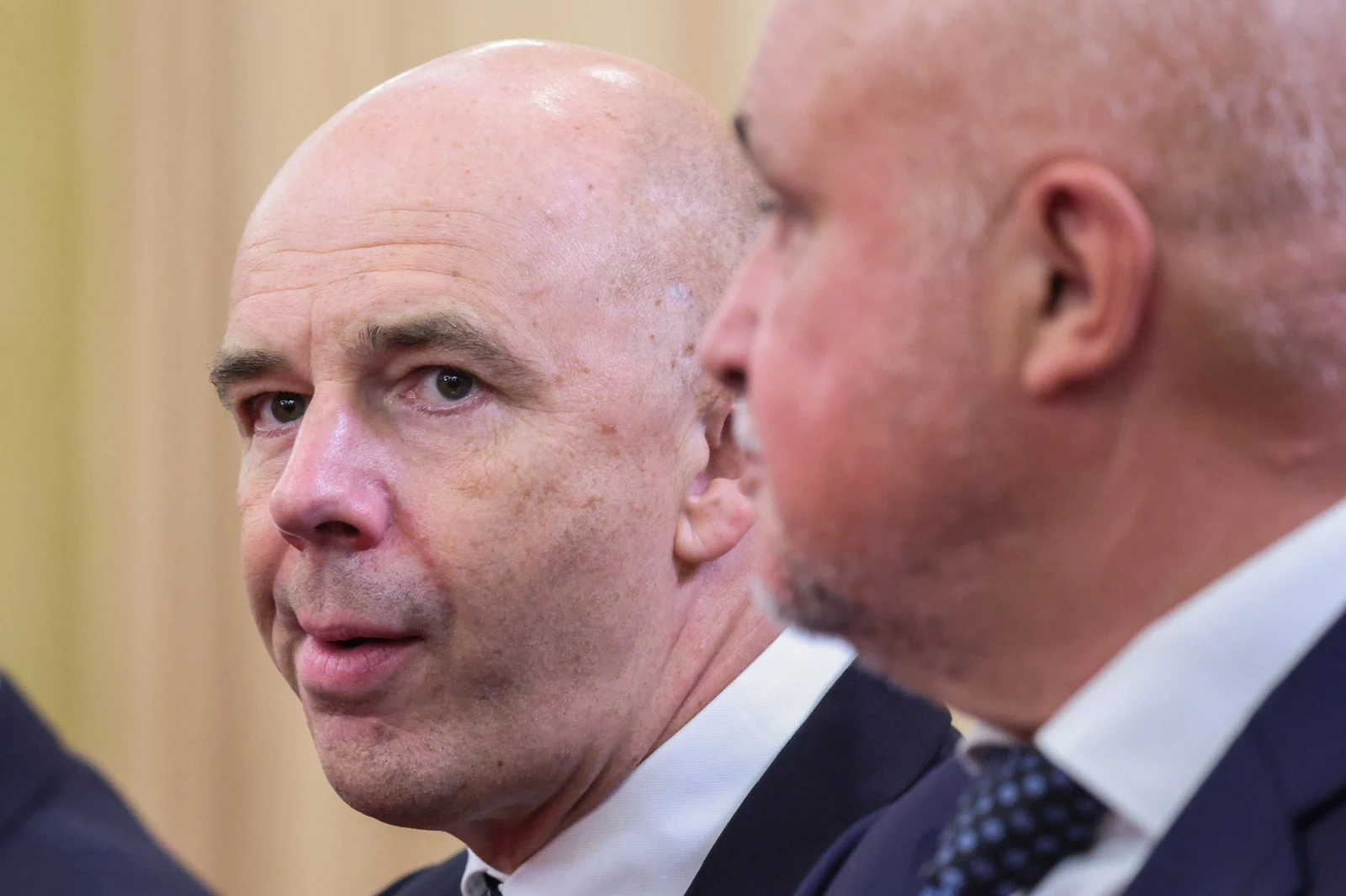
Delegates from several countries walked out of a meeting of the International Monetary Fund’s steering committee on Saturday, October 17, when Russian Finance Minister Anton Siluanov addressed the group in Russian, according to three sources familiar with the matter. The walkout, which included representatives from European Union countries, underscored the continuing diplomatic divisions over Russia’s invasion of Ukraine and the difficulty of maintaining consensus within international financial institutions.
The incident occurred during the annual meetings of the IMF and World Bank in Bangkok, Thailand, where finance officials and central bankers have gathered to discuss global economic challenges. Russia’s war against Ukraine has strained relations among participating governments since February 2022, repeatedly complicating efforts to agree on common statements through the IMF’s International Monetary and Financial Committee (IMFC).
The latest confrontation comes amid wider disagreements over Russia’s participation in international forums, the future of Western support for Ukraine and the role of dialogue in resolving conflicts. While some governments argue that engagement with Moscow is necessary to address international crises, European officials have warned against allowing Russia to resume normal diplomatic relations while the war continues.
IMF Steering Committee Walkout as Russian Minister Speaks
Several delegations left the room when Siluanov began speaking, according to officials who described the incident to Reuters. One source said many delegations, including members of the European Union, walked out. A second official present at the meeting estimated that nearly a dozen delegates departed.
The official identified representatives from Denmark, Sweden, Finland, Norway, Lithuania, Latvia and Estonia among those who left. These countries have been vocal in their opposition to Russia’s invasion and have supported measures intended to increase pressure on Moscow over the war.
The walkout was a visible demonstration of the political divisions surrounding Russia’s participation in international economic institutions. Although the IMF’s primary purpose is to promote international monetary cooperation and financial stability, its meetings bring together governments whose economic decisions and diplomatic positions are increasingly shaped by geopolitical conflicts.
One European diplomat explained the position behind the protest, saying: “The Ukraine war is existential for us in Europe. We cannot normalize relations with Russia.”
The remark reflects concerns among European governments that Russia’s participation in high-level international meetings could be interpreted as a return to ordinary diplomatic engagement despite its continued war against Ukraine. Leaving the room provided a public way for participating countries to register their opposition without ending their involvement in the broader IMF and World Bank meetings.
Russia-Ukraine War Continues to Divide the IMF
Russia’s full-scale invasion of Ukraine in February 2022 has created persistent divisions within the International Monetary and Financial Committee, the body that advises the IMF’s Board of Governors on the international monetary and financial system. The conflict has made it difficult for the committee to produce consensus statements in the years since the invasion began.
Such statements are important because they communicate a shared assessment of global economic conditions and indicate areas where member governments can cooperate. When major participants disagree over a conflict that has profound economic and security implications, reaching common language becomes considerably more difficult.
The disagreement extends beyond the immediate question of Russia’s presence in the room. The war has affected energy markets, trade relationships, public spending priorities and economic security across Europe and beyond. Governments also differ over sanctions, military assistance to Ukraine and the conditions under which Russia should participate in international diplomatic initiatives.
The annual meetings in Bangkok brought these tensions into focus once again. According to the Reuters report, divisions were evident not only over Russia but also amid fresh strains between the United States and Ukraine.
The IMF itself is not a military alliance, and its economic mandate differs from the security objectives pursued by NATO and individual governments. Nevertheless, its committee meetings depend on cooperation among member countries, making it difficult to separate global economic discussions from political disputes that influence national policies and International Relations.
European Countries Resist Russia’s Return to International Forums
The walkout followed growing European concern about Russia’s renewed participation in high-level international financial discussions. Germany had warned on Thursday against efforts to bring Moscow back onto the international stage after Siluanov attended a meeting of G20 finance ministers and central bank governors.
Siluanov’s appearance at the G20 gathering was notable because it marked his return to an in-person meeting of the group hosted by the United States since Russia launched its full-scale invasion of Ukraine. The meeting took place in Asheville, North Carolina, just over a month before the IMF and World Bank gatherings in Bangkok.
For European governments that have supported Ukraine, Russia’s presence at international meetings raises questions about diplomatic accountability and whether engagement risks weakening efforts to isolate Moscow over the war. Their position is shaped by the security implications of the conflict, particularly for countries geographically close to Russia and Ukraine.
Denmark, Sweden, Finland, Norway and the Baltic states of Lithuania, Latvia and Estonia were among the countries whose delegates reportedly left the IMF committee meeting. Their departure highlighted the continued resistance among several European governments to treating relations with Russia as normal while the conflict remains unresolved.
However, the walkout does not necessarily indicate that all participating countries share the same approach. Governments can disagree over Russia’s participation while continuing to cooperate on financial stability, international lending and other economic priorities. The dispute reflects a broader question facing international institutions: how to maintain channels for cooperation when member governments are sharply divided over a major conflict.
United States Defends Dialogue With Russia
The United States has taken a different position on Russia’s participation in international financial discussions. Erin Browne, a US Treasury undersecretary, told Reuters on Thursday that Washington, which currently leads the G20, supported Russia’s presence in the group despite concerns expressed by European governments.
Browne argued that communication is necessary to address international crises and pursue possible solutions. She said: “We think it’s really important if you’re going to solve a crisis, you need to have open dialogue and open conversation.”
She added that meaningful dialogue and conflict resolution are difficult when the parties are not speaking to one another.
The US position reflects an approach that distinguishes diplomatic engagement from agreement with Russia’s actions. Under this view, maintaining communication channels can provide opportunities to discuss economic risks, manage disputes and explore possible ways to reduce tensions, even when relations between governments remain hostile.
European officials, by contrast, have emphasised the danger of normalising Russia’s international standing while the war continues. The disagreement is therefore not simply about whether officials should communicate with Moscow, but also about the settings, timing and political implications of that engagement.
Both positions have consequences for international diplomacy. Limiting contact can demonstrate political opposition and reinforce diplomatic pressure, but it may also reduce opportunities for direct communication. Continued engagement can preserve those opportunities, although critics argue that participation in prominent international forums may confer legitimacy without producing progress towards ending the conflict.
The IMF and G20 operate under different mandates, but the debate surrounding Russia’s attendance at both illustrates how economic institutions have become venues for wider geopolitical disagreements.
Ukraine War Tensions Rise Between Washington and Kyiv
The dispute at the IMF meeting took place against a difficult backdrop for Ukraine, as disagreements between Washington and Kyiv added another layer of uncertainty to relations among Western allies.
Ukrainian President Volodymyr Zelenskiy criticised US President Donald Trump’s diesel deal with Russia while speaking at a European Union summit on Friday. Zelenskiy also welcomed the possibility of European allies taking a greater role in peace negotiations.
Trump had again criticised Ukraine, describing its strikes on Russian oil refineries as a “disgrace”. His comments highlighted continuing differences over Ukraine’s military strategy and the means of putting pressure on Russia.
Attacks on oil refineries can affect Russia’s fuel production and energy infrastructure, while also carrying the risk of further escalation. The dispute over such strikes reflects wider differences about the military and diplomatic measures that could influence the course of the war.
European Union leaders rallied around Zelenskiy during the summit, at a time when Ukraine was facing continued missile and drone attacks on its cities. Kyiv was also concerned about the possibility that Washington could reduce intelligence sharing and weapons support, both of which have been important to Ukraine’s defence.
These concerns have increased the significance of European support. If US assistance were to diminish, European governments could face greater pressure to fill gaps in military and financial backing. However, the scale of any change would depend on future policy decisions and the ability of European countries to coordinate their responses.
Why the IMF and G20 Matter in the Russia Dispute
The IMF and the G20 are different institutions, but both provide platforms where major economies can discuss international financial and economic challenges.
The IMF works to promote international monetary cooperation, support financial stability and assist member countries facing economic difficulties. Its International Monetary and Financial Committee helps guide discussions about the global monetary system and the direction of the fund’s work.
The G20 brings together major advanced and emerging economies to discuss issues including economic growth, financial regulation, trade and international development. Meetings of finance ministers and central bank governors provide opportunities to coordinate policies and address risks that can spread across national borders.
Russia’s participation in these forums is controversial because the invasion of Ukraine has affected relations between Moscow and many Western governments. European countries have supported sanctions and other measures against Russia, while continuing to debate how best to engage with Russian officials in international settings.
Disagreements can complicate efforts to reach joint statements or coordinate responses to global economic problems. Yet the absence of consensus does not necessarily prevent every form of cooperation. Member countries can continue technical discussions and pursue areas of shared interest even when they cannot agree on language addressing the war.
The walkout in Bangkok demonstrated the limits of that separation. A meeting focused on international financial issues can still become a stage for diplomatic protest when participating governments believe that another country’s actions are too serious to set aside.
What the IMF Meeting Walkout Means for Future Diplomacy
The incident is unlikely, by itself, to determine Russia’s future role in international financial institutions. It does, however, reveal the continuing obstacles to rebuilding trust between Moscow and European governments while the war in Ukraine remains unresolved.
One challenge is the gap between maintaining communication and restoring normal relations. The United States has argued that dialogue is necessary to address crises, while several European countries have made clear that Russia’s participation in international meetings should not be taken as evidence that the conflict can be treated as an ordinary diplomatic disagreement.
Another challenge is the effect of disagreements among Ukraine’s partners. Differences between Washington and European capitals over engagement with Russia, military support and possible peace negotiations could make it more difficult to maintain a unified diplomatic approach. At the same time, European support for Zelenskiy indicates that many governments remain concerned about Ukraine’s security and the consequences of Russia’s invasion.
For the IMF, the immediate issue is how to preserve its economic mandate while member countries bring sharply conflicting political positions into its meetings. The committee’s difficulties in reaching consensus statements since 2022 demonstrate that the war continues to affect the institution’s ability to present a unified position on international financial issues.
Future progress will depend partly on developments in the war and on whether governments can identify areas of cooperation without abandoning their stated positions. A change in Russia’s international standing would also depend on political decisions and the broader course of diplomatic negotiations, rather than on attendance at any single meeting.
Conclusion: Russia’s Presence Exposes Deep Divisions at IMF Meetings
The walkout by delegates during Anton Siluanov’s address at the IMF steering committee meeting in Bangkok exposed the continuing diplomatic divide over Russia’s invasion of Ukraine. Representatives from several European countries reportedly left the room, signalling their opposition to normalising relations with Moscow while the conflict continues.
The incident also highlighted differences between the United States and European governments over how to engage with Russia. Washington has defended participation in international forums as a means of maintaining dialogue, while European officials have stressed that engagement should not obscure the consequences of the war.
With Ukraine facing continued attacks and uncertainty over future US military and intelligence support, the wider diplomatic stakes remain significant. The IMF and G20 will continue to provide platforms for economic cooperation, but the walkout in Bangkok illustrates how difficult it remains to separate global financial discussions from the political and security consequences of the war.
For breaking news and live news updates, like us on Facebook or follow us on Twitter and Instagram. Read more on Latest World on thefoxdaily.com.



COMMENTS 0