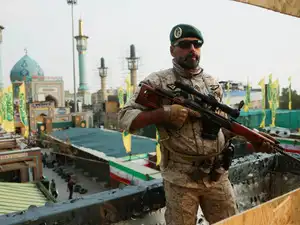
Iranian army spokesman Mohammad Akraminia said the country’s armed forces had gained experience through direct confrontation with the United States and Israel. According to a statement reported by Iran’s state news agency IRNA on Saturday, November 7, the military was now on higher alert and had greater motivation, commitment and confidence than when the conflict began.
The remarks signal Tehran’s intention to project military resilience despite months of fighting, damage to infrastructure and pressure on its economy. They also come at a sensitive moment, with fresh military activity around the Strait of Hormuz taking place alongside diplomatic efforts involving Qatar and other regional countries.
However, Iran’s assertion that its forces have become stronger is an official assessment from Tehran, not an independently verified measurement of its overall military capability. The United States has maintained that Iran’s military capacity has been severely weakened by the conflict.
Iran Says Its Military Is More Prepared for Another Confrontation
Speaking through state media, Iranian army spokesman Mohammad Akraminia said the country’s armed forces had learned from their direct military encounters with the United States and Israel. He described the military as more prepared and confident than it was at the beginning of the war.
Akraminia also indicated that Iran would respond quickly if it faced another attack. He said the armed forces would deliver an immediate and effective response under the direction of the country’s Supreme Leader, adding that the response would not be restricted by geographical boundaries.
The statement is significant because it comes after months of military confrontation that have tested Iran’s defence systems, military infrastructure and ability to respond to attacks. Tehran is attempting to demonstrate that the conflict has not eliminated its capacity to defend itself or threaten opposing forces.
Iran’s military messaging also serves a domestic purpose. Public statements about readiness, confidence and resistance can help reassure supporters that the country remains capable of confronting external pressure. At the same time, they send a warning to Washington and its regional partners against assuming that further military action would produce an easy outcome.
Still, battlefield experience and operational confidence do not necessarily mean that a military has recovered equipment, personnel or infrastructure lost during a prolonged conflict. Assessing Iran’s actual strength would require independent information about its remaining missile stockpiles, air-defence systems, command structures, production capacity and ability to sustain operations.
US Offers $20 Million Reward for Information on Iran’s Nuclear Programme
Iran’s military statement coincided with a new American effort to obtain intelligence about Tehran’s nuclear programme. On Friday, November 6, the US military announced that the State Department’s Rewards for Justice programme was offering a reward of up to $20 million, along with possible relocation, for information related to Iran’s nuclear activities.
The announcement was made by US Central Command, which oversees American military operations across the Middle East. The reward covers information about facilities, equipment and individuals associated with the programme, including members of Iran’s scientific community. It also includes information about the movement of relevant facilities, equipment or personnel.
Washington has not publicly specified the exact information that would qualify for the maximum reward. The programme is designed to encourage people with access to relevant intelligence to share information with American authorities.
The offer is particularly notable because President Donald Trump has repeatedly claimed that US military action has severely damaged or effectively destroyed Iran’s nuclear programme. The new intelligence initiative indicates that Washington continues to seek information about the programme’s facilities, equipment and personnel.
The US State Department has also raised concerns about Iran’s nuclear transparency and its obligations to the International Atomic Energy Agency (IAEA). The agency has faced difficulties maintaining continuity of knowledge about certain aspects of Iran’s nuclear activities, including the production and inventory of important components such as centrifuges.
The reward announcement does not, by itself, establish the current condition or operational status of Iran’s nuclear facilities. Instead, it reflects the continued American interest in gathering intelligence about the programme and the people and infrastructure connected to it.
Trump Issues Fresh Warning as Washington Weighs Its Next Move
Trump has continued to combine warnings of further military action with statements suggesting that a diplomatic agreement could be possible. His comments have left uncertainty over whether Washington intends to maintain pressure through negotiations or resume a broader military campaign.
On November 5, Trump said the administration was considering whether additional action was necessary to ensure that Iran could not rebuild its nuclear programme. He warned that the United States might have to go further, while also expressing reluctance to cause further destruction across the country.
In another statement reported by US media, Trump said: “You’ll know soon enough,” when discussing the possibility of further action. The remark added to concerns that the pause in large-scale fighting might not hold.
On Friday, November 6, Trump also described Iran as militarily and economically damaged by the conflict, while saying that Tehran wanted to reach an agreement. He told reporters that discussions with Iran were continuing and that the two sides had been communicating.
The contrasting messages reflect the difficult position facing the US administration. Washington wants to prevent Iran from developing a nuclear weapon and maintain pressure on Tehran, but a renewed military campaign could carry significant regional and economic consequences.
Trump’s comments also came after a difficult midterm election result for Republicans. The war and higher fuel prices have contributed to public dissatisfaction, adding domestic political pressure to the administration’s decisions about the conflict.
US Carries Out Fresh Strikes Near the Strait of Hormuz
Military tensions increased again on Friday after Trump confirmed that American forces had carried out limited strikes against an Iranian air-defence system near Qeshm Island. The island is located close to the Strait of Hormuz, one of the world’s most important maritime routes for energy shipments.
Trump described the operation as minor, saying American forces had destroyed a recently constructed anti-aircraft installation. He did not provide extensive details about the target or the equipment involved.
Iranian state media separately reported hearing two explosions in the Suza area of Qeshm Island. The reports placed the incident in a strategically sensitive location, although the available information did not establish the full extent of the damage.
The US military had also reported defensive strikes earlier in the week. Explosions were reported on Qeshm and Hengam islands, as well as in the nearby mainland area of Bandar Abbas.
Iranian media reported on Saturday that two missiles had struck Qeshm Island, but there was no official information confirming the extent of any damage. Iranian state television also reported two explosions on the island.
Separately, Iran’s army said its air-defence systems had struck and destroyed a US drone flying over the island, according to state media. The military did not provide further details about the aircraft or the circumstances surrounding the reported interception.
These developments underline the fragile nature of the current situation. Even while diplomatic channels remain active, military incidents around the Strait of Hormuz create the possibility of further escalation.
Why the Strait of Hormuz Matters to the Conflict
The Strait of Hormuz is a major strategic pressure point in the confrontation between Iran and the United States. The narrow waterway connects the Persian Gulf with the Gulf of Oman and the Arabian Sea, making it a critical route for oil and gas exports from several major energy-producing countries.
Normally, around one-fifth of global oil consumption passes through the strait. Any prolonged disruption can affect shipping schedules, energy supplies, insurance costs and international oil prices.
Iran has sought to restrict maritime traffic through the waterway and has linked its position to demands it wants Washington to meet. Iranian army spokesman Akraminia said Tehran retained control over the strategic passage and that it would remain closed until the country’s demands were fulfilled.
Such a position gives Iran a potential source of leverage beyond direct military confrontation. Restrictions on shipping can create economic pressure on countries that depend on energy supplies moving through the Gulf, while also increasing the costs of the conflict for international markets.
However, keeping the waterway restricted also carries risks for Iran. The disruption can affect regional economies and increase pressure from countries that rely on uninterrupted maritime trade. It can also create further opportunities for military confrontation involving American forces and other regional actors.
For Washington and its partners, restoring safe passage through the strait is therefore an important part of any broader effort to stabilise the region.
Iran Sends Nuclear Proposal to the US Through Qatar
Despite the renewed military activity, diplomatic efforts have continued. A senior Iranian official told Reuters on November 5 that Tehran had sent a nuclear proposal to the United States through Qatar.
The official said Washington was reviewing the proposal but did not disclose its detailed contents. The proposal is expected to be discussed only after the United States meets seven demands presented by Iran.
Iran’s security official Mohsen Rezaei has said that Tehran will not negotiate or reopen the Strait of Hormuz until its conditions are fulfilled. These demands include lifting US sanctions, releasing frozen Iranian assets and providing compensation for war damage.
Iran has also called for an end to the conflict across the region and the removal of the American naval blockade affecting its ports. Tehran wants any settlement to address hostilities beyond its own territory, including Israeli military operations in Lebanon.
Washington, meanwhile, insists that Iran’s nuclear programme must be included in the initial negotiations. This difference over the order and scope of discussions remains one of the main obstacles to an agreement.
The Iranian proposal is an important diplomatic development, but it does not mean that negotiations have formally resumed or that a ceasefire agreement is close. The two governments continue to disagree over the conditions that must be met before substantive nuclear talks can begin.
Qatar Works on a Possible Bridge Agreement
Qatar has emerged as an important mediator between Washington and Tehran. Its diplomatic involvement has included discussions with Iranian officials and communication with the US administration as regional governments attempt to prevent another round of large-scale fighting.
According to regional officials cited by The Associated Press, Qatari mediators have discussed a possible two-day arrangement designed to build confidence between the two sides and create conditions for wider negotiations.
Under the reported proposal, the United States would lift its naval blockade and release some of Iran’s frozen funds during the first stage. In return, Tehran would allow inspectors from the International Atomic Energy Agency to visit nuclear sites that were bombed by the United States and Israel.
The second stage would involve Iran reopening the Strait of Hormuz under a modified arrangement previously discussed with Oman. The proposed mechanism would be temporary, with a longer-term agreement to be negotiated in cooperation with other Gulf countries.
If the initial steps were implemented, Washington and Tehran would then move towards more extensive discussions about Iran’s stockpile of highly enriched uranium and other parts of its nuclear programme.
These details have been attributed to regional officials familiar with the discussions. The proposal has not been confirmed as an agreed settlement by both governments, and major questions remain about whether either side is prepared to accept its conditions.
Qatar’s prime minister has urged the United States and Iran not to wait for a perfect moment to reach a peace agreement. The message reflects growing concern among regional governments that continued uncertainty could lead to another escalation.
Iran’s Nuclear Stockpile Remains a Major Point of Disagreement
The nuclear issue remains central to the dispute because Washington wants stronger assurances that Iran cannot develop a nuclear weapon. Tehran has consistently maintained that its nuclear programme is peaceful, but its uranium enrichment activities have generated serious concerns among the United States, Israel and other countries.
The International Atomic Energy Agency has reported that Iran possessed 440.9 kilograms of uranium enriched to up to 60% purity. This is below the approximately 90% enrichment level generally associated with weapons-grade uranium, but it is considerably higher than the enrichment levels commonly used for civilian nuclear power.
Uranium enriched to 60% does not automatically mean that a country has produced a nuclear weapon. However, the material can become a significant proliferation concern because moving from 60% to weapons-grade enrichment requires a smaller additional enrichment step than starting with natural uranium.
International inspectors play an important role in monitoring nuclear facilities, verifying declared activities and assessing whether nuclear material is being used for peaceful purposes. Access to sites damaged during military operations is therefore likely to be a sensitive part of any agreement.
Iran may view inspections at bombed facilities as a security and sovereignty concern, while Washington is likely to regard independent verification as essential before offering major concessions. Bridging this difference will be difficult without an arrangement that addresses both sides’ immediate priorities.
What the Latest Developments Mean for the US-Iran War
The latest developments show that the conflict has entered a complicated phase in which military pressure and diplomatic engagement are taking place simultaneously. Iran is publicly presenting its armed forces as stronger and more experienced, while the United States continues to highlight the damage inflicted on Iranian military and nuclear infrastructure.
Neither side appears to have abandoned its core objectives. Washington wants restrictions and assurances concerning Iran’s nuclear programme, while Tehran is seeking sanctions relief, access to frozen funds, compensation and an end to military pressure.
The Strait of Hormuz adds another layer of risk. Any prolonged restriction on shipping could have consequences far beyond the immediate conflict, particularly for energy-importing countries and global markets. A renewed military confrontation around the waterway could also draw additional regional actors into the crisis.
Iran’s claim that its forces are stronger should therefore be understood as part of its broader political and military messaging. The statement demonstrates that Tehran wants to discourage further attacks and strengthen its position in negotiations. It does not independently establish that Iran has overcome the damage caused by months of war.
For now, the direction of the conflict will depend on whether the United States and Iran can agree on initial confidence-building measures and establish a workable path towards nuclear negotiations. Qatar’s mediation offers a possible channel, but the gap between the two governments remains substantial.
What Happens Next?
The immediate focus is likely to remain on Qatar’s mediation efforts, the status of Iran’s nuclear proposal and the possibility of further US military operations. Washington is reviewing Tehran’s proposal, while Iranian officials continue to insist that their conditions must be addressed before negotiations can move forward.
Any progress will require decisions on several difficult issues, including sanctions, frozen Iranian funds, the naval blockade, international inspections and the reopening of the Strait of Hormuz.
Fresh military incidents could complicate those discussions and undermine confidence between the two sides. Conversely, an agreement on limited steps could create an opening for broader negotiations and reduce the risk of renewed attacks.
Iran’s latest declaration of military strength and Washington’s continued pressure over the nuclear programme illustrate the central contradiction in the crisis: both governments are signalling readiness for confrontation while leaving the door open to a negotiated settlement. Whether diplomacy can overcome that contradiction remains uncertain.
For breaking news and live news updates, like us on Facebook or follow us on Twitter and Instagram. Read more on Latest World on thefoxdaily.com.





COMMENTS 0