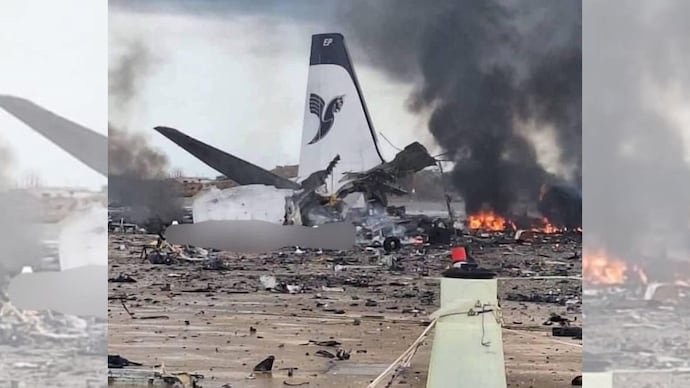
The conflict between the United States and Iran has entered another dangerous phase after the US launched retaliatory military strikes against Iranian targets following an attack on American forces stationed in Jordan. The escalation comes amid an already fragile security environment across the Middle East, where multiple flashpoints from Iraq and the Strait of Hormuz to Egypt’s Mediterranean coast have intensified within hours.
The latest developments have not only raised fears of a wider regional war but also renewed concerns about disruptions to global energy supplies, international shipping, diplomatic efforts, and economic stability. As military operations expand across multiple countries, governments and markets are closely watching whether the conflict can still be contained or whether it risks evolving into a prolonged regional confrontation.
What Happened?
The United States carried out retaliatory strikes against Iranian targets after an attack on a US military installation in Jordan. The operation followed warnings from US President Donald Trump that Iran would face a strong military response if American personnel continued to be targeted.
The retaliation came shortly after US and Saudi military operations against Iran-backed militias in Iraq, where multiple fighters and Iranian advisers were reported killed. The rapid sequence of military actions marked one of the most significant escalations in recent months.
Within the same day, reports also emerged of drone attacks that ignited fires aboard two natural gas vessels at Egypt’s Damietta Port, adding an unexpected new front to an already volatile regional security landscape.
Timeline of the Latest Escalation
| Development | Key Details |
|---|---|
| Attack on US forces | American military personnel stationed in Jordan came under attack. |
| US retaliation | Washington launched strikes against Iranian targets. |
| Operations in Iraq | US and Saudi actions targeted Iran-backed militias. |
| Damietta incident | Drone attacks caused fires aboard natural gas vessels at Egypt’s Damietta Port. |
| Hormuz tensions | Renewed instability affected one of the world’s most important energy shipping routes. |
| Oil market reaction | Brent crude prices surged as investors priced in geopolitical risks. |
Why the Jordan Attack Matters
US military facilities in Jordan play a crucial role in supporting regional counterterrorism operations, intelligence gathering, logistics, and cooperation with allied forces across the Middle East.
An attack on American personnel stationed there represents more than a localized security incident. It challenges US military deterrence and increases pressure on Washington to respond decisively, particularly when officials believe state-backed or proxy groups may be involved.
Such incidents also increase the risk of rapid escalation because retaliatory strikes often trigger additional military responses from opposing forces or allied militias.
Damietta Drone Attack Opens a New Maritime Front
The reported drone strikes at Egypt’s Damietta Port have expanded concerns beyond traditional conflict zones.
Damietta is an important Mediterranean energy hub that handles liquefied natural gas (LNG), commercial shipping, and maritime trade. Any disruption at the port could have broader implications for regional energy exports and shipping confidence.
British maritime security assessments indicated that fires broke out aboard a US-owned floating storage facility and a Greek-owned tanker. Although no casualties were reported, the incident demonstrated how commercial infrastructure is increasingly vulnerable during periods of regional conflict.
If future investigations establish links between the attacks and regional armed groups, it would represent a significant widening of the conflict beyond the Persian Gulf.
Strait of Hormuz Remains the Biggest Strategic Concern
The Strait of Hormuz continues to be one of the world’s most strategically important maritime chokepoints.
The narrow waterway connects the Persian Gulf to international markets and serves as the primary export route for crude oil and liquefied natural gas from several Gulf producers.
Any military confrontation affecting shipping through Hormuz immediately attracts worldwide attention because even temporary disruptions can influence fuel prices, insurance costs, freight rates, and global inflation.
Renewed military activity around the Strait has again highlighted how quickly regional conflicts can affect international energy markets.
Impact on Global Oil Markets
Energy traders reacted immediately to the latest escalation.
Brent crude prices rose sharply as markets factored in the possibility of supply disruptions and increased geopolitical risk premiums.
Oil Prices typically respond to uncertainty rather than confirmed supply shortages. Even if production remains stable, threats to transportation routes can significantly affect pricing because buyers anticipate future disruptions.
Higher crude prices can eventually influence transportation costs, manufacturing expenses, airline operations, and consumer fuel prices around the world.
Military Pressure Meets Diplomatic Uncertainty
The latest escalation comes despite ongoing diplomatic efforts aimed at reducing tensions.
Regional mediators have continued attempting to restart negotiations between Washington and Tehran. However, repeated military exchanges have complicated those efforts, making trust increasingly difficult to rebuild.
Diplomatic negotiations often become more challenging when military operations continue simultaneously because each new strike changes political calculations on both sides.
Officials familiar with mediation efforts have indicated that communication channels remain open, but prospects for an immediate breakthrough remain uncertain.
Role of Regional Players
The crisis now involves multiple countries with differing strategic interests.
- United States: Protecting military personnel, regional allies, and freedom of navigation.
- Iran: Responding to military pressure while maintaining regional influence.
- Saudi Arabia: Strengthening regional security while protecting critical energy infrastructure.
- Egypt: Seeking stability while safeguarding important maritime trade routes.
- Jordan: Managing heightened security risks because of its strategic location.
- Iraq: Remaining a focal point where multiple regional actors continue operating.
The involvement of numerous governments increases both the complexity of diplomacy and the risk of unintended escalation.
Economic Consequences Beyond Oil
The conflict’s impact extends well beyond energy markets.
Shipping companies operating in high-risk areas often face increased insurance premiums, longer transit routes, and additional security expenses. These costs may eventually affect international trade and supply chains.
Financial markets also tend to react cautiously during periods of geopolitical uncertainty, with investors shifting toward safer assets while reducing exposure to regions facing heightened conflict risks.
Businesses dependent on Middle Eastern energy supplies closely monitor developments because prolonged instability can affect procurement costs and production planning.
Growing Security Risks for Commercial Shipping
Commercial vessels have increasingly become indirect victims of regional conflicts.
Even when merchant ships are not deliberate targets, military activity, naval mines, drones, missiles, and mistaken identification can significantly increase operational risks.
Shipping companies operating through the Gulf and nearby waters are therefore expected to maintain enhanced security protocols, adjust sailing schedules where necessary, and closely coordinate with maritime authorities.
Strategic Challenge Facing Washington
The United States faces a delicate strategic balance.
On one hand, military retaliation is intended to deter future attacks on American personnel and reassure regional allies. On the other hand, expanding military operations carries the risk of triggering additional retaliatory actions that could prolong the conflict.
American policymakers must therefore weigh immediate security objectives against the broader goal of preventing a wider regional war.
Why Investors Are Watching Every Development
Financial markets increasingly view geopolitical events in the Middle East through the lens of supply-chain resilience.
Major concerns include:
- Potential disruptions to energy exports.
- Shipping delays.
- Higher freight costs.
- Inflationary pressure.
- Volatility in global commodity markets.
- Uncertainty surrounding future diplomatic negotiations.
Even short-lived military escalations can produce significant market reactions because energy infrastructure plays a central role in the global economy.
Possible Scenarios Going Forward
Scenario 1: Controlled Escalation
Military responses remain limited while diplomatic channels continue operating, preventing a broader regional conflict.
Scenario 2: Expanded Regional Conflict
Additional attacks involving proxy groups or strategic infrastructure could draw more countries directly into the confrontation.
Scenario 3: Diplomatic Breakthrough
Mediators succeed in restoring negotiations, reducing military activity and easing pressure on Global Energy Markets.
At present, uncertainty remains high, and developments continue to evolve rapidly.
Why This Crisis Matters Globally
The latest confrontation illustrates how interconnected today’s geopolitical environment has become. Military incidents in one part of the Middle East can quickly influence oil prices, shipping routes, inflation, financial markets, and diplomatic relations across continents.
For countries dependent on imported energy, sustained instability could increase fuel costs and place additional pressure on economic growth. For governments, the challenge lies in balancing national security interests with the need to prevent a conflict that could have far-reaching humanitarian and economic consequences.
Conclusion
The US retaliatory strikes against Iranian targets following the attack on American forces in Jordan, combined with the reported drone attacks at Egypt’s Damietta Port and renewed tensions around the Strait of Hormuz, mark another significant escalation in an already fragile Middle East security environment.
While diplomatic efforts continue behind the scenes, the expanding geographical scope of the crisis demonstrates how quickly regional conflicts can spill across borders and affect global energy markets, international shipping, and geopolitical stability. Whether the coming days bring renewed negotiations or further military escalation will be closely watched by governments, investors, and citizens worldwide, as the outcome could shape the region’s security landscape for months to come.
For breaking news and live news updates, like us on Facebook or follow us on Twitter and Instagram. Read more on Latest World on thefoxdaily.com.





COMMENTS 0