Energy Diplomacy has suddenly become the centerpiece of the India-US relationship.
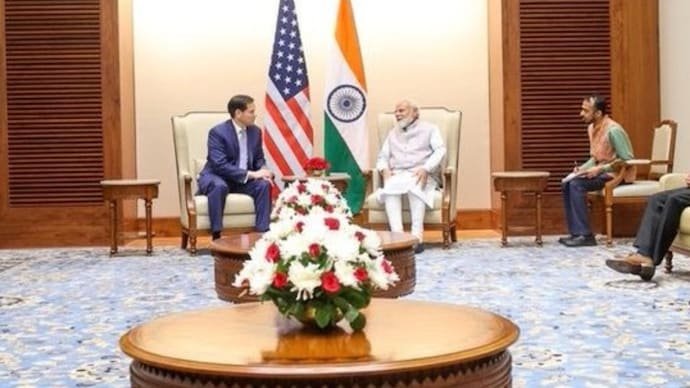
During his high-level meeting with Prime Minister Narendra Modi in New Delhi, US Secretary of State Marco Rubio pushed a message that carried both economic and geopolitical weight: the United States wants to become one of India’s biggest and most reliable energy partners.
The timing of Rubio’s pitch could hardly be more critical.
Global oil markets are once again under pressure as escalating tensions involving Iran, Israel and the United States continue disrupting shipping routes through the Strait of Hormuz one of the world’s most important oil transit chokepoints. For India, which imports more than 80 percent of its crude oil needs, the situation represents a major strategic vulnerability.
Rubio’s proposal to expand American oil and liquefied natural gas (LNG) exports to India is therefore not just about trade. It is about reshaping the future architecture of India’s energy security at a time when the world is entering a far more unstable geopolitical era.
And unlike routine diplomatic talking points, this energy conversation has real consequences for fuel prices, inflation, industrial growth, strategic autonomy and even India’s geopolitical positioning in the coming decade.
Why Marco Rubio’s Energy Proposal Matters Right Now
Rubio’s remarks come at a moment when the Global energy system is facing simultaneous pressures from war, sanctions, shipping disruptions and great-power competition.
The Strait of Hormuz, located between Iran and Oman, carries nearly 20 percent of the world’s oil and gas shipments. Any Military escalation or disruption there immediately impacts global energy prices.
India is particularly exposed.
A large share of India’s crude imports traditionally comes from West Asia, and nearly half of those imports pass through Hormuz. Even temporary disruptions can significantly increase India’s import bill and place pressure on the rupee, inflation and government finances.
That is why Rubio’s statement that the US wants to sell India “as much energy as they’ll buy” is strategically important. Washington is offering India something New Delhi increasingly values: diversification.
In modern Geopolitics, diversification equals resilience.
India’s Energy Problem Is Bigger Than Rising Oil Prices
Many reports focus only on short-term fuel costs. But India’s real challenge is structural.
India is the world’s third-largest energy consumer, and its demand continues rising rapidly due to:
- Urbanisation
- Industrial growth
- Expanding manufacturing
- Infrastructure development
- Growing middle-class consumption
- Increasing electricity demand
Unlike some developed economies where energy demand has stabilized, India’s requirements are expected to grow for decades.
That creates a difficult balancing act.
India must secure enough energy to fuel growth while also avoiding overdependence on unstable regions or politically risky suppliers.
This is precisely where the United States sees an opportunity.
How America Became an Energy Superpower
Just fifteen years ago, the idea of the United States becoming a major energy exporter sounded improbable.
Today, it is one of the world’s largest producers of oil and natural gas.
The transformation came largely due to the shale revolution, which dramatically expanded US production capacity through advances in hydraulic fracturing and horizontal drilling technologies.
The result has been massive growth in:
- Crude oil exports
- Liquefied natural gas exports
- Refining capacity
- Global energy influence
Washington is now actively looking for stable long-term buyers in Asia, and India fits perfectly into that strategy.
Unlike Europe, where energy demand growth is relatively limited, India offers decades of expanding consumption.
Why the US Wants India as an Energy Partner
The American push is not purely commercial.
There are at least five strategic reasons Washington wants deeper energy ties with India.
1. Strengthening Strategic Alignment
Energy partnerships create long-term interdependence between countries. The more India relies on American LNG and crude supplies, the stronger the broader bilateral relationship becomes.
2. Countering China’s Regional Influence
The Indo-Pacific is increasingly shaped by economic competition between the US and china. Stronger India-US energy ties strengthen Washington’s regional strategy.
3. Reducing India’s Dependence on Volatile Regions
The US believes India’s heavy dependence on West Asian shipping routes creates vulnerabilities that rivals could exploit during crises.
4. Expanding America’s Energy Exports
Asian economies represent the biggest long-term growth market for global energy demand.
5. Building Supply Chain Partnerships
Modern geopolitical alliances increasingly depend on integrated trade, technology and energy systems rather than just military cooperation.
The Hormuz Crisis Has Changed Global Energy Thinking
One of the biggest insights competitors are missing is how dramatically the current Hormuz tensions are changing long-term strategic calculations.
For decades, policymakers treated uninterrupted Gulf energy flows almost as a certainty.
That assumption is now weakening.
The possibility of prolonged instability in the region is forcing countries like India, Japan and South Korea to rethink supply diversification much more aggressively.
This is not just about one temporary crisis.
It is about preparing for a future where geopolitical disruptions become more frequent rather than less.
| Key Energy Risk | Impact on India |
|---|---|
| Hormuz shipping disruption | Higher oil prices and import costs |
| Regional conflict escalation | Supply uncertainty |
| Currency volatility | Pressure on rupee and inflation |
| Dependence on limited suppliers | Reduced strategic flexibility |
| Global energy price spikes | Higher transport and manufacturing costs |
Can US Energy Actually Replace West Asian Oil?
Probably not entirely and that is not the real objective.
Geography still matters enormously in energy markets. West Asian producers remain closer to India and often offer competitive pricing advantages.
Instead, India’s strategy appears focused on diversification rather than replacement.
That means creating a broader mix of suppliers so no single geopolitical disruption can severely damage India’s economy.
From a strategic standpoint, diversification gives India:
- More bargaining power
- Greater resilience during crises
- Reduced political vulnerability
- Improved supply stability
- Enhanced strategic autonomy
This is why Rubio repeatedly emphasized making US energy a “bigger part” of India’s portfolio rather than the only part.
The LNG Opportunity Could Be Even Bigger Than Oil
While oil dominates headlines, LNG may actually become the more transformative area of India-US cooperation.
India is rapidly increasing natural gas usage as part of its transition toward cleaner energy systems.
The government aims to increase natural gas’s share in the energy mix significantly over the coming years.
That creates huge opportunities for American LNG exporters.
US LNG offers several advantages:
- Stable long-term contracts
- Diversified sourcing
- Flexible shipping arrangements
- Lower geopolitical risk compared to conflict zones
As India expands LNG terminals and gas infrastructure, US suppliers could become increasingly important players in India’s energy ecosystem.
The Venezuela Remark Reveals a Bigger Strategy
Rubio’s mention of Venezuelan oil was particularly interesting.
It suggests Washington may be exploring broader ways to stabilize global energy flows and support alternative supply channels for partners like India.
Venezuela possesses some of the world’s largest proven oil reserves, but sanctions and political instability have limited its role in global markets.
If the US supports greater Venezuelan engagement with India, it would signal a pragmatic shift in energy diplomacy driven by global supply concerns.
In geopolitics, necessity often changes old calculations surprisingly fast.
India Is Playing a Smart Multi-Alignment Game
One important point often ignored in simplistic geopolitical narratives is that India is not abandoning its strategic autonomy.
New Delhi continues maintaining relationships across multiple global power centers, including:
- The United States
- Russia
- Gulf countries
- European nations
- East Asian economies
This flexible strategy allows India to maximize economic opportunities while avoiding overdependence on any single bloc.
India’s approach to energy imports reflects the same philosophy.
New Delhi is likely to continue buying from multiple suppliers based on pricing, reliability and strategic considerations rather than ideological alignment alone.
What This Means for Ordinary Indians
The implications of these energy discussions extend far beyond diplomatic meetings.
Energy prices affect nearly every aspect of daily life.
Stable and diversified energy supplies can help:
- Reduce fuel price volatility
- Control inflation
- Support manufacturing growth
- Lower transportation costs
- Improve energy availability
- Strengthen economic stability
In a country as large and energy-dependent as India, even small improvements in energy security can have massive economic ripple effects.
The Quad Connection Is Not Accidental
Rubio’s discussions also included cooperation within the Quad framework involving India, the United States, Australia and Japan.
This matters because energy security is increasingly becoming part of Indo-Pacific strategic planning.
The Quad is no longer focused only on military or maritime issues.
It is evolving into a broader platform for cooperation involving:
- Supply chains
- Technology
- Infrastructure
- Energy resilience
- Economic security
That evolution reflects a larger reality: the future of global power competition will depend as much on economics and supply chains as on military strength.
Prediction: India-US Energy Ties Will Deepen Rapidly
One clear prediction emerges from Rubio’s visit: India-US energy cooperation is likely to expand significantly over the next decade.
Several trends support this outlook:
- India’s rising energy demand
- America’s export ambitions
- Growing geopolitical instability
- Need for diversified supply chains
- Strengthening bilateral relations
Future agreements may involve not only oil and LNG, but also:
- Strategic petroleum reserves
- Clean energy technologies
- Hydrogen cooperation
- Nuclear energy collaboration
- Grid modernization
Energy could ultimately become one of the strongest foundations of the India-US strategic partnership.
Conclusion: Rubio’s Energy Pitch Reflects a New Global Reality
Marco Rubio’s push for greater American energy exports to India is not simply a trade proposal. It is a reflection of how deeply geopolitics and energy security are now interconnected.
As tensions in West Asia continue threatening global oil flows, countries like India are being forced to rethink how they secure the fuel needed to power economic growth.
The United States sees this moment as both a strategic opportunity and a chance to deepen ties with one of the world’s most important emerging powers.
For India, expanded access to American oil and LNG could provide greater resilience, stronger bargaining power and reduced vulnerability to geopolitical shocks.
The broader message from Rubio’s visit is clear: in the 21st century, energy security is no longer just about economics. It is about national security, geopolitical influence and the future balance of global power.
And in that rapidly changing landscape, India and the United States appear increasingly determined to build a deeper energy alliance that could shape the Indo-Pacific for decades to come.
For breaking news and live news updates, like us on Facebook or follow us on Twitter and Instagram. Read more on Latest India on thefoxdaily.com.






COMMENTS 0