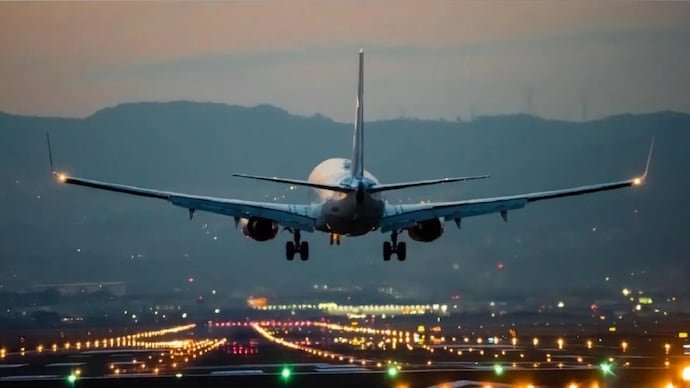
Iran has partially reopened its airspace to international transit flights, offering a limited sign of normalization after weeks of heightened regional tensions. But the move comes at a complicated moment, as Military control tightens over the Strait of Hormuz and uncertainty continues to ripple across global transport networks.
According to Iran’s Civil Aviation Authority, aircraft can now pass through the eastern portion of the country’s airspace, and several major airports including those in Tehran, Mashhad, and other regional hubs have resumed operations. On paper, it looks like a step toward stability. In practice, airlines appear far more cautious.
Flight tracking data in the hours following the announcement showed little change, with many carriers continuing to reroute around Iranian airspace. That hesitation speaks volumes about the gap between official policy and operational reality.
Why Airlines Aren’t Rushing Back
Reopening airspace is only one part of the equation. For airlines, safety assessments depend on multiple factors military activity, missile risks, communication reliability, and geopolitical predictability.
Right now, those factors remain uncertain.
Even though eastern corridors are technically open, airlines are weighing the broader Security environment. With tensions escalating in nearby maritime zones and conflicting signals from political leaders, rerouting flights though costly remains the safer bet.
Key Reasons Airlines Are Avoiding Iranian Airspace
- Ongoing military tensions in the region
- Uncertainty over escalation in the coming days
- Insurance and liability risks
- Availability of alternative routes
In aviation, perception of risk is often as important as actual risk and right now, confidence is still fragile.
The Bigger Picture: Strait of Hormuz Overshadows Everything
While the reopening of airspace might suggest easing tensions, developments at sea tell a very different story. Iran has reimposed strict military control over the Strait of Hormuz, one of the world’s most critical energy chokepoints.
This narrow passage handles roughly 20% of Global Oil shipments, making it essential not just for regional economies but for global energy stability.
The timing of Iran’s decision is significant. Just a day earlier, there had been cautious optimism after a temporary reopening of the strait following a ceasefire agreement. That optimism quickly faded as Tehran reversed course, citing alleged violations and reinstating tighter controls.
Airspace vs Maritime Reality
| Sector | Status | Implication |
|---|---|---|
| Airspace (Eastern Iran) | Partially Open | Limited relief for aviation routes |
| Strait of Hormuz | Under strict military control | Major concern for global oil supply |
| Airline Behavior | Still avoiding region | Low confidence despite reopening |
This contrast highlights a key point: reopening airspace does not necessarily signal broader de-escalation.
Strategic Insight: Why Open the Skies but Tighten the Seas?
At first glance, Iran’s mixed approach loosening airspace restrictions while tightening maritime control may seem contradictory. In reality, it reflects a calculated strategy.
Airspace reopening sends a signal of partial normalcy, potentially easing international pressure and avoiding complete isolation. Meanwhile, controlling the Strait of Hormuz preserves a powerful bargaining chip in negotiations.
This dual-track approach allows Iran to:
- Maintain leverage over global energy markets
- Demonstrate control without full escalation
- Keep diplomatic channels open while applying pressure
It’s a balancing act between signaling cooperation and asserting dominance.
Impact on Global Travel and Trade
The aviation and shipping industries are both feeling the effects of the current uncertainty, though in different ways.
Aviation Sector
Flight rerouting increases fuel consumption, travel time, and operational costs. Over time, these costs can be passed on to passengers, leading to higher ticket prices.
Shipping and Energy Markets
The situation in the Strait of Hormuz has far more immediate global consequences. Any disruption even partial can lead to oil price fluctuations and supply concerns.
Markets tend to react not just to actual disruptions, but to the risk of disruption. That risk is currently elevated.
Timeline of Rapidly Changing Developments
| Day | Development |
|---|---|
| Day 1 | Ceasefire announced; Hormuz temporarily reopened |
| Day 2 | Iran reimposes strict control over the strait |
| Day 3 | Partial reopening of eastern airspace announced |
| Current | Airlines cautious; maritime tensions remain high |
This rapid sequence of shifts is a key reason why global operators are hesitant to adjust their strategies too quickly.
What Happens Next?
The next few days are critical. Much depends on whether diplomatic efforts can stabilize the situation or whether tensions escalate further.
A looming deadline tied to ceasefire negotiations adds urgency, with the possibility of renewed Conflict still on the table.
Several scenarios could unfold:
- Gradual normalization: More air routes reopen and shipping stabilizes
- Status quo: Airspace remains partially open but underused; maritime tensions persist
- Escalation: Further restrictions or incidents disrupt both air and sea routes
For now, the global response remains cautious watching, waiting, and preparing for multiple outcomes.
Conclusion: A Signal of Calm or a Strategic Illusion?
Iran’s partial reopening of its airspace offers a glimpse of potential de-escalation, but it is far from a clear signal of stability. With the Strait of Hormuz under tight military control and geopolitical tensions unresolved, the broader picture remains uncertain.
The divergence between air and sea policies reveals a deeper strategic game one where signals are carefully calibrated, and every move carries multiple meanings.
For airlines, shipping companies, and global markets, the message is clear: proceed with caution. Because in this region, even small changes can have outsized consequences.
For breaking news and live news updates, like us on Facebook or follow us on Twitter and Instagram. Read more on Latest World on thefoxdaily.com.






COMMENTS 0