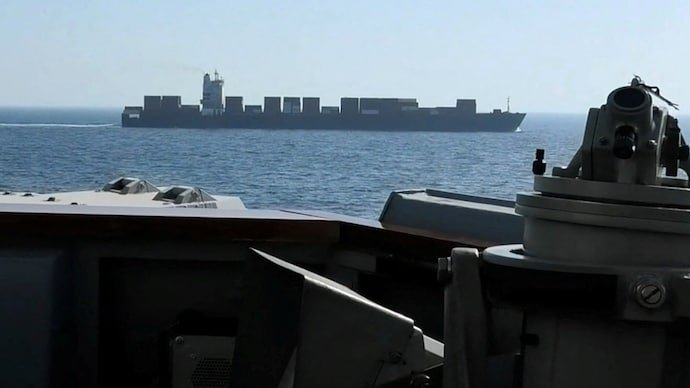
The Middle East may once again be approaching a pivotal diplomatic crossroads.
Following months of military escalation, drone attacks, shipping disruptions, and fears of a broader regional war, reports of a possible US-Iran draft agreement have triggered intense global scrutiny.
According to Iranian state-linked media, the proposed framework could include the reopening of commercial shipping through the Strait of Hormuz, partial reduction of American military forces near the Gulf, and a broader de-escalation process intended to prevent another major regional conflict.
However, the situation remains highly uncertain.
The White House quickly rejected the Iranian media reports as fabricated, publicly dismissing claims that any such memorandum of understanding had been finalized or officially endorsed by Washington.
Despite the denial, the reports themselves reveal something important: diplomatic pressure is rapidly growing on both Tehran and Washington to avoid a prolonged Gulf confrontation that could destabilize Global energy markets and trigger wider geopolitical consequences.
Why the Strait of Hormuz Matters to the Entire World
The Strait of Hormuz is one of the most strategically important waterways on Earth.
The narrow maritime corridor connects the Persian Gulf to the Arabian Sea and serves as a critical route for global energy exports.
Roughly one-fifth of the world’s oil supply typically passes through the strait, along with significant volumes of liquefied natural gas.
Major energy exporters dependent on Hormuz include:
- Saudi Arabia
- United Arab Emirates
- Kuwait
- Iraq
- Qatar
- Iran
Because of this, even temporary instability around the waterway can rapidly affect:
- Global oil prices
- Shipping insurance costs
- Energy supply chains
- Inflation worldwide
- Financial market confidence
That explains why every military incident near Hormuz immediately attracts international concern far beyond the Middle East.
What the Proposed US-Iran Framework Allegedly Includes
According to Iranian reports, the draft framework under discussion could involve several major elements intended to reduce tensions.
The reported proposals include:
- Restoration of commercial shipping through Hormuz within 30 days
- Reduction of US military presence around the Gulf
- An end to what Tehran describes as a naval blockade
- Joint management of shipping routes involving Iran and Oman
- Restrictions on vessels linked to “hostile countries”
- Possible future adoption through a UN Security Council mechanism
Iranian outlets also suggested that negotiations continue regarding the scale of any American military withdrawal.
However, Washington has publicly rejected the reports, creating major uncertainty over what discussions are genuinely taking place behind closed doors.
Why the White House Strongly Rejected the Reports
The White House’s rapid dismissal of the alleged framework highlights the highly sensitive nature of US-Iran Diplomacy.
American officials likely fear several strategic risks if such reports are perceived as credible prematurely:
- Appearing weak after recent military strikes
- Undermining deterrence against Iran
- Triggering backlash from regional allies
- Creating domestic political criticism
- Encouraging further Iranian leverage demands
Public messaging in geopolitical crises often differs sharply from private diplomatic negotiations.
Historically, sensitive negotiations between adversarial states frequently involve:
- Backchannel diplomacy
- Public denials
- Indirect signaling
- Conflicting narratives
Therefore, the White House rejection does not necessarily eliminate the possibility that some form of exploratory diplomatic discussions may still be underway.
The Military Escalation That Triggered the Latest Crisis
The diplomatic tension intensified following recent US military strikes targeting Iranian missile positions and boats allegedly attempting to deploy naval mines near the Strait of Hormuz.
Washington described the operation as defensive and necessary to protect maritime security.
Iran, however, condemned the strikes as a violation of the ceasefire and accused the United States of escalating tensions deliberately.
The exchange reflects the increasingly fragile security environment surrounding the Gulf.
Unlike previous decades, today’s regional confrontations involve:
- Drones
- Missile systems
- Electronic warfare
- Maritime disruption tactics
- Proxy conflicts
- Cyber operations
This creates a far more unpredictable escalation environment where small incidents can quickly spiral into larger crises.
Iran’s Strategy: More Control Over Hormuz
One of the most important aspects of the reported framework is Iran’s apparent insistence on maintaining greater operational authority over the Strait of Hormuz.
Iranian state media emphasized that Tehran would continue restricting vessels linked to countries it considers hostile.
This reveals a critical strategic objective.
Iran does not simply want sanctions relief or temporary de-escalation.
It also seeks recognition of its regional influence and maritime leverage.
Control over Hormuz gives Tehran enormous geopolitical significance because the waterway affects global Energy Security.
Even the possibility of disruption allows Iran to exert pressure during negotiations.
| Iran’s Objectives | US and Allied Objectives |
|---|---|
| Reduce military pressure | Protect shipping routes |
| Increase regional influence | Maintain Gulf deterrence |
| Secure frozen assets relief | Prevent nuclear escalation |
| Control maritime access | Ensure open navigation |
| Limit hostile military presence | Protect allied Gulf states |
Why Global Oil Markets Are Watching Closely
The Hormuz situation matters enormously for global Energy Markets.
Even rumors of military escalation near the strait can push oil prices sharply higher.
That is because traders fear:
- Supply disruptions
- Shipping delays
- Insurance cost spikes
- Potential naval conflict
- Wider Middle East instability
Energy-importing economies remain highly vulnerable to sudden oil price shocks.
Higher crude prices can quickly affect:
- Fuel prices
- Inflation
- Transportation costs
- Food supply chains
- Manufacturing expenses
After years of global inflation concerns, governments are especially sensitive to any development that could destabilize energy markets again.
Could the US Really Reduce Its Military Presence?
The idea of a substantial American military withdrawal from the Gulf remains highly controversial.
The United States maintains extensive military infrastructure across the region, including bases, naval assets, and air operations linked to broader strategic goals.
These include:
- Protecting shipping routes
- Containing regional threats
- Supporting Gulf allies
- Counterterrorism operations
- Deterring Iranian military activity
Any large-scale reduction would therefore represent a major geopolitical shift.
However, analysts believe Washington may consider limited repositioning or temporary force adjustments if it helps stabilize the region without weakening overall deterrence.
The distinction between a tactical reduction and a strategic withdrawal is extremely important.
Oman’s Quiet Diplomatic Role
The reports mentioning Oman’s involvement are particularly significant.
Unlike several Gulf states, Oman traditionally maintains relatively balanced relations across regional rivalries.
Muscat has previously played important behind-the-scenes roles in facilitating:
- Nuclear negotiations
- Hostage exchanges
- Backchannel diplomacy
- Regional de-escalation talks
Its inclusion in any Hormuz management framework would therefore align with its broader diplomatic positioning.
The Nuclear Question Still Hangs Over Everything
Although the reported framework focuses heavily on shipping and military tensions, the larger unresolved issue remains Iran’s nuclear programme.
The United States and several allies continue insisting that Iran must not develop nuclear weapons capability.
Tehran denies seeking nuclear weapons and argues its programme is civilian.
However, the nuclear dispute continues shaping every broader negotiation because it affects:
- Sanctions policy
- Military deterrence
- Regional alliances
- Israeli security concerns
- Global non-proliferation policy
Many analysts believe any lasting Gulf stabilization framework would eventually require progress on the nuclear issue as well.
Why the Middle East Is Entering a New Strategic Phase
The latest developments suggest the region may be entering a new phase of geopolitical bargaining shaped by several overlapping pressures:
- Energy security concerns
- Global inflation risks
- Military fatigue
- Shipping disruptions
- Economic instability
- Domestic political pressure
Neither Iran nor the United States appears eager for a full-scale regional war.
At the same time, neither side wants to appear strategically weak.
This creates a delicate environment where diplomacy, military pressure, and public messaging are all unfolding simultaneously.
Conclusion: The Hormuz Crisis Is About More Than Oil
The reported US-Iran framework whether fully accurate or not highlights the extraordinary strategic importance of the Strait of Hormuz and the fragile balance shaping the Middle East today.
At its core, the crisis is not only about shipping lanes or military deployments.
It is about regional influence, global energy security, deterrence, diplomacy, and the future balance of power in one of the world’s most volatile regions.
Iran seeks recognition of its strategic role and relief from sustained military and economic pressure.
The United States aims to maintain stability, protect maritime trade, and prevent broader escalation while preserving its regional influence.
Between those competing objectives lies a narrow diplomatic path that could either reduce tensions or collapse into another dangerous confrontation.
For now, the world’s attention remains fixed on Hormuz because what happens in that narrow waterway rarely stays confined to the Gulf.
For breaking news and live news updates, like us on Facebook or follow us on Twitter and Instagram. Read more on Latest World on thefoxdaily.com.






COMMENTS 0