A diplomatic dispute between South Korea and Ukraine has erupted over the transfer of two North Korean prisoners of war captured while fighting for Russia, after Ukrainian President Volodymyr Zelenskyy publicly revealed that the men had been sent to South Korea.
What was expected to be a sensitive humanitarian arrangement has instead developed into an unexpected diplomatic crisis between Seoul and Kyiv. The dispute is not primarily about where the two North Korean soldiers are now. Both sides acknowledge that they reached South Korea. The disagreement centres on what Ukraine and South Korea agreed about the transfer and whether the details were supposed to remain confidential.
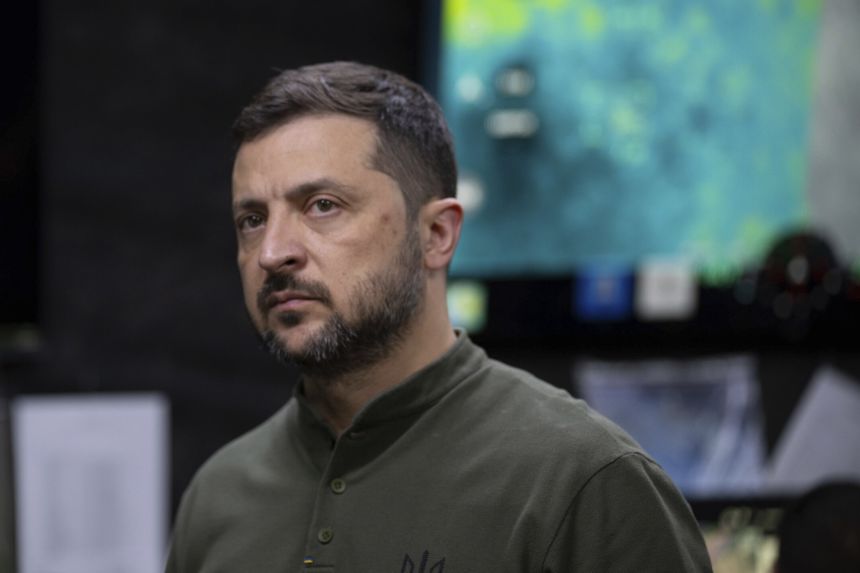
Zelenskyy mentioned the transfer during his address to the United Nations General Assembly, saying Ukraine had “sent two North Korean prisoners of war to the Republic of Korea”. Seoul had previously indicated that it was prepared to receive the men, who had expressed a desire to live in South Korea rather than return to North Korea.
Instead of welcoming the announcement, South Korea reacted angrily. Its foreign ministry summoned Ukraine’s chargé d’affaires in Seoul and demanded an apology, saying Kyiv had broken an understanding to keep the transfer confidential.
Ukraine disputes that description. Zelenskyy’s adviser Dmytro Lytvyn said there had been no non-disclosure agreement. The conflicting accounts have turned the fate of two prisoners into a broader argument about diplomatic trust, prisoner exchanges, North Korea’s military involvement in Russia’s war and South Korea’s relationship with Kyiv.
Who Are the Two North Korean Prisoners of War?
The two men were captured by Ukrainian forces in Russia’s Kursk region in January 2025. They were among thousands of North Korean troops sent by Pyongyang to fight alongside Russian forces.
Their capture was significant because North Korea’s involvement in Russia’s war has created an unusual situation involving soldiers from one country fighting on the territory of another country against Ukraine. The two captured soldiers subsequently said they wanted to go to South Korea.
Their stated preference was particularly important because South Korea regards North Koreans as its own citizens. North Koreans who arrive in the South as defectors generally go through a government process involving questioning by the National Intelligence Service before being transferred to a state resettlement centre.
However, the circumstances surrounding these two men were far more sensitive than those of an ordinary North Korean defector. They had been captured on a battlefield in Russia’s Kursk region and had been serving with forces fighting Ukraine.
Their eventual transfer required discussions between Kyiv and Seoul. In July, Zelenskyy and South Korean President Lee Jae Myung agreed to resolve the issue while respecting the soldiers’ “free will”.
The pair reportedly reached South Korea through a third country earlier this month.
Why Is South Korea Angry With Ukraine?
Seoul’s objection centres on the disclosure of information that it says was supposed to remain confidential.
According to the South Korean account, Kyiv had requested secrecy surrounding the transfer. The reported reason was the sensitivity of Ukraine’s decision to hand the prisoners over rather than potentially use them in an exchange for Ukrainian prisoners held by Russia.
South Korea says it agreed to keep the matter confidential because of concerns about the safety of the two men and their families, as well as broader diplomatic and security considerations.
The arrangement changed when Zelenskyy publicly referred to the transfer during his UN speech.
South Korean President Lee subsequently wrote on X that Ukraine had violated a “non-disclosure agreement” and described the development as regrettable. The statement immediately turned what had been a largely private diplomatic process into a public disagreement.
The dispute intensified after Zelenskyy’s adviser Dmytro Lytvyn responded that there had been no such agreement.
Lee’s office rejected Ukraine’s account and said Kyiv’s conduct seriously undermined trust between the two governments. South Korea then summoned Ukraine’s chargé d’affaires and demanded an apology at the governmental level.
Was There Really a Non-Disclosure Agreement?
This remains the most important unresolved issue between Seoul and Kyiv.
South Korea’s foreign ministry told Ukraine’s envoy that there had been a “clear agreement” to handle the transfer confidentially. However, when asked whether the arrangement had been formally put in writing, the ministry said the two governments had decided to handle the matter confidentially.
That wording leaves room for an important distinction.
A diplomatic understanding to maintain confidentiality does not necessarily mean that the two governments signed a formal document titled a non-disclosure agreement. South Korea has described the arrangement as a clear agreement, while Zelenskyy’s adviser has rejected the claim that such an agreement existed.
The public information therefore does not establish the exact form of the understanding or precisely what each government believed could be disclosed.
Ukraine’s embassy in Seoul did not respond to a request for comment in the material surrounding the dispute.
Until the two governments provide more details about their July discussions and subsequent communications, the disagreement over confidentiality is likely to remain at the centre of the diplomatic row.
Why the Two Prisoners Are Sensitive for North Korea
The case also carries significant political sensitivity for North Korea.
Pyongyang has not publicly commented on the transfer. South Korea’s Unification Ministry said it had not identified any related developments and would continue monitoring the situation.
The absence of a public North Korean response is notable because the two soldiers represent an unusual outcome for a regime that has maintained strict control over information concerning its citizens and military personnel.
According to Cho Han-bum of the Korea Institute for National Unification, the transfer could be extremely sensitive for Pyongyang because North Korea has promoted a heroic narrative around its soldiers fighting for Russia.
Cho argued that the regime would be unlikely to disclose domestically that two soldiers survived capture and subsequently chose South Korea.
North Korea has also glorified soldiers who reportedly killed themselves rather than be captured. Against that background, the decision by two surviving prisoners to seek the South carries a significance that goes beyond the individual circumstances of the men.
For Pyongyang, acknowledging the case could raise uncomfortable questions about the fate and choices of its soldiers deployed overseas. So far, however, North Korea has said nothing publicly about the transfer.
Why Did the Prisoners Want to Go to South Korea?
The two men reportedly expressed their own desire to Travel to South Korea after their capture.
Their stated wishes became an important part of the discussions between Ukraine and South Korea. When Zelenskyy and Lee discussed the issue in July, they agreed that the matter should be resolved while respecting the soldiers’ “free will”.
This element distinguishes the case from a straightforward prisoner exchange.
Ukraine had custody of the men because they had been captured during the war. South Korea, meanwhile, has a longstanding policy and legal framework concerning North Koreans who arrive in its territory.
The eventual transfer through a third country allowed the two governments to resolve the immediate question of where the men would go without publicly revealing the details of the process at the time.
North Koreans arriving in South Korea are generally questioned by the National Intelligence Service before moving into the country’s resettlement system. Sensitive cases can reportedly be handled differently, reflecting the security considerations involved in arrivals from North Korea.
Could the Prisoners Have Been Exchanged for Ukrainians?
The possibility of a prisoner exchange is one of the reasons the transfer became diplomatically sensitive.
South Korea says Ukraine was concerned about domestic criticism because the two North Korean prisoners could potentially have been used in an exchange for a larger number of Ukrainian prisoners held by Russia.
Prisoner exchanges are an important humanitarian issue during the Russia-Ukraine war because they can return captured soldiers to their respective countries. The presence of North Korean troops fighting alongside Russian forces adds another layer to that process.
In this case, the prisoners were not simply Russian personnel. They were North Korean citizens who reportedly wanted to move to South Korea. That created a difficult choice for Kyiv involving the prisoners’ wishes, Ukraine’s interest in recovering its own captured personnel and its diplomatic relationship with Seoul.
South Korea’s account suggests that the sensitivity of that decision was one reason confidentiality mattered.
How Has South Korea Supported Ukraine?
South Korea has opposed Russia’s full-scale invasion of Ukraine since it began in February 2022. Seoul condemned Moscow’s actions and joined Western sanctions against Russia.
South Korea also pledged a $100 million support package in July.
At the same time, Seoul has maintained limits on its involvement in the conflict. It has refused to send weapons directly to Kyiv, consistent with its broader practice of not supplying lethal arms to countries engaged in war.
That position has allowed South Korea to support Ukraine politically and economically while avoiding direct military involvement in the conflict.
South Korea’s relationship with Russia also has an economic history. Before the war, Russia was one of Seoul’s significant trading partners.
At the same time, Lee’s government has an interest in improving relations with North Korea. That means Seoul has to consider the Korean Peninsula’s security environment while managing its relationship with Ukraine and its position toward Russia.
Why the Dispute Could Affect South Korea’s Ukraine Policy
The dispute has already triggered criticism within South Korea, including from politicians associated with Lee’s own Democratic Party.
Democratic Party lawmaker Kim Byung-joo said there was “no reason or need” to support Ukraine and called for the government to review its aid immediately.
Such criticism reflects a broader debate over how closely South Korea should align itself with Kyiv while balancing its own diplomatic and security priorities.
The controversy does not by itself establish that South Korea’s official Ukraine policy has changed. Seoul continues to condemn Russia’s invasion and has provided support to Ukraine. But the episode has provided critics with another argument for reconsidering the extent of that involvement.
The Political Debate is also connected to the question of whether Seoul’s interests are best served by deeper engagement in the European conflict or by concentrating more heavily on issues closer to the Korean Peninsula.
Why Zelenskyy’s UN Statement Caused Such a Reaction
The timing and setting of Zelenskyy’s disclosure are central to understanding Seoul’s response.
The transfer had apparently been handled quietly for security and diplomatic reasons. Zelenskyy then revealed it while addressing the UN General Assembly, making the movement of the two prisoners an international public matter.
For Ukraine, the announcement presented the transfer as an accomplished humanitarian outcome. For South Korea, however, the public disclosure was seen as a violation of the confidentiality that Seoul says had been agreed.
The disagreement therefore concerns diplomatic expectations as much as the prisoners themselves.
If Seoul believed that the information was to remain confidential until both governments agreed otherwise, Zelenskyy’s statement would represent a significant breach of that understanding from the South Korean perspective. If Kyiv believed there was no binding non-disclosure agreement, Ukraine’s position would be fundamentally different.
The public statements from both sides have so far failed to reconcile those interpretations.
What Happens to the Two North Korean Soldiers Now?
The two men are reportedly already in South Korea after travelling through a third country. Their arrival means the immediate question of their destination has been resolved, but their case remains sensitive because of their unusual background.
South Korean authorities are expected to apply the appropriate procedures for North Koreans arriving in the country, although sensitive cases can reportedly follow a different process from the standard resettlement route.
North Korea’s silence also leaves open the question of whether Pyongyang will eventually acknowledge the case. Given the political sensitivity surrounding North Korean troops fighting for Russia, the regime may have little incentive to publicly discuss soldiers who chose South Korea after being captured.
A Small Transfer With Much Bigger Diplomatic Consequences
The dispute between South Korea and Ukraine illustrates how a decision involving just two prisoners can intersect with several major geopolitical issues.
The two men were captured while fighting for Russia, later expressed a desire to go to South Korea and were ultimately transferred there. What followed was a disagreement over whether the process was supposed to remain confidential.
For Seoul, the issue is about trust and the handling of a sensitive agreement. For Kyiv, the dispute has centred on whether a formal non-disclosure agreement actually existed. Meanwhile, the case carries implications for North Korea because it involves soldiers who survived capture and chose the South.
It also arrives at a delicate point in South Korea’s relationship with the Ukraine war. Seoul has condemned Russia and supported Ukraine but has stopped short of supplying lethal weapons directly. The controversy has now given domestic critics another reason to question the country’s approach.
For now, the most concrete disagreement remains the simplest one: South Korea says the transfer was covered by a clear confidentiality understanding, while Ukraine disputes the existence of the non-disclosure agreement described by Seoul.
Until the two governments clarify what was agreed, the controversy over the two North Korean prisoners is likely to remain more than a resolved humanitarian case. It has become a test of diplomatic trust between South Korea and Ukraine, while also exposing the wider complications created by North Korea’s involvement in Russia’s war.
For breaking news and live news updates, like us on Facebook or follow us on Twitter and Instagram. Read more on Latest World on thefoxdaily.com.






COMMENTS 0