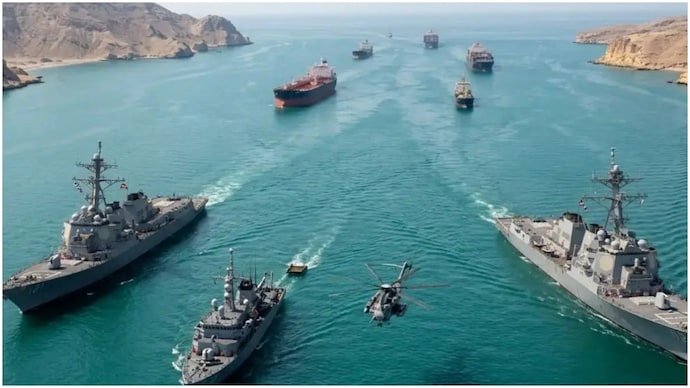
The Strait of Hormuz, one of the world’s most critical maritime chokepoints, remains open but commercial traffic continues to operate well below normal levels after renewed military escalation between Iran and the United States. The latest Iranian drone attacks on commercial vessels, followed by American retaliatory strikes against Iranian military infrastructure, have slowed what had initially appeared to be a gradual recovery in shipping following a temporary diplomatic breakthrough.
While energy markets have remained relatively stable compared to the early days of the conflict, shipping companies, insurers, oil producers and governments continue to monitor developments closely. The renewed uncertainty highlights how quickly geopolitical tensions can disrupt one of the most important global trade routes responsible for transporting nearly one-fifth of the world’s seaborne crude oil.
Why the Strait of Hormuz Matters
The Strait of Hormuz connects the Persian Gulf with the Gulf of Oman and the Arabian Sea, serving as the primary export route for crude oil and liquefied natural gas produced by Gulf nations including Saudi Arabia, the United Arab Emirates, Kuwait, Iraq and Qatar.
Any disruption to shipping through the narrow waterway immediately affects global energy markets because millions of barrels of crude oil transit the strait every day. Even temporary slowdowns often increase insurance premiums, freight charges and shipping costs, eventually influencing fuel prices worldwide.
For major energy-importing countries such as India, china, Japan and South Korea, uninterrupted navigation through Hormuz remains strategically vital for maintaining stable energy supplies.
Recovery Interrupted by Fresh Attacks
Following the interim understanding reached between Washington and Tehran, shipping activity had begun recovering from crisis levels. Traffic reportedly improved from less than 10 percent of normal operations to nearly half of pre-conflict averages as operators cautiously resumed voyages.
That progress, however, stalled after an Iranian drone struck a commercial cargo vessel using the southern shipping corridor near Oman on June 25. The attack prompted immediate American military strikes against Iranian missile facilities, drone infrastructure and surveillance installations, triggering another cycle of retaliation.
Iran later launched missile and drone attacks targeting American military facilities in Bahrain and Kuwait before both sides temporarily paused military operations.
The renewed fighting has reinforced concerns that the temporary calm achieved through diplomatic efforts remains highly fragile.
Competing Shipping Corridors Create Confusion
One of the principal reasons for slower traffic recovery is disagreement over how ships should navigate the Strait during the implementation period of the interim agreement.
Iran has directed commercial vessels toward a northern shipping corridor running closer to its coastline while introducing a vetting mechanism requiring shipping companies to provide information regarding cargo, destinations and crew members.
Some operators have also reported demands for transit-related payments during this process.
Meanwhile, many international shipping companies continue preferring the southern corridor near Oman’s territorial waters, where American surveillance aircraft and drones provide additional security oversight.
The cargo vessel targeted during the latest Iranian drone strike was reportedly using this southern route, further increasing uncertainty among shipowners regarding which passage offers greater safety.
Different Interpretations of the Interim Agreement
Another major obstacle stems from differing interpretations of the temporary memorandum reached between Iran and the United States.
American officials maintain that the agreement was intended to reopen the Strait for unrestricted commercial navigation during a 60-day implementation period without Iran collecting transit-related fees.
Iran, however, argues that the agreement authorises Tehran to supervise shipping operations throughout the transition while coordinating maritime management with regional partners including Oman.
This disagreement has complicated efforts to restore confidence among international shipping operators, many of whom remain reluctant to fully resume normal schedules until legal and security uncertainties are resolved.
Shipping Traffic Remains Below Normal Levels
Marine tracking data indicates that shipping continues through the Strait, but volumes remain well below historical averages.
Before hostilities escalated, more than 130 vessels typically crossed the waterway each day.
Recent monitoring has shown daily traffic fluctuating between approximately 40 and 80 vessels, illustrating that recovery has slowed considerably.
Another notable development has been the growing split between preferred navigation routes.
- Some vessels continue using the US-supported southern corridor near Oman.
- Others increasingly travel through Iranian-controlled northern routes.
- Several ships have switched off tracking systems while transiting sensitive areas.
- A smaller number continue using traditional central shipping lanes.
This fragmented pattern reflects ongoing caution among commercial operators rather than a return to normal maritime activity.
Insurance and Shipping Costs Remain Elevated
Although maritime traffic has not stopped entirely, insurers continue treating voyages through the Strait of Hormuz as high-risk operations.
War-risk insurance premiums remain elevated compared with pre-conflict levels, increasing transportation costs for shipping companies.
Longer routing decisions, additional security precautions and operational delays also contribute to higher freight expenses.
If uncertainty persists, these costs could eventually influence global commodity prices even without a complete closure of the waterway.
Impact on Global Oil Markets
Interestingly, oil prices have remained relatively resilient despite renewed military exchanges.
Several factors have prevented another major price spike.
- Strategic petroleum reserves have helped cushion supply concerns.
- Alternative export pipelines bypassing the Strait have expanded.
- Higher production from several oil-exporting countries has offset part of the risk.
- Lower energy demand in some major importing economies has eased pressure.
- Traders increasingly believe that neither side currently seeks a prolonged closure of the Strait.
Nevertheless, analysts caution that a sustained military confrontation could quickly reverse market stability if shipping were significantly disrupted.
Legal Questions Surround Maritime Control
International maritime law experts argue that commercial navigation through international straits is protected under the United Nations Convention on the Law of the Sea (UNCLOS), which guarantees the right of transit passage for peaceful shipping.
Iran, however, continues to emphasise its geographic position and security responsibilities as the principal coastal state overseeing much of the northern side of the Strait.
This legal disagreement remains one of the central diplomatic challenges facing negotiators attempting to establish a long-term framework for maritime security.
What It Means for India
India imports a significant share of its crude oil requirements from Gulf producers whose exports travel through the Strait of Hormuz.
Any prolonged disruption could affect:
- Crude oil availability.
- Shipping and freight charges.
- Petrol and diesel prices.
- Inflationary pressures across multiple sectors.
- Overall energy security planning.
Although current supplies remain stable, Indian policymakers continue closely monitoring developments while diversifying energy import sources to reduce dependence on any single maritime route.
Future Outlook
The temporary pause in hostilities has reduced the immediate risk of a wider regional conflict, but commercial confidence has yet to recover fully.
Upcoming diplomatic negotiations between Iran and the United States will likely determine whether both sides can establish mutually accepted rules governing shipping through the Strait of Hormuz.
If negotiations produce greater clarity regarding maritime administration and commercial passage, shipping volumes could gradually return to pre-conflict levels. However, further attacks on commercial vessels or renewed military retaliation could once again disrupt one of the world’s most strategically important waterways.
Conclusion
The Strait of Hormuz remains operational, but the latest Iranian drone strikes and subsequent US military response have demonstrated how fragile maritime security continues to be. While global oil markets have avoided another major shock for now, shipping companies remain cautious, vessel movements remain below historical norms, and competing interpretations of the interim agreement continue to complicate recovery.
Until a durable diplomatic settlement addresses both maritime security and broader regional disputes, the world’s most important energy corridor is likely to remain vulnerable to sudden disruptions, with significant implications for global trade, oil markets and energy-importing economies worldwide.
For breaking news and live news updates, like us on Facebook or follow us on Twitter and Instagram. Read more on Latest World on thefoxdaily.com.






COMMENTS 0